Beijing Zhongshan Park

⭐ 4.20

No. 4, Zhonghua Road, Dongcheng District, Beijing, China
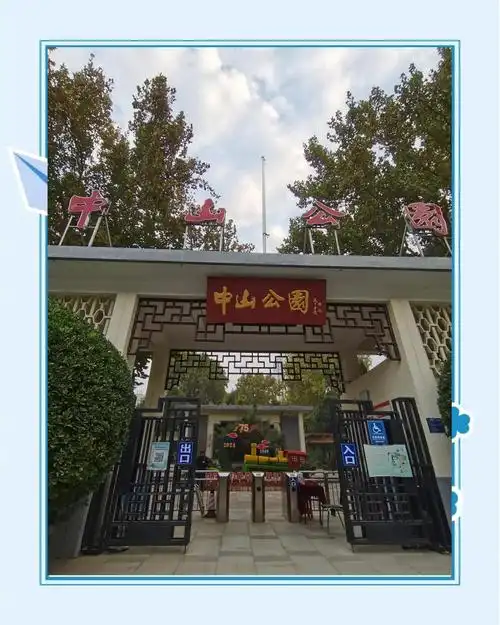
Beijing Zhongshan Park
The park's origins lie in the imperial Altar of Soil and Grain (Shejitan), constructed in 1420 during the reign of the Yongle Emperor, whose reign also gave Beijing its iconic Forbidden City. For five centuries, Ming and Qing emperors performed spring and autumn rites here to honor the land gods—ceremonies parallel in solemnity to the Vatican's papal blessings or ancient Greek sacrifices at Olympia. The square altar is divided into five sections according to the five elements (wood, fire, earth, metal, water), each filled with earth of corresponding color—green, red, white, black, and yellow—symbolizing imperial dominion over the realm. Remarkably, the original 15th-century soil remains intact, a continuity matched by few sacred sites worldwide. Dominating the northern end, the former Worship Hall was transformed in 1928 into Zhongshan Hall, a stately tribute to Sun Yat-sen, founder of the Republic of China. Its painted beams and soaring rooflines echo the restrained elegance of a European baroque state hall, while serving as a venue for major commemorative events. The architectural transition from imperial altar to republican memorial mirrors the park's broader journey—among the earliest royal grounds in any capital to open to ordinary citizens, preceding Europe's great public park movements in London and Paris by decades. The park's natural treasures are equally compelling. More than 600 ancient trees, mostly cypresses, form one of Beijing's oldest surviving groves, with some specimens dating back nearly a thousand years to the Liao dynasty. The celebrated "Embracing Locust and Cypress" is a natural wonder where two trees have grown together into a single fused trunk—a phenomenon comparable to the ancient oaks of England's Sherwood Forest or the sacred groves of Celtic myth. Visitors describe the trees as "living artifacts," a phrase that captures their role as botanical heritage alongside the stone monuments. Cultural life flourished here in the Republican era, when literary giants including Lu Xun gathered at the Laijinyuxuan teahouse, still serving its signature winter vegetable buns today—a continuity of culinary tradition rare in any capital. The Tanghua Greenhouse and Huifang Garden offer year-round blooms, while the spring tulip festival (March–May) showcases over 160 varieties and nearly 200,000 flowers, rivaling Keukenhof in scale. The Peace Preservation Arch near the south gate, originally erected with stones from a demolished Ming gate, and Sun Yat-sen's bronze statue create a contemplative commemorative zone that anchors the park's red revolutionary heritage. Entry is modest: 3 yuan on ordinary days, around 10 yuan during flower festivals (March–May) when the greenhouses are included, with discounts for seniors and children. The recommended route begins at the south gate, proceeding past the Peace Arch, Sun Yat-sen's statue, the five-color altar, the Laijinyuxuan teahouse, the greenhouses, and finally Zhongshan Hall before exiting the north gate—a leisurely 1.5-hour circuit that flows seamlessly into visits to the Forbidden City and Tiananmen Square. Plan at least half a day to appreciate both the monuments and the quiet, reflective atmosphere that makes this park a unique meeting point of imperial history, republican ideals, and contemporary urban life.

Traveler reviews

✨Beijing Zhongshan Park|History and Poetry Next to Tiananmen✨ Located at 4 Zhonghua Road, Dongcheng District, Zhongshan Park sits just west of Tiananmen Square, built on the ancient Altar of Land and Grain (Shejitan) — an imperial ceremonial site dating back...
⭐ 5 · Phoenix Lane Expand
Zhongshan Park sits right next to the south side of the Forbidden City (Palace Museum) and just west of Tiananmen Square, separated from the Forbidden City by only a single wall. This classical garden covers about 230,000 square meters and was originally the Altar of Land and Grain (Shejitan) during the Ming and Qing dynasties. The Zhongshan Hall is where ceremon...
⭐ 5 · Jamie Cole Expand