Capital Museum

⭐ 4.50

No. 16, Fuxingmenwai Street, Xicheng District, Beijing, China
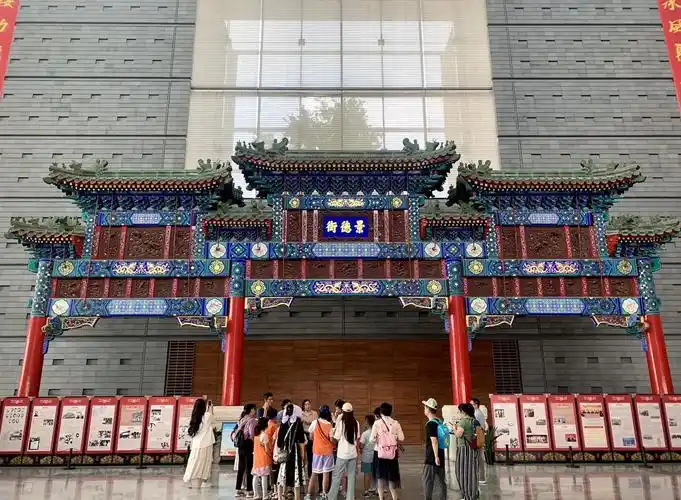
Capital Museum
Comparable in scope and ambition to the British Museum's coverage of London's evolution or the Louvre's narrative of Paris, the Capital Museum traces Beijing's transformation from a frontier settlement on the northern edge of China's Central Plain into the imperial seat of the Yuan, Ming, and Qing dynasties, and finally the capital of modern China. With more than 125,000 artifacts in its holdings—including over 60,000 designated as nationally significant treasures—the museum presents eight centuries of dynastic rule, revolution, and reinvention through a chronological framework that Western visitors familiar with European capital-city histories will find intuitive and rewarding. The architecture itself rewards attention. Designed with a "square embracing the circle" motif that echoes traditional Chinese cosmology, the main building pairs a rectangular central hall with a circular exhibition rotunda, creating a deliberate dialogue between earthly geometry and celestial harmony. Five above-ground floors and two subterranean levels house state-of-the-art climate control and interactive multimedia stations, while expansive glass facades flood the galleries with natural light—an approach reminiscent of Norman Foster's modern museum designs in London and Berlin. Culturally, the museum's crown jewels include the Bo Ju Li, a 3,000-year-old bronze vessel from the ancient Yan kingdom whose intricate taotie motifs rival the craftsmanship found in contemporary Mycenaean and Etruscan metalwork. The "Old Beijing Memories" folk exhibition recreates the vanished world of hutong alleyways, courtyard homes, and seasonal festivals through meticulously arranged period interiors, offering visitors a poignant counterpoint to the Forbidden City's imperial grandeur just a few kilometers away. Practical planning is straightforward. The main building sits at 16 Fuxingmenwai Street in Xicheng District, easily reached via Metro Line 1 or Line 9 to the Military Museum station. Admission is free, though domestic visitors must reserve through the museum's WeChat official account; foreign visitors may simply present their passport at the north gate without prior booking. The museum closes on Tuesdays except during summer holiday extensions, so check official announcements before traveling. For the best experience, begin on floors two through four to absorb the chronological spine of Beijing's history, then dive into specialized galleries of Buddhist sculpture, jade, or porcelain before concluding on the fifth-floor folk exhibition, where the everyday textures of old Beijing come vividly to life. English-speaking visitors should switch the museum's WeChat mini-program to English mode for exhibition guides, floor maps, and 3D object models, and take advantage of the complimentary English audio tour that accompanies the permanent collections.

Traveler reviews

The Capital Museum is really worth a visit. The general history exhibition gives a detailed overview of Beijing's development, and the Liulihe site relics exhibition and the Western Xia cultural ...
⭐ 4 · River Adams Expand
Capital Museum is definitely worth a visit. The general history exhibition gives a detailed overview of Beijing's development through the ages, and the Liulihe Site artifacts exhibition and the Western Xia cultura...
⭐ 4 · Hayden Cruz Expand