Zhihua Temple

⭐ 4.20

Zhihua Temple, Dongcheng District, Beijing, China
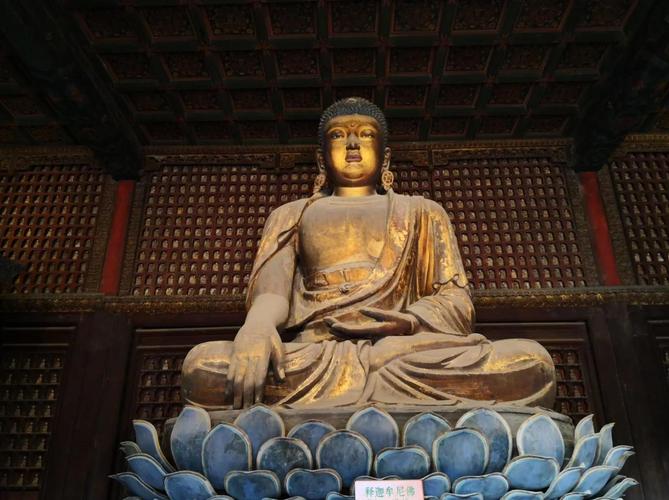
Zhihua Temple
Zhihua Temple was established in 1444 during the reign of the Zhengtong Emperor, contemporaneous with the late stages of the Hundred Years' War in Europe and the fall of Constantinople. It was commissioned by Wang Zhen, a powerful court eunuch whose influence rivaled that of Cardinal Richelieu two centuries later. Listed among China's first batch of national cultural relics in 1961, the temple survived the turmoil of subsequent dynasties largely intact, offering a rare window into mid-15th-century Chinese ecclesiastical architecture at a time when most of Beijing's old wooden buildings have vanished. The complex follows the traditional Buddhist "Seven-Hall" layout, aligned north-south in classic Chinese fashion, crowned with black-glazed tiles that signal imperial-grade status, a privilege reserved for the highest religious establishments. From the mountain gate through the Hall of Wisdom, every timber frame, bracket set, and painted beam is original Ming craftsmanship, much as a visitor to a Chartres or a Westminster Abbey marvels at vaulted ceilings and carved stone, here one admires the soaring dougong bracket systems and gentle upward curve of the eaves that define Chinese wooden architecture. The temple stands as a living fossil of early Ming building techniques. Inside the Scripture Hall sits Beijing's only surviving original wooden revolving sutra cabinet, an octagonal structure with 360 small drawers that rotates clockwise to symbolize the recitation of sutras, a mechanical marvel predating European bookwheel inventions by over a century. The Hall of Wisdom preserves vivid Ming-dynasty murals depicting the Bodhisattva Ksitigarbha and the Ten Kings of the Underworld, painted in pigments that still glow after five centuries. Two exquisite carved ceiling caissons, sadly looted in the 1930s, now reside in overseas collections. The temple's most evocative treasure is Jing Music, an ancient ceremonial tradition descended from Tang and Song court music, performed daily at 10:00 and 15:00 by the 27th generation of hereditary musician-monks. Using archaic instruments including guan pipes, sheng mouth organs, and cloud gongs, the ensemble produces a haunting, otherworldly sound sometimes compared to medieval European plainchant. Recognized as a national intangible cultural heritage in 2006, this 580-year unbroken musical lineage is among the oldest continuously performed repertoires in the world. Located at 5 Lumicang Hutong in Dongcheng District, the temple is open Tuesday through Sunday from 9:00 to 17:00, with last entry at 16:30, and closed Mondays. Admission is just 20 yuan, with free entry for the first 200 visitors every Wednesday. Advance booking via the WeChat account "Zhihua Temple" is recommended. From Chaoyangmen Station, take Exit G of Metro Lines 2 or 6 and walk roughly 800 meters through the atmospheric hutong lanes. Allow 1.5 to 2 hours and follow a counterclockwise route from the mountain gate through the Hall of Wisdom, ideally timed to catch a music performance, then onward to the Scripture Hall with its revolving cabinet, finishing at the Ten-Thousand Buddha Pavilion. Photography is welcomed but flash is forbidden, and visitors should never touch the rotating cabinet except to turn it clockwise. In spring, pear blossoms frame the gray brick walls and black-tiled roofs in delicate white, making it a favorite secret spot for photographers seeking Old Beijing atmosphere far from the capital's crowded landmarks.

Traveler reviews

Zhihua Temple — "Great sound is hard to hear, great form has no shape" Absolutely worth a visit. I followed along with the volunteer guide, who walked us through the entire history and architecture of Zhihua Temple — full 3 hours of non-stop explanation! Then we listened to the ethere...
⭐ 5 · Skyler Moon Expand
Zhihua Temple, located at No. 5 Lumicang Hutong in Dongcheng District, Beijing, was built following the traditional Buddhist monastic layout of the "Seven Halls of a Sangha Monastery" and stands as the largest surviving Ming Dynasty timber-frame architectural complex in Beijing. Construction began in the 8th year of the Zhengtong reign (1443), when it originally served as the family temple of Wang Zhen, a powerful eunuch who controlled the Directorate of Ceremonial. During the reign of Emperor Yingzong, Wang Zhen — despite being a eunuch — amassed enormous wealth and wielded significant political power as the emperor's favorite. The temple he commissioned was extraordinarily lavish in scale and materials, befitting his status. Because he was a favored court official and framed the project as a way to repay imperial kindness, Emperor Yingzong bestowed upon it the name "Bao'en Zhihua Chan Temple" — "Temple of Grace and Wisdom Repaying Imperial...
⭐ 5 · Taylor Reid Expand