Fayuan Temple
⭐ 3.20
Fayuan Temple Scenic Area, Dingtao District, Heze City, Shandong Province, China
Traveler reviews
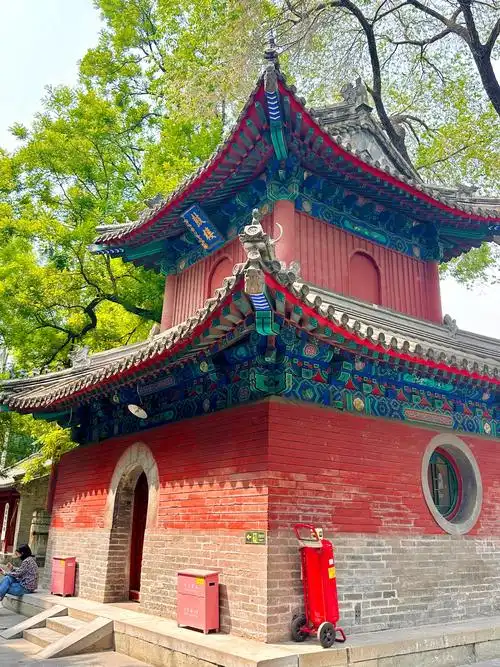
Fayuan Temple was first built in the 19th year of Emperor Taizong's Zhenguan reign during the Tang Dynasty, completed in the first year of Wansui Tongtian under Empress Wu Zetian, and originally named Minzhong Temple. After being damaged by an earthquake during the Liao Dynasty, it was rebuilt and later renamed Chongfu Temple during the Zhengtong era of the Ming Dynasty. In the 11th year of Emperor Yongzheng's reign during the Qing Dynasty, it was granted the imperial name Fayuan Temple and expanded into a Vinaya (Lü) school Buddhist monastery. The temple faces south with a symmetrical central-axis layout. Along the main axis you'll find the Mountain Gate (Shanmen), Hall of Heavenly Kings (Tianwang Dian), and the Great Hall of the Buddha (Daxiong Baodian) — all Qing Dynasty structures. The eastern and western flanks house monks' quarters and auxiliary buildings. The existing buildings date from Qing Dynasty restorations, and in the 45th year of Emperor Qianlong's reign, the imperial plaque "F...
⭐ 5 · Alex Morgan
Expand
Fayuan Temple was first built in the 19th year of the Zhenguan period of the Tang Dynasty and completed in the Wansui Tongtian year of Empress Wu Zetian's reign, originally named Minzhong Temple. After being damaged by an earthquake during the Liao Dynasty, it was rebuilt and renamed Chongfu Temple during the Zhengtong period of the Ming Dynasty. In the 11th year of the Yongzheng reign of the Qing Dynasty, it was bestowed the name Fayuan Temple by imperial decree and expanded into a Vinaya (monastic discipline) school monastery. The temple faces south with a central axis symmetric layout. The central axis features a series of Qing Dynasty buildings including the Mountain Gate, Hall of Heavenly Kings, and the Great Hall of the Great Sage. The east and west wings contain monks' quarters and auxiliary structures. The existing architecture represents Qing Dynasty reconstruction. In the 45th year of the Qianlong reign, the emperor bestowed the plaque reading "Fahai Zhenyuan" (True Source of the Dharma Sea). In 1956, the Chinese Buddhist Academy was established here, and in 1980, the Chinese Buddhist Library and Cultural Relics Museum was founded. Today it serves as a center for Buddhist education and research. It was designated a Beijing Municipal Cultural Relic Protection Unit in 1979, selected as a key Buddhist temple in Han Chinese regions in 1983, and became the fi...
⭐ 5 · Taylor Reid
Expand