Lugou Bridge

⭐ 4.20

Lugou Bridge Scenic Area, Lugou Bridge Subdistrict, Fengtai District, Beijing, China
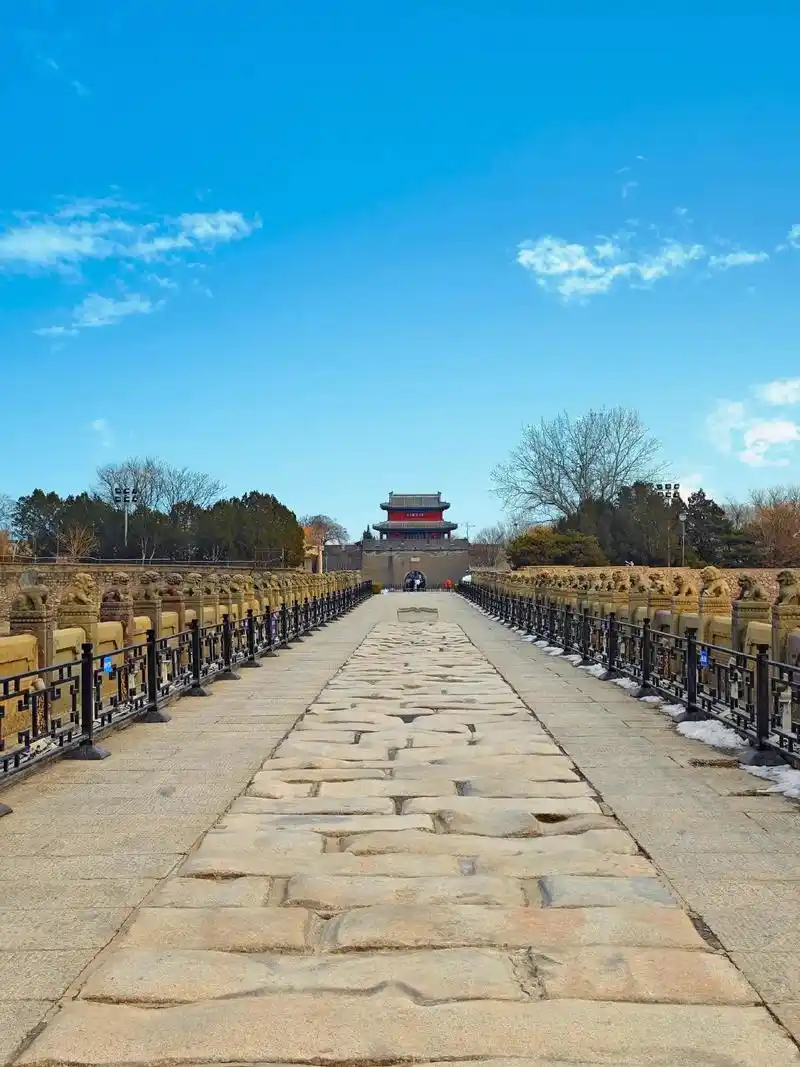
Lugou Bridge
The bridge was constructed between 1189 and 1192 during the Jin Dynasty—a period contemporary to the late Crusades and the reign of Richard the Lionheart in England. Originally named Guangli Bridge, it later took its present name from the Lugou River, now the Yongding. Few travelers realize that Marco Polo, who crossed it in the late 13th century, recorded it as "a stone bridge so beautiful that it is perhaps without equal in the world." That single sentence introduced the structure to medieval Europe and explains its enduring Western name. At 266.5 meters with 11 half-moon arches of varying spans, Lugou Bridge is the largest surviving multi-arch stone bridge in northern China. Its white-marble balustrades are populated by 501 stone lions—each one distinct, ranging from fierce guardians to playful cubs tucked beneath larger paws. Local lore holds that "the lions of Lugou Bridge cannot be counted," a saying that has puzzled visitors for eight centuries. Compared to Europe's celebrated medieval spans like Prague's Charles Bridge or Rome's Ponte Sant'Angelo, Lugou Bridge is both broader and more sculptural, an open-air museum of Chinese stone carving from the Jin through the Qing dynasties. For centuries, the bridge has been celebrated in poetry and painting. "Lugou Xiaoyue" (Dawn Moon over Lugou) has ranked among the Eight Scenic Views of Yanjing, old Beijing, since the Yuan Dynasty, drawing literati who came to watch the autumn moon sink behind the western hills. The Qianlong Emperor himself left a stone stele at the bridgehead in the 18th century, an imperial seal of approval still visible today. Standing here at dawn, with the moon setting over the Yongding, one understands why scholars ranked this view among the empire's most beloved scenic compositions. On the night of July 7, 1937, a minor military skirmish between Japanese and Chinese forces near the bridge escalated into full-scale war. The Marco Polo Bridge Incident marked the beginning of China's eight-year War of Resistance, the first major conflict of World War II in Asia, preceding Pearl Harbor by more than four years. The adjacent town of Wanping, a fully preserved Ming-era garrison fortress, still bears shell marks on its walls from Japanese artillery—a haunting silence preserved in stone. The on-site Museum of the War of Chinese People's Resistance Against Japanese Aggression systematically documents the fourteen-year struggle against occupation. Entry to the bridge scenic area costs around 20 RMB, with free admission for seniors, students, and children with valid ID. Hours run 7:30–19:00 from April through October and 8:00–17:30 from November through March. Take Metro Line 16 to Wanping City Station, a short walk from the bridge. The resistance museum sits inside Wanping City, requires advance reservation, and is free with ID; it opens 9:00–16:30 and is closed Mondays except public holidays. Allow two to three hours and follow a thoughtful route: cross the bridge while counting lions, climb the Wanping walls to see the shell scars, then descend into the museum. Autumn (September–October) offers the finest light, especially at dawn or dusk when the white marble glows golden. Visitors are asked to maintain a respectful demeanor given the site's solemn significance—Lugou Bridge is at once an artistic masterpiece and a place of national memory, a rare combination found at few historic sites worldwide.

Traveler reviews

Lugou Bridge sits just outside the west gate of Wanping City in Fengtai District, Beijing. It's been given an extra layer of historical weight because of the painful memory it carries from the Chinese resistance against Japanese invasion. The bridge was first built in 1189 during the Jin Dynasty and completed in 1192, with repairs carried out through the Ming and Qing dynasties as well. Standing on the bridge, the stone lions lining both sides of the railings have weathered nearly a thousand years of wind and rain yet remain...
⭐ 5 · Skyler Moon Expand
Marco Polo Bridge Lugou Bridge holds immense historical significance as the starting point of the full-scale War of Resistance against Japan following the "July 7th Incident" on July 7, 1937. At the eastern end of the bridge stands the "Lugou Xiaoyue" (Lugou at Dawn) stele in...
⭐ 5 · Reese Dalton Expand