Baoen Temple Pagoda
⭐ 3.20
Shou County, Huainan City, Anhui Province, China
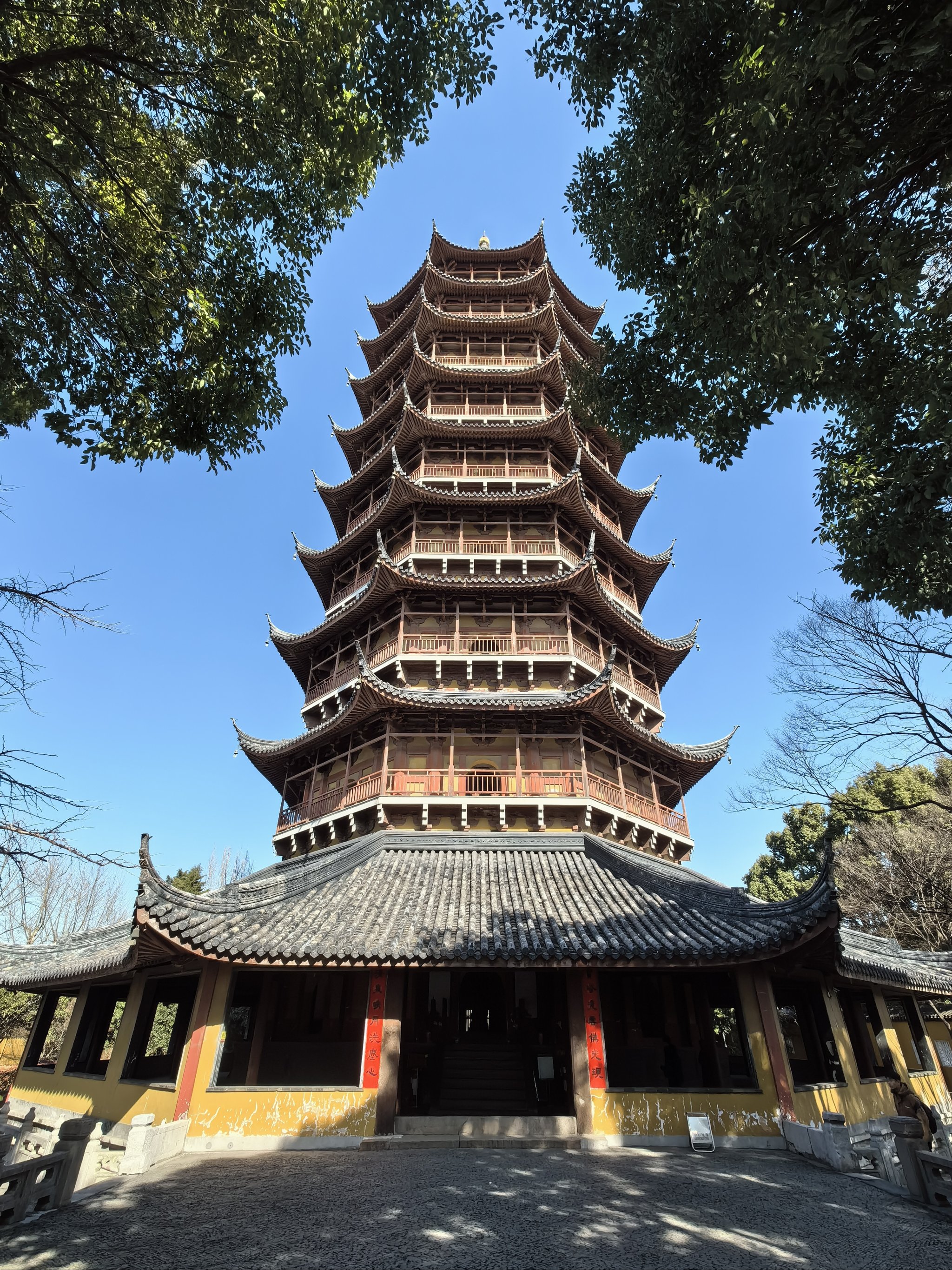 Founded during the Tang Dynasty's golden Zhenguan era (627–649 AD), Baoensi has witnessed more than thirteen centuries of Chinese history. To place it in world context: while this monastery was being established, Tang envoys were traveling westward along the Silk Road, the Prophet Muhammad was preaching in Arabia, and Anglo-Saxon kingdoms were consolidating across post-Roman Britain. Originally a modest Buddhist shrine, the temple grew to prominence during the Northern Song dynasty (960–1127)—the same era that produced Europe's great Romanesque cathedrals and witnessed William the Conqueror's 1066 invasion of England.
The temple's lost centerpiece was a magnificent nine-story brick pagoda built in the Northern Song period to house sacred Buddhist relics—a tradition comparable to Europe's medieval reliquary shrines at Cologne Cathedral or Santiago de Compostela. Disaster struck during the Qing dynasty when an earthquake toppled six of the nine tiers; the remaining three were dismantled in 1977 for safety reasons. The site's greatest archaeological treasure lies hidden beneath the former pagoda base: an underground vault discovered during foundation clearing yielded painted murals, gilded silver and gold funerary caskets, and Buddhist relics dating to the Northern Song—all now classified as top-grade national treasures.
Flanking the courtyard stand two venerable ginkgo trees exceeding 1,300 years in age—older than most of Western Europe's great medieval cathedrals and contemporary with the temple's founding. Designated nationally protected trees, these "living fossils" (the ginkgo species dates back roughly 200 million years) provide the site's most photogenic spectacle: a canopy of lush green in summer transforming into a river of gold each autumn. Their gnarled branches create the quintessential backdrop for atmospheric photography and quiet contemplation.
Beyond its Buddhist heritage, Baoensi carries a striking layer of modern Chinese history. A row of modest halls beside the temple served as the headquarters of the General Front Committee during the Huaihai Campaign of 1948–49—one of three decisive Communist victories that shaped modern China, comparable in strategic weight to the D-Day landings or Stalingrad. Today, monks still chant sutras within the temple's reconstructed halls, making Baoensi a rare example of an authentic, functioning monastery rather than a purely museum-like site.
The temple is located near the intersection of Beiliangjia Lane and Dasi Lane in the northeast corner of Shouxian Ancient Town. Entry is free, with opening hours typically 07:00 to 16:30 (last entry around 16:00). As a place of worship, visitors should dress modestly, speak softly inside halls, and refrain from using flash photography near Buddha statues. English signage is minimal, so a translation app is recommended. The site is compact and can be thoroughly explored in about one hour.
Baoensi works best as the afternoon culmination of a Shouxian Ancient Town day itinerary: begin with a morning walk along the remarkably intact Ming-era city walls (among the best preserved in China) and the adjacent Confucius Temple, then sample local specialties like Shouxian beef soup and the famous "Great Rescue" pastry for lunch. End the day at Baoensi to experience the ginkgo trees at their most evocative. Travelers interested in the underground vault's treasures should also visit the nearby Shouxian Museum, which displays related artifacts from the discovery.
Founded during the Tang Dynasty's golden Zhenguan era (627–649 AD), Baoensi has witnessed more than thirteen centuries of Chinese history. To place it in world context: while this monastery was being established, Tang envoys were traveling westward along the Silk Road, the Prophet Muhammad was preaching in Arabia, and Anglo-Saxon kingdoms were consolidating across post-Roman Britain. Originally a modest Buddhist shrine, the temple grew to prominence during the Northern Song dynasty (960–1127)—the same era that produced Europe's great Romanesque cathedrals and witnessed William the Conqueror's 1066 invasion of England.
The temple's lost centerpiece was a magnificent nine-story brick pagoda built in the Northern Song period to house sacred Buddhist relics—a tradition comparable to Europe's medieval reliquary shrines at Cologne Cathedral or Santiago de Compostela. Disaster struck during the Qing dynasty when an earthquake toppled six of the nine tiers; the remaining three were dismantled in 1977 for safety reasons. The site's greatest archaeological treasure lies hidden beneath the former pagoda base: an underground vault discovered during foundation clearing yielded painted murals, gilded silver and gold funerary caskets, and Buddhist relics dating to the Northern Song—all now classified as top-grade national treasures.
Flanking the courtyard stand two venerable ginkgo trees exceeding 1,300 years in age—older than most of Western Europe's great medieval cathedrals and contemporary with the temple's founding. Designated nationally protected trees, these "living fossils" (the ginkgo species dates back roughly 200 million years) provide the site's most photogenic spectacle: a canopy of lush green in summer transforming into a river of gold each autumn. Their gnarled branches create the quintessential backdrop for atmospheric photography and quiet contemplation.
Beyond its Buddhist heritage, Baoensi carries a striking layer of modern Chinese history. A row of modest halls beside the temple served as the headquarters of the General Front Committee during the Huaihai Campaign of 1948–49—one of three decisive Communist victories that shaped modern China, comparable in strategic weight to the D-Day landings or Stalingrad. Today, monks still chant sutras within the temple's reconstructed halls, making Baoensi a rare example of an authentic, functioning monastery rather than a purely museum-like site.
The temple is located near the intersection of Beiliangjia Lane and Dasi Lane in the northeast corner of Shouxian Ancient Town. Entry is free, with opening hours typically 07:00 to 16:30 (last entry around 16:00). As a place of worship, visitors should dress modestly, speak softly inside halls, and refrain from using flash photography near Buddha statues. English signage is minimal, so a translation app is recommended. The site is compact and can be thoroughly explored in about one hour.
Baoensi works best as the afternoon culmination of a Shouxian Ancient Town day itinerary: begin with a morning walk along the remarkably intact Ming-era city walls (among the best preserved in China) and the adjacent Confucius Temple, then sample local specialties like Shouxian beef soup and the famous "Great Rescue" pastry for lunch. End the day at Baoensi to experience the ginkgo trees at their most evocative. Travelers interested in the underground vault's treasures should also visit the nearby Shouxian Museum, which displays related artifacts from the discovery.