Bird's Nest

⭐ 4.30

National Stadium, Chaoyang District, Beijing, China
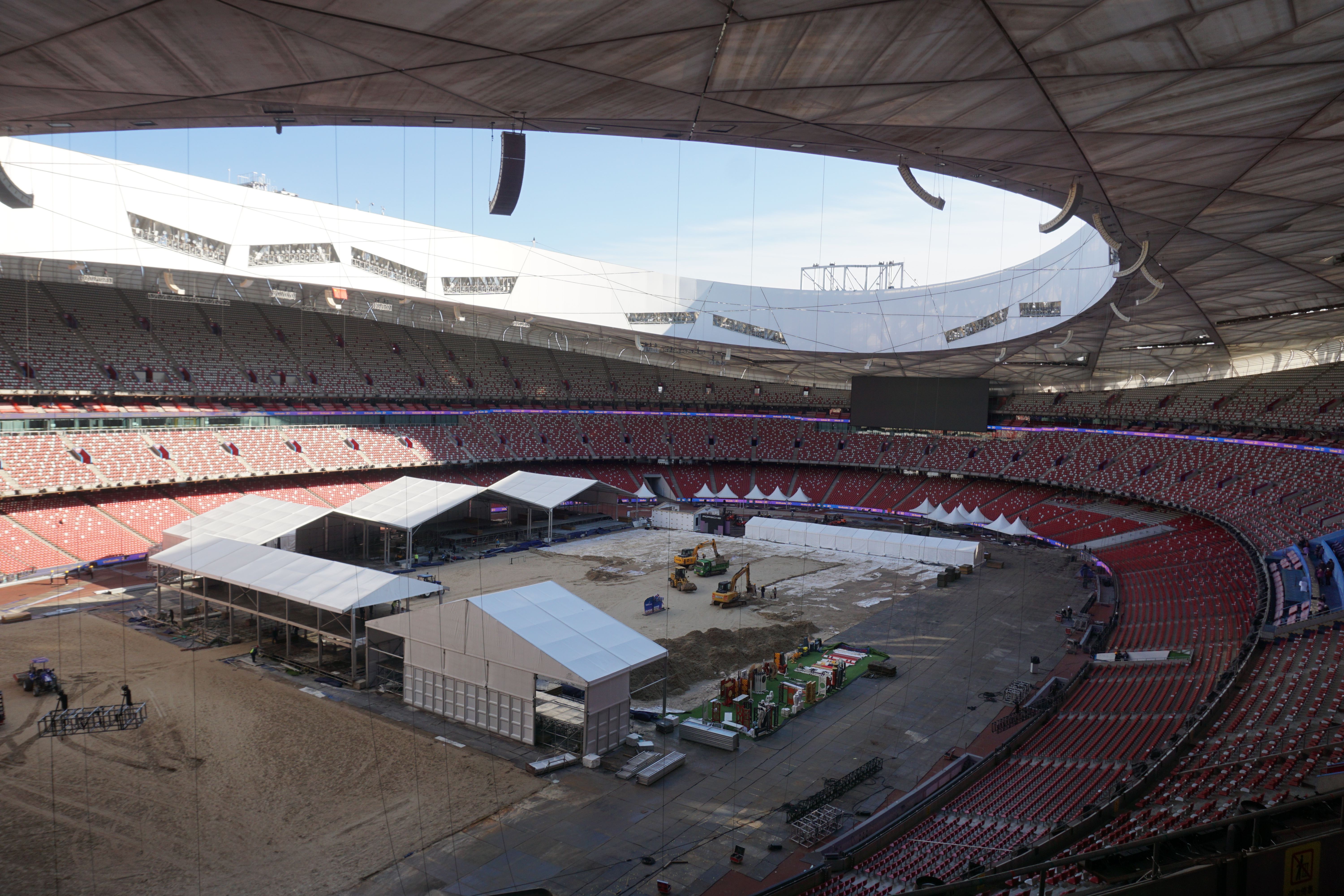
Bird's Nest
Twice host to Olympic history, the National Stadium—universally known as the Bird's Nest—is the world's only venue to stage both Summer and Winter Games ceremonies. When it opened for the 2008 Beijing Olympics, the stadium redefined what sporting architecture could be, eclipsing even Rome's Colosseum in capacity at roughly 91,000 seats. Fourteen years later, it returned to the global stage for the 2022 Winter Olympics opening and closing ceremonies, earning the unique title of "Dual-Olympic Landmark." In 2014, it was named one of China's Ten Greatest Contemporary Buildings, a standing befitting its place along Beijing's ancient Central Axis. Swiss firm Herzog & de Meuron, joined by the China Architecture Design & Research Group, conceived the stadium as a colossal woven basket. Its shell consists of 42,000 tonnes of interlaced steel beams—the largest structure of its kind—forming a porous lattice that filters daylight and shelters spectators. Measuring 333 metres long, 296 metres wide, and rising 69 metres high, the bowl-shaped interior is entirely column-free, offering unobstructed sightlines that rival the engineering daring of Paris's Eiffel Tower. By night, programmable LED lighting transforms the structure into a glowing lantern across the capital's skyline. Inside the stadium, the Dual-Olympic Exhibition displays torch cauldrons, ceremonial props, and memorabilia from both Games, allowing visitors to relive Usain Bolt's record sprints and the ethereal lighting of the 2022 ceremonies. Together with the neighbouring Water Cube (now Ice Cube), Olympic Tower, and the Olympic Museum, the Bird's Nest anchors the northern extension of the city's Central Axis—added to the UNESCO World Heritage List in 2024 as the longest ancient urban axis still in continuous use. It is both monument and meeting point for global sport and Chinese heritage. Standard admission runs about 50 RMB; the Sky Walk ticket is 80–100 RMB, with half-price discounts for students and seniors. Book via the Chaopiao mini-program or at the gate. Opening hours run 09:00–19:00 from April to October, with some evenings extended to 21:30; check ahead for event closures. The most convenient approach is Metro Line 8 to Olympic Park Station, Exits D or H, followed by an eight-minute walk. Foreign cards including Visa and Mastercard are accepted at ticket gates and shops. Plan to enter after 16:00 to enjoy three atmospheres in one visit: afternoon light on the steelwork, golden-hour photography from the Sky Walk, and the evening illumination show. Allow 90 minutes for the stadium alone, or two to three hours if you add the Sky Walk and neighbouring Olympic Park attractions. Wear non-slip shoes for the elevated walkway, and bring a light jacket in summer—the exposed top deck can be breezy. Even non-ticket holders can capture postcard-perfect reflections from the sunken gardens and artificial lake.

Traveler reviews

I went when a singer was preparing for a concert that evening — they were cleaning and doing soundcheck during the day. The Bird's Nest is seriously massive, you can really picture how glorious it must have been back in 2008. The overall architectural design is very artistic, and you can see the Water Cube and other buildings across the way. If you climb to the very top you ca...
⭐ 5 · Quinn Lee Expand
"Visit to the Bird's Nest: Imprints of Time Beneath the Olympic Halo" The moment I stepped into the Bird's Nest, the blazing atmosphere of the 2008 Beijing Olympics still seemed to linger in the air. As the soul stage for that year's opening ceremony and events, this colossal steel cage still stuns every visitor with its interlacing lines. Yet approaching the inner field, I couldn't help but feel a touch of sentiment—the track surface shows signs of wear from the years, the edges slightly grayed, as if it's been a long time since athletes sprinted, gasped, and cheered here. The venue is kept clean, but it lacks that coiled-up, ready-to-burst energy—it feels more like a time capsule, well-preserved but slightly too quiet. Buying a ticket and entering, the biggest meaning might lie in "imagining the space." Standing at the center of the stands and closing my eyes, I could almost hear the roar of 90,000 people gathered, the flame tracing a spiral path across the night sky, those world-stunning moments crystallizing into history right here. Now with sparse visitors, this nostalgia actually comes through more clearly. Walking around the venue and looking up at the sky through the lattice, the steel skeleton forms a cold, regular kind of beauty in the light and shadow—but if you're just rushing through to snap ph...
⭐ 4 · Drew Carter Expand