Lama Temple

⭐ 4.70

No. 1, Yonghegong Street, Dongcheng District, Beijing, China
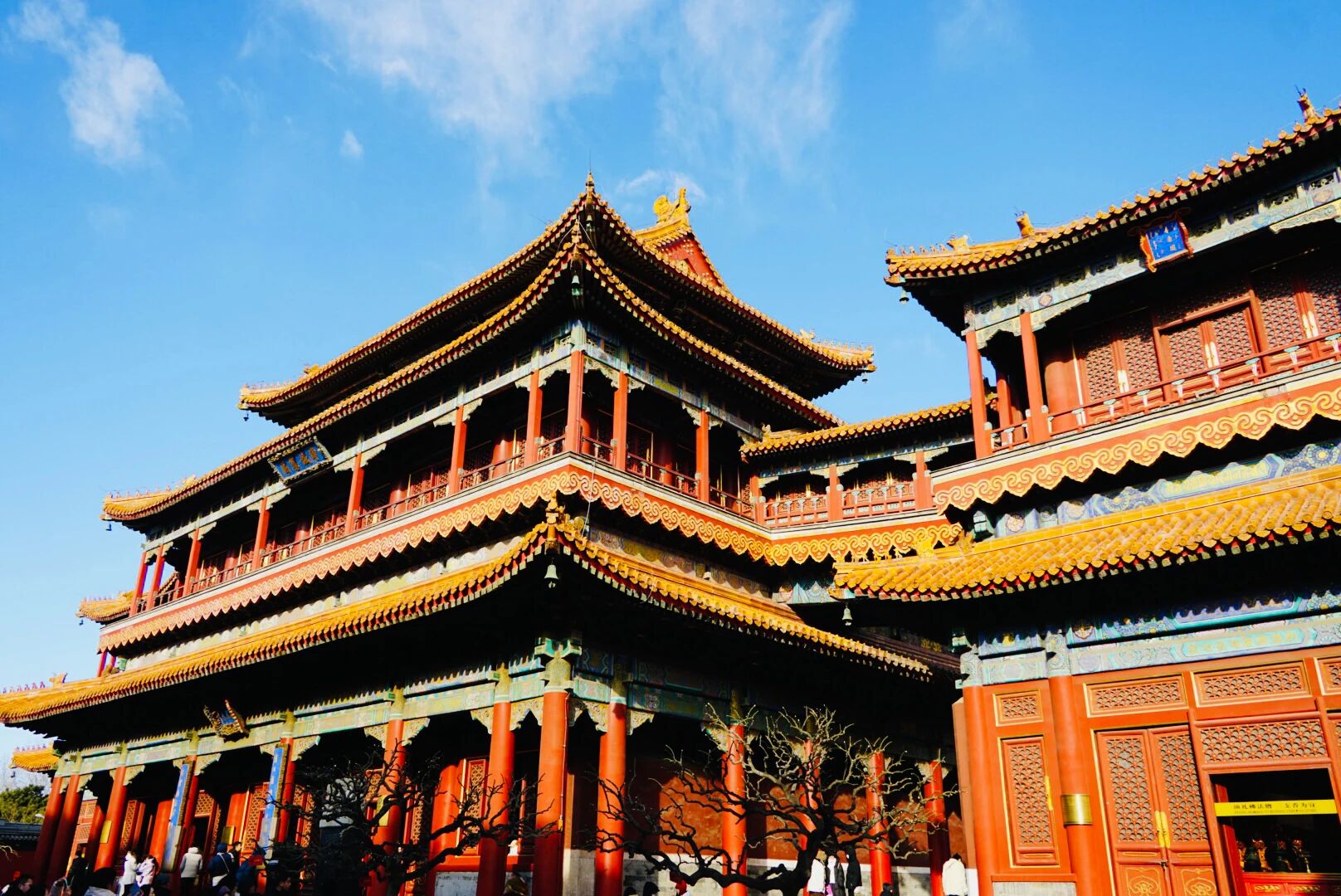
Lama Temple
Yonghe Temple occupies a singular place in history as the only former imperial residence later converted into a functioning monastery. Built in 1694 as the mansion of the Qianlong Emperor's father, Prince Yong, it became a favored residence of Emperor Yongzheng and, after his death, served as a temporary resting place for his coffin—a privilege that earned the complex its distinctive imperial yellow glazed roof tiles, the same hue crowning the Forbidden City. Comparable in prestige to Rome's Lateran Palace, which likewise married ecclesiastical and imperial power, Yonghe Temple went on to serve as the Qing dynasty's central administrative hub for Tibetan and Mongolian Buddhist affairs, managing the reincarnation of senior lamas and shaping religious policy across Inner Asia. The temple's architecture adheres rigorously to the axial symmetry characteristic of imperial Chinese planning, with five successive halls—Zhaotai Gate, Yonghe Gate, Yonghe Palace, Yongyou Hall, Falun Hall, and Wanfu Pavilion—aligned along a central north-south axis. Each roof form, bracket set, and painted motif follows the highest standards of Qing official construction, while subtle Tibetan flourishes—stupas, prayer wheels, and tantric iconography—signal its Buddhist identity. Scholars of architecture often compare its hybrid aesthetic to the layered Byzantine and Ottoman influences found in Istanbul's Hagia Sophia complex. The three treasures of Yonghe Temple rank among the finest achievements of Qing decorative art. Most spectacular is the 26-meter Maitreya Buddha in Wanfu Pavilion, carved from an entire white sandalwood trunk—18 meters rising above ground and 8 meters descending into the earth—an undertaking without parallel in the Buddhist world. Falun Hall houses the purple sandalwood Mountain of Five Hundred Arhat figures, while the Zhaofo Tower contains an exquisitely pierced golden nanmu wood Buddhist shrine. Together these three masterpieces are known as the "Three Wonders of Yonghe Temple," complemented by luminous murals, thangkas, and gilded reliquaries throughout the complex. Practical visiting information is straightforward. Admission costs just 25 yuan (12.5 yuan for concessions), though visitors must reserve in advance through the official WeChat account "Yonghegong Visitor and Pilgrim Services." Hours run from 9:00 to 17:00 in summer and 9:00 to 16:30 in winter. The temple sits steps from Exit C of Yonghegong Station on Metro Lines 2 and 5, making it one of Beijing's most accessible landmarks. Allow 1.5 to 2 hours for a self-guided visit, or up to 2.5 hours with a guide. An audio or human guide is strongly recommended, as the visual splendor can otherwise overwhelm visitors unfamiliar with Buddhist symbolism and Qing imperial lore. Free incense sticks are distributed at the entrance, though worshippers should respect Buddhist etiquette: avoid stepping on door thresholds, refrain from photographing main altar statues, and dress modestly. The temple pairs naturally with the adjacent Confucian Temple and Imperial Academy to the east and the leafy hutong cafés of Wudaoying Street to the north, forming an ideal half-day cultural itinerary in old Beijing. Few sites worldwide allow travelers to move so seamlessly from imperial China to the living traditions of Tibetan Buddhism within a single afternoon. Yonghe Temple offers exactly that—a chance to stand before a colossus of sandalwood, trace the hand of Qianlong-era craftsmen, and feel the ongoing pulse of religious practice in a city that has served as China's spiritual and political crossroads for more than seven centuries.

Traveler reviews

Mr. Yu's guided tour was absolutely fantastic, way beyond what I expected. He covered everything from history to religion—mixing serious official accounts with fun folklore and anecdotes. It really brought the Yonghe Temple's past and present to life, showing just how grand ...
⭐ 5 · Quinn Lee Expand
Visited Lama Temple (Yonghe Temple) in Beijing today, and our guide Han from Xiucai Speaking was with us the whole way. Han was warm and welcoming, with thoughtful, attentive service — really took care of every person in the group. He knows his stuff inside out, and brought the complex history of Tibetan Buddhism, the fascinating backstory of how this prince's residence was converted into a monastery, and the architecture to life in a way that was easy to follow without ever sounding like he was reading from a script. What would have been a rushed, surface-level visit tu...
⭐ 5 · Sage Williams Expand