Temple of Heaven Park

⭐ 5.00

No. 7, Tiantan Nei Dongli, Dongcheng District, Beijing, China
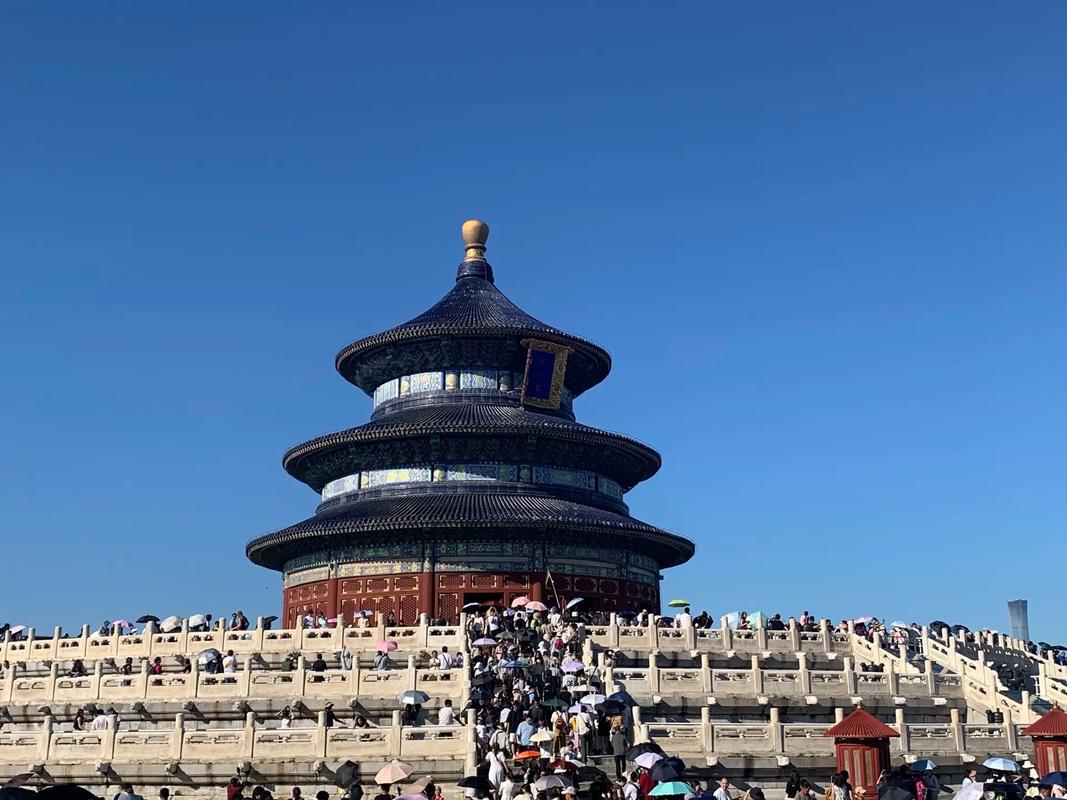
Temple of Heaven Park
**A Sacred Stage for Emperors and Heaven** When the Temple of Heaven was completed in 1420, Henry V was still on the English throne and the Medici were just beginning their rise in Florence. For nearly five centuries afterward, China's emperors ascended this sacred axis twice yearly—at the winter solstice to offer thanks to Heaven, and in early spring to pray for abundant harvests. The complex represents the philosophical heart of imperial China: the belief that the Son of Heaven ruled by cosmic mandate. Its placement forms the southern anchor of Beijing's central axis, a planning concept even grander than Versailles, predating most European urban design by centuries. **Architecture That Embodies the Cosmos** The Hall of Prayer for Good Harvests rises as a masterpiece of wooden construction—a triple-tiered circular pavilion crowned in deep cobalt-blue tiles symbolizing the sky. Its 28 interior columns correspond precisely to the months, seasons, and lunar mansions of ancient astronomy, while the surrounding Circular Mound Altar uses multiples of nine (the supreme yang number) in every stone and step. The deep blue dome and rhythmic geometry echo ancient temples like Rome's Pantheon, yet the entire complex predates St. Peter's Basilica's completion by decades. **Acoustic Marvels Ahead of Their Time** Within the Imperial Vault of Heaven sits the famous Echo Wall—a circular brick enclosure where whispers travel with startling clarity along its curved surface, much like the whispering gallery of London's St. Paul's Cathedral. Stepping on the "Triple Sound Stone" in the courtyard produces multiple distinct echoes, a phenomenon engineered some four centuries before modern acoustics explained the science. On quiet mornings, visitors can test these wonders themselves in near-perfect stillness. **Practical Tips for the Independent Traveler** Purchase the combined ticket (34 yuan in peak season, roughly $5) to access all three core buildings; the basic 15-yuan entry excludes them. Core structures close on Mondays for maintenance, and advance booking through the official "天坛" WeChat account is essential. Gates open from 6:00 to 22:00, with main buildings accessible from 8:00 to 17:30 (extended to 18:00 in summer). Foreign visitors can use passport-friendly entry lanes and rent audio guides in 17 languages, including English, French, and German. **The Recommended Route and What to Watch For** Enter through the East Gate and exit via the South Gate for a single, linear journey along the sacred axis: the 72-Corridor Gallery, the Hall of Prayer for Good Harvests, the raised Sacred Way, the Echo Wall, and finally the Circular Mound Altar—about 2.5 to 3 hours total. Take Metro Line 5 to Tiantan Dongmen Station, Exit A, as parking is notoriously difficult. Arrive between 8–9 a.m. or after 4 p.m. for softer light, smaller crowds, and stunning photographs. **Beyond the Main Sights** Don't miss the ancient Nine-Dragon Cypress, a gnarled 600-year-old tree beloved by photographers, or the tranquil Fasting Palace to the west where emperors prepared in solitary meditation before ceremonies. Bring water and snacks in summer, as on-site food is overpriced, and politely decline informal guides at the entrance. The Temple of Heaven rewards those who slow down—it remains one of humanity's most eloquent expressions of the dialogue between earth, sky, and human ambition.

Traveler reviews

As a sacred site where emperors of the Ming and Qing dynasties offered sacrifices to heaven and prayed for good harvests, Beijing's Temple of Heaven reaches the pinnacle of architectural, aesthetic, and cultural achievement. If I had to evaluate it across several dimensions: ### 1. Architectural Aesthetics: Minimalist yet Monumental The Temple of Heaven breaks from the traditional palace convention of "more is more," instead masterfully employing **expansive negative space and striking contrasts**. * **The Ultimate Fusion of Circle and Square**: The circular pointed roofs of the Hall of Prayer for Good Harvests and the Imperial Vault of Heaven harmonize perfectly with the square walls and broad bases, giving tangible form to the ancient Chinese cosmology of "round heaven, square earth." * **A Symphony of Color**: Unlike the Forbidden City's vast expanses of "red walls and yellow tiles," the Temple of Heaven's core structures feature a distinctive **deep blue glazed tile**, symbolizing the boundless sky. When the azure rooftops mingle with the emerald ancient c...
⭐ 4 · Jamie Cole Expand
The Temple of Heaven is the sacred site where Ming and Qing emperors offered sacrifices to heaven and prayed for good harvests — honestly, it's the pinnacle of classical Chinese architectural aesthetics. The whole park is filled with towering ancient trees, with lush pines and cypresses surrounding you, and the blue-tiled roofs paired with red walls create such an atmospheric vibe. The Hall of Prayer for Good Harvests is absolutely magnificent and beautifully crafted, while the Circular Mound Altar has a perfectly symmetrical l...
⭐ 5 · Sage Williams Expand