Meihua Mountain Nature Reserve
⭐ 4.20
Meihua Mountain Nature Reserve, Shanghang County, Longyan City, Fujian Province, China
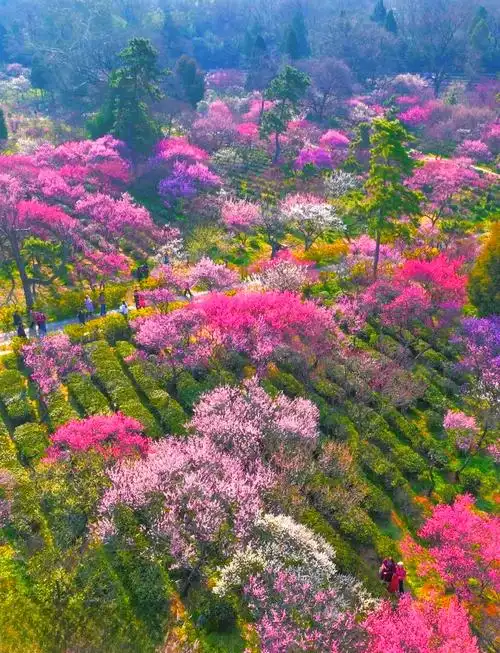 Established in 1988 and elevated to A-grade status just four years later, Meihua Mountain occupies a strategic ecological position that has long been recognized by Chinese naturalists. The reserve is sometimes called the "Mother Mountain of Fujian" because the Min, Ting, and Jiulong rivers all originate from its slopes, sustaining millions of people downstream. For European travelers, the landscape evokes the wild expanses of Scotland's Cairngorms or the forested ridges of Germany's Black Forest, though with distinctly subtropical vegetation. A short drive away, the site of the 1929 Gutian Conference adds a powerful historical dimension—Hakka Party leaders convened there to define revolutionary strategy, making this a meaningful stop for those tracing China's 20th-century history.
The reserve harbors nearly 2,000 plant species and 362 vertebrate species, including the elusive yellow-bellied tragopan, a pheasant as exotic to Western birders as the capercaillie is to Europeans. Mean elevation sits around 900 meters, with the summit of Shimen Mountain reaching 1,811 meters—comparable in scale to modest Pyrenean peaks. Visitors glide over the canopy aboard the Buyun Cable Car, then step onto the glass-bottomed Sky Platform for sweeping views of layered ridgelines that vanish into cloud. Light adventure offerings include a forest slide and gentle hiking trails through ancient woodlands, where oxygen-rich air and consistent summer coolness make the area a natural wellness retreat.
The undisputed headline attraction is the China Tiger Park, the world's largest facility dedicated to saving Panthera tigris amoyensis from extinction. Once roaming across southern China in numbers rivaling Bengal tigers in India, the subspecies dwindled to fewer than 30 wild animals by the 1990s. Today, more than 300 South China Tigers live within carefully managed enclosures here, with adults undergoing hunting training in large fenced reserves. During summer evenings, guests can join a guided "Night Tiger Watch" by prior reservation—an experience that recalls the rare privilege of tracking lynx in Scandinavian forests. A high-tech visitor center uses AR and VR to teach guests about biodiversity, insect identification, and the broader science of species recovery.
Practical access is refreshingly straightforward. The reserve sits within the Longyan region, roughly three hours by high-speed train from Xiamen or Guangzhou, though self-driving offers the most flexibility for navigating Fujian's winding mountain roads. Entry is frequently free or heavily discounted—often free in July and August—while the cable car round-trip costs around 60 to 80 yuan. Summer hours run 08:00 to 18:00, though the core and buffer zones remain strictly off-limits to protect wildlife; all tourism is confined to designated experimental zones. Bring sturdy non-slip shoes and rain gear, as mountain fog can roll in suddenly and outdoor activities pause during heavy storms.
The best window is May through October, when wildflowers bloom and temperatures remain pleasantly cool. Half a day suffices for the highlights, but a full day allows for unhurried photography and quiet forest walks. Accommodations in the surrounding villages are predominantly family-run eco-lodges serving Hakka cuisine—try the locally sourced bamboo shoots and river fish. Pairing a visit with the nearby Gutian Conference site makes for a thoughtful two-day itinerary blending ecology, conservation, and modern Chinese history in one of Fujian's most rewarding corners.
Established in 1988 and elevated to A-grade status just four years later, Meihua Mountain occupies a strategic ecological position that has long been recognized by Chinese naturalists. The reserve is sometimes called the "Mother Mountain of Fujian" because the Min, Ting, and Jiulong rivers all originate from its slopes, sustaining millions of people downstream. For European travelers, the landscape evokes the wild expanses of Scotland's Cairngorms or the forested ridges of Germany's Black Forest, though with distinctly subtropical vegetation. A short drive away, the site of the 1929 Gutian Conference adds a powerful historical dimension—Hakka Party leaders convened there to define revolutionary strategy, making this a meaningful stop for those tracing China's 20th-century history.
The reserve harbors nearly 2,000 plant species and 362 vertebrate species, including the elusive yellow-bellied tragopan, a pheasant as exotic to Western birders as the capercaillie is to Europeans. Mean elevation sits around 900 meters, with the summit of Shimen Mountain reaching 1,811 meters—comparable in scale to modest Pyrenean peaks. Visitors glide over the canopy aboard the Buyun Cable Car, then step onto the glass-bottomed Sky Platform for sweeping views of layered ridgelines that vanish into cloud. Light adventure offerings include a forest slide and gentle hiking trails through ancient woodlands, where oxygen-rich air and consistent summer coolness make the area a natural wellness retreat.
The undisputed headline attraction is the China Tiger Park, the world's largest facility dedicated to saving Panthera tigris amoyensis from extinction. Once roaming across southern China in numbers rivaling Bengal tigers in India, the subspecies dwindled to fewer than 30 wild animals by the 1990s. Today, more than 300 South China Tigers live within carefully managed enclosures here, with adults undergoing hunting training in large fenced reserves. During summer evenings, guests can join a guided "Night Tiger Watch" by prior reservation—an experience that recalls the rare privilege of tracking lynx in Scandinavian forests. A high-tech visitor center uses AR and VR to teach guests about biodiversity, insect identification, and the broader science of species recovery.
Practical access is refreshingly straightforward. The reserve sits within the Longyan region, roughly three hours by high-speed train from Xiamen or Guangzhou, though self-driving offers the most flexibility for navigating Fujian's winding mountain roads. Entry is frequently free or heavily discounted—often free in July and August—while the cable car round-trip costs around 60 to 80 yuan. Summer hours run 08:00 to 18:00, though the core and buffer zones remain strictly off-limits to protect wildlife; all tourism is confined to designated experimental zones. Bring sturdy non-slip shoes and rain gear, as mountain fog can roll in suddenly and outdoor activities pause during heavy storms.
The best window is May through October, when wildflowers bloom and temperatures remain pleasantly cool. Half a day suffices for the highlights, but a full day allows for unhurried photography and quiet forest walks. Accommodations in the surrounding villages are predominantly family-run eco-lodges serving Hakka cuisine—try the locally sourced bamboo shoots and river fish. Pairing a visit with the nearby Gutian Conference site makes for a thoughtful two-day itinerary blending ecology, conservation, and modern Chinese history in one of Fujian's most rewarding corners.