Nanhu Park
⭐ 3.60
Nanhu Park, Huangzhou District, Huanggang City, Hubei Province, China
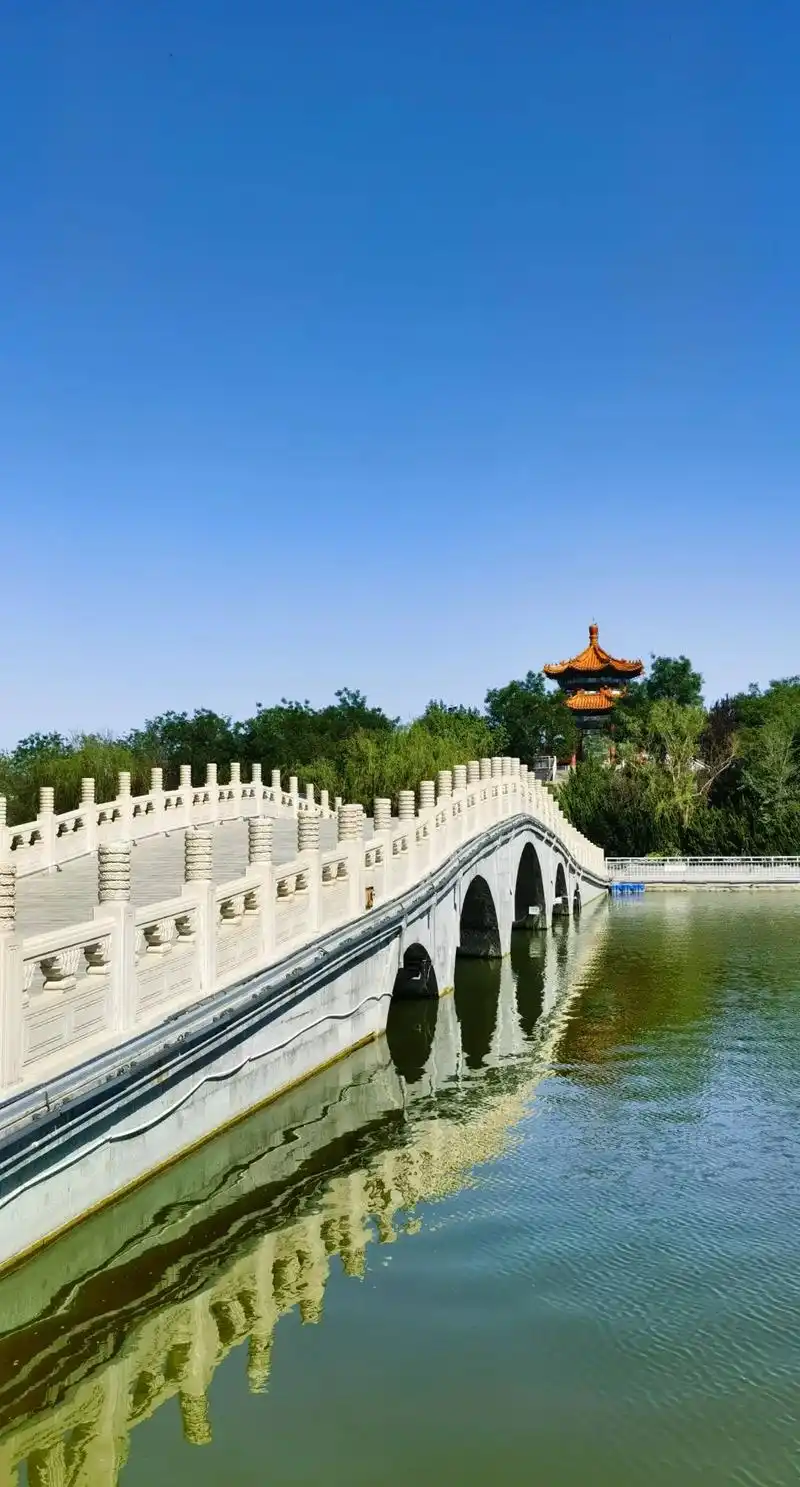 Nanhu Park's location at the junction of Macheng's old and new districts places it at the cultural crossroads of central Hubei, with the park's crescent-shaped Yuejin Lake serving as its scenic heart. Opened in 1994 and spanning roughly 90 hectares, the grounds combine landscaped hillsides, dense seasonal vegetation, and waterways that shift character dramatically throughout the year—from summer lotus blossoms to autumn flower fields. Early morning and dusk are particularly rewarding times to visit, when locals practice tai chi along the lakeshore and children play in the recreational zones.
The park's most historically resonant landmark is the Wansong Ancient Pavilion, one of Macheng's celebrated "Three Terraces and Eight Views." This site owes its fame to Su Shi (1037–1101), the Song Dynasty poet-statesman often compared to Dante or Shakespeare for his towering influence on Chinese literature, who composed the prose-poem "Wansong Pavilion with Preface" here. The pavilion crowns the park's highest hill, offering panoramic views of the lake below. Nearby, the photogenic Nine-Turn Bridge spans the water in an elegant geometric arrangement, while the surrounding structures—tiled roofs, upturned eaves, and ornate pavilions—reflect the architectural vocabulary of eastern Hubei during the Ming and Qing dynasties.
Beyond natural beauty, Nanhu Park serves as a powerful memorial to one of China's largest internal migrations. Between the late 17th and 19th centuries, when the Sichuan basin had been devastated by war and famine, hundreds of thousands of settlers departed from the Huguang region—including Macheng—and repopulated western China. This "Huguang fills Sichuan" movement is a demographic phenomenon on the scale of the post-Thirty Years' War German migrations, and the park commemorates it through dedicated cultural exhibits. A statue of Macheng natives can even be found today in Chengdu's Huguang Migrants Memorial Hall, underscoring the deep family ties that still link these regions.
Complementing the migration theme, the park highlights traditional Confucian values of filial piety and honors scholars who passed the imperial examinations—the ancient civil service system that, like Oxford and Cambridge in England, served as the pathway to elite status for over a millennium. Additional attractions include the Shemo Palace (Spirit-Demon Palace), a labyrinthine maze, and large Buddhist statuary that reflect the syncretic folk-religious landscape of rural Hubei. Together these elements offer Western visitors an unusually accessible window into the layered cultural identity of eastern Hubei, far from the better-trodden routes of the Yangtze or Yellow Rivers.
Practical information makes a visit straightforward. Park entry is free, though amusement rides such as bumper cars and slide carts require separate tickets. Opening hours run from 6:00 a.m. to 10:00 p.m. daily, with early mornings or late afternoons recommended to avoid weekend crowds. Drivers should navigate to Nanhu Park North Gate at 199 Nanhuan Road; bus routes 5 and 6 serve the "Nanhu Station" stop. Visitors arriving from Huanggang can take a high-speed train or coach to Macheng North Station, followed by a 15-minute transfer. For those wishing to extend their stay, the park pairs naturally with the nearby Xiaogan Township Cultural Park—an immigration heritage museum—and the spectacular Guifeng Mountain azalea reserve, making a satisfying single day of cultural and natural exploration.
Nanhu Park's location at the junction of Macheng's old and new districts places it at the cultural crossroads of central Hubei, with the park's crescent-shaped Yuejin Lake serving as its scenic heart. Opened in 1994 and spanning roughly 90 hectares, the grounds combine landscaped hillsides, dense seasonal vegetation, and waterways that shift character dramatically throughout the year—from summer lotus blossoms to autumn flower fields. Early morning and dusk are particularly rewarding times to visit, when locals practice tai chi along the lakeshore and children play in the recreational zones.
The park's most historically resonant landmark is the Wansong Ancient Pavilion, one of Macheng's celebrated "Three Terraces and Eight Views." This site owes its fame to Su Shi (1037–1101), the Song Dynasty poet-statesman often compared to Dante or Shakespeare for his towering influence on Chinese literature, who composed the prose-poem "Wansong Pavilion with Preface" here. The pavilion crowns the park's highest hill, offering panoramic views of the lake below. Nearby, the photogenic Nine-Turn Bridge spans the water in an elegant geometric arrangement, while the surrounding structures—tiled roofs, upturned eaves, and ornate pavilions—reflect the architectural vocabulary of eastern Hubei during the Ming and Qing dynasties.
Beyond natural beauty, Nanhu Park serves as a powerful memorial to one of China's largest internal migrations. Between the late 17th and 19th centuries, when the Sichuan basin had been devastated by war and famine, hundreds of thousands of settlers departed from the Huguang region—including Macheng—and repopulated western China. This "Huguang fills Sichuan" movement is a demographic phenomenon on the scale of the post-Thirty Years' War German migrations, and the park commemorates it through dedicated cultural exhibits. A statue of Macheng natives can even be found today in Chengdu's Huguang Migrants Memorial Hall, underscoring the deep family ties that still link these regions.
Complementing the migration theme, the park highlights traditional Confucian values of filial piety and honors scholars who passed the imperial examinations—the ancient civil service system that, like Oxford and Cambridge in England, served as the pathway to elite status for over a millennium. Additional attractions include the Shemo Palace (Spirit-Demon Palace), a labyrinthine maze, and large Buddhist statuary that reflect the syncretic folk-religious landscape of rural Hubei. Together these elements offer Western visitors an unusually accessible window into the layered cultural identity of eastern Hubei, far from the better-trodden routes of the Yangtze or Yellow Rivers.
Practical information makes a visit straightforward. Park entry is free, though amusement rides such as bumper cars and slide carts require separate tickets. Opening hours run from 6:00 a.m. to 10:00 p.m. daily, with early mornings or late afternoons recommended to avoid weekend crowds. Drivers should navigate to Nanhu Park North Gate at 199 Nanhuan Road; bus routes 5 and 6 serve the "Nanhu Station" stop. Visitors arriving from Huanggang can take a high-speed train or coach to Macheng North Station, followed by a 15-minute transfer. For those wishing to extend their stay, the park pairs naturally with the nearby Xiaogan Township Cultural Park—an immigration heritage museum—and the spectacular Guifeng Mountain azalea reserve, making a satisfying single day of cultural and natural exploration.