Huanggang Museum
⭐ 3.80
Xingang Road, Economic Development Zone, Huanggang City, Hubei Province, China
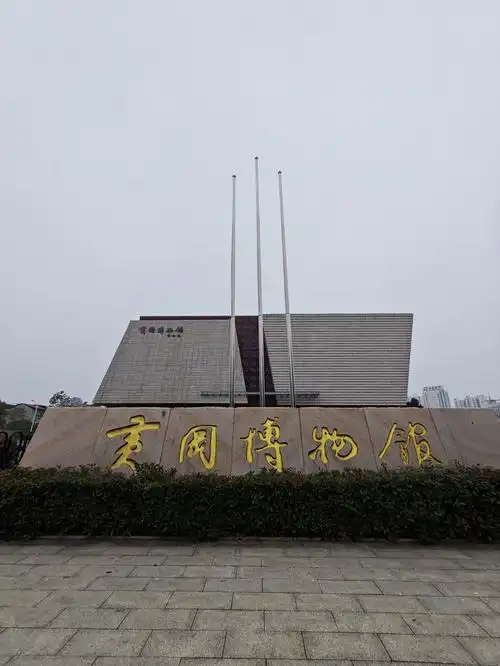 A Treasure House of Eastern Hubei
Founded as the cornerstone cultural institution of eastern Hubei, Huanggang Museum has grown into a National Class-2 museum, AAA-rated scenic site, and patriotic education base, with a footprint of roughly 12,000 square meters and display halls covering 4,200 square meters. To put its collection in perspective, its 42,185 artifacts rival the holdings of many medium-sized regional museums across Europe, and it ranks among the top prefecture-level museums in Hubei Province—a province better known to Westerners as the childhood home of Count CaoCao's armies and the gateway to the Three Kingdoms heartland.
Three National Treasures Under One Roof
The museum's pride is its trio of "crown jewels." The Spring and Autumn period Xu Gong Mai bronze food vessel (roughly 600–500 BCE)—a contemporary of the early Celtic Hallstatt culture in Europe—bears a 35-character inscription linking it to the vassal lords of the Zhou feudal system. The Eastern Han triple-dragon lamp (1st–2nd century CE) is essentially an ancient "modular" lighting system: nine detachable branches spring from a base of three interlocking winged dragons, an engineering feat comparable to Roman bronze craftsmanship at roughly the same date. Rarest of all is a Ming Jiajing reign (1522–1566) imperial yellow-glazed lidded jar, its subtle hidden patterns representing the pinnacle of imperial porcelain just before the Jingdezhen kilns perfected their full-color repertoire.
Six Permanent Galleries
Six interconnected halls sweep visitors from the Neolithic through the modern era. "Ancient Homeland" recreates prehistoric village life; "Southern Lands and the Yangyue" explores the meeting of Chu and Yue cultures during the Bronze and Iron Ages; "Cultural Flourishing" showcases jade, gold, and silver ornaments from the Tang through the Qing dynasties—pieces that would not look out of place in the V&A's East Asian collection. "A Century of Rise and Fall" tells the story of the Huangzhou merchant guilds and the city's role in modern education, while "Changing Heaven and Earth" commemorates the Huangma Uprising of 1927 and Liu Bocheng and Deng Xiaoping's legendary march into the Dabie Mountains—a turning point of the Chinese Civil War as pivotal in 20th-century history as the crossing of the Rhine was in Europe's.
Architecture and Visitor Services
The museum sits at 110 Mingzhu Avenue, Huanggang District, a clean, contemporary building opposite the Oriental Plaza. Facilities include free drinking water, professional guides (whose team has won national awards), and rentable audio devices. The experience leans toward contemplative artifact-viewing rather than hands-on exhibits, making it ideal for history enthusiasts, school groups, and families following the trail of Su Dongpo, the Song dynasty poet-painter who was once prefect of nearby Huangzhou.
Practical Visit Information
Opening hours run Tuesday through Sunday, 9:00 a.m. to 5:00 p.m. (last entry 4:30 p.m.); the museum is closed on Mondays and free for all visitors on production of a passport or ID card. Groups of more than ten should reserve guides in advance. Allow 1.5 to 2.5 hours for a thorough visit. For a quieter experience, arrive at opening or after 3:00 p.m. Always check the official website before visiting, as summer schedules occasionally shift.
Why Visit and How to Combine
While it lacks the blockbuster wow factor of Beijing's National Museum or the architectural drama of Shanghai's Museum, Huanggang Museum rewards travelers seeking a deeper, less-touristed immersion in regional Chinese history. Its location is a gift for any itinerary: the museum sits within easy walking distance of the famous Red Cliff where Su Dongpo composed his greatest poems, and the scenic Yiaihu Park. A half-day "Dongpo cultural trail" combining all three delivers the perfect balance of art, history, and lakeside nature in a single, unhurried morning or afternoon.
A Treasure House of Eastern Hubei
Founded as the cornerstone cultural institution of eastern Hubei, Huanggang Museum has grown into a National Class-2 museum, AAA-rated scenic site, and patriotic education base, with a footprint of roughly 12,000 square meters and display halls covering 4,200 square meters. To put its collection in perspective, its 42,185 artifacts rival the holdings of many medium-sized regional museums across Europe, and it ranks among the top prefecture-level museums in Hubei Province—a province better known to Westerners as the childhood home of Count CaoCao's armies and the gateway to the Three Kingdoms heartland.
Three National Treasures Under One Roof
The museum's pride is its trio of "crown jewels." The Spring and Autumn period Xu Gong Mai bronze food vessel (roughly 600–500 BCE)—a contemporary of the early Celtic Hallstatt culture in Europe—bears a 35-character inscription linking it to the vassal lords of the Zhou feudal system. The Eastern Han triple-dragon lamp (1st–2nd century CE) is essentially an ancient "modular" lighting system: nine detachable branches spring from a base of three interlocking winged dragons, an engineering feat comparable to Roman bronze craftsmanship at roughly the same date. Rarest of all is a Ming Jiajing reign (1522–1566) imperial yellow-glazed lidded jar, its subtle hidden patterns representing the pinnacle of imperial porcelain just before the Jingdezhen kilns perfected their full-color repertoire.
Six Permanent Galleries
Six interconnected halls sweep visitors from the Neolithic through the modern era. "Ancient Homeland" recreates prehistoric village life; "Southern Lands and the Yangyue" explores the meeting of Chu and Yue cultures during the Bronze and Iron Ages; "Cultural Flourishing" showcases jade, gold, and silver ornaments from the Tang through the Qing dynasties—pieces that would not look out of place in the V&A's East Asian collection. "A Century of Rise and Fall" tells the story of the Huangzhou merchant guilds and the city's role in modern education, while "Changing Heaven and Earth" commemorates the Huangma Uprising of 1927 and Liu Bocheng and Deng Xiaoping's legendary march into the Dabie Mountains—a turning point of the Chinese Civil War as pivotal in 20th-century history as the crossing of the Rhine was in Europe's.
Architecture and Visitor Services
The museum sits at 110 Mingzhu Avenue, Huanggang District, a clean, contemporary building opposite the Oriental Plaza. Facilities include free drinking water, professional guides (whose team has won national awards), and rentable audio devices. The experience leans toward contemplative artifact-viewing rather than hands-on exhibits, making it ideal for history enthusiasts, school groups, and families following the trail of Su Dongpo, the Song dynasty poet-painter who was once prefect of nearby Huangzhou.
Practical Visit Information
Opening hours run Tuesday through Sunday, 9:00 a.m. to 5:00 p.m. (last entry 4:30 p.m.); the museum is closed on Mondays and free for all visitors on production of a passport or ID card. Groups of more than ten should reserve guides in advance. Allow 1.5 to 2.5 hours for a thorough visit. For a quieter experience, arrive at opening or after 3:00 p.m. Always check the official website before visiting, as summer schedules occasionally shift.
Why Visit and How to Combine
While it lacks the blockbuster wow factor of Beijing's National Museum or the architectural drama of Shanghai's Museum, Huanggang Museum rewards travelers seeking a deeper, less-touristed immersion in regional Chinese history. Its location is a gift for any itinerary: the museum sits within easy walking distance of the famous Red Cliff where Su Dongpo composed his greatest poems, and the scenic Yiaihu Park. A half-day "Dongpo cultural trail" combining all three delivers the perfect balance of art, history, and lakeside nature in a single, unhurried morning or afternoon.