Wuzu Temple
⭐ 4.20
Wuzu Temple, Huangmei County, Huanggang City, Hubei Province, China
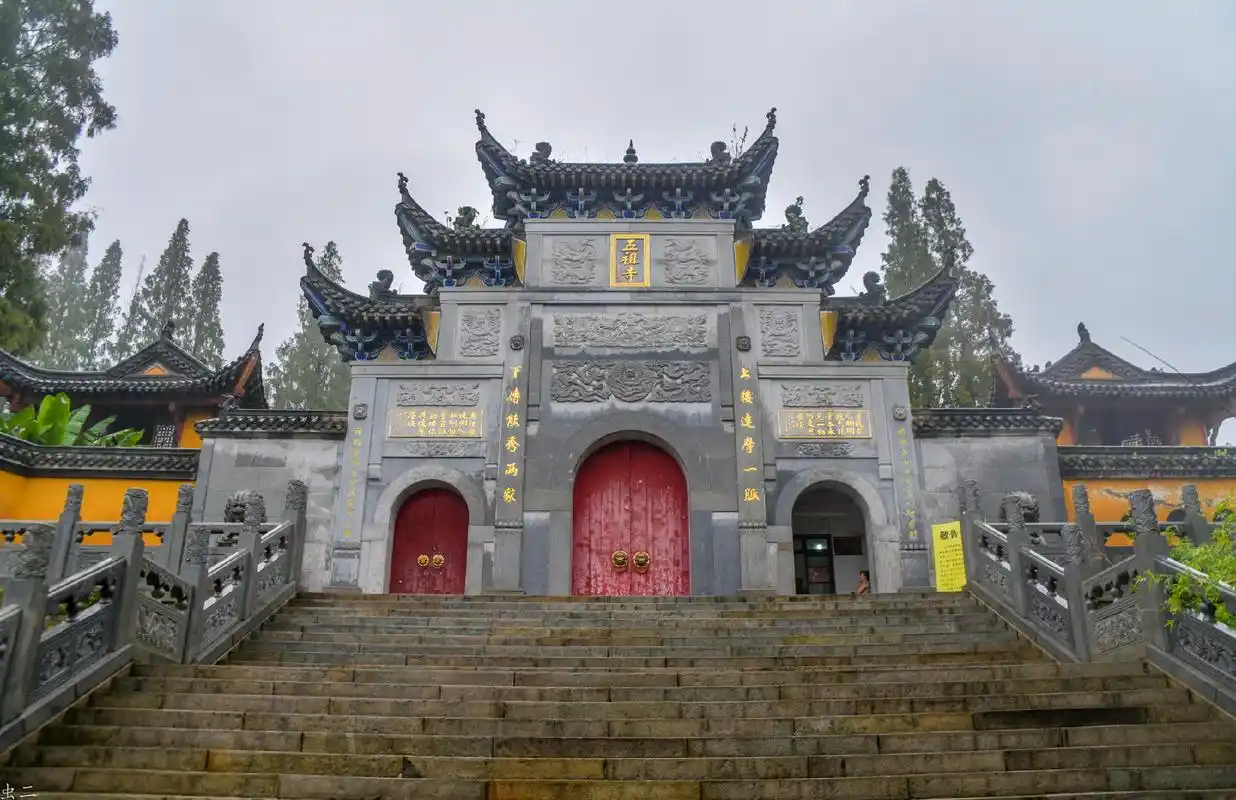 Founded in 654 CE during the Tang Dynasty—an age contemporary with the rise of Islam and the final flowering of Anglo-Saxon England—Wuzu Temple served as the mountain seat of Hongren (601–674), the Fifth Patriarch of Chan Buddhism. The monastery achieved lasting fame when the illiterate laborer Huineng received Hongren's sacred robe and alms bowl here, an event as transformative for Eastern spirituality as Martin Luther's Reformation would later be for Western Christianity. This transmission sparked the famous "Southern Sudden versus Northern Gradual" schism, birthing the Southern Chan school that would eventually become Zen in Japan and Korea.
Sprawling up the eastern slopes, the temple's architecture spans nearly 1,400 years of devotion. The Qing-dynasty Zhenshen Hall, a beautifully carved brick-and-timber structure, enshrines Hongren's remains within the towering Fayu Pagoda. Visitors approach through a sequence of halls—Tianwang, Mahavira, and Vairocana—arranged along a central axis that recalls the processional planning of Chartres Cathedral. Most striking is the Feihong Bridge, a single-arch Yuan-dynasty stone span (1271–1368) flung across a gorge with the same bold engineering confidence seen in Europe's finest medieval bridges.
Cultural treasures scatter the grounds like pages from a meditation manual. The lecture platform, where Hongren once taught, sits beside a White Lotus Pond whose waters remain perpetually half-full—a quiet mystery that has intrigued visitors for centuries. The "Sixth Patriarch's Waist Stone," weighing some 14 kilograms, marks the spot where Huineng pounded rice before his enlightenment. Inside the Vairocana Hall, a small museum displays over 200 local artifacts, including a Qing-dynasty turquoise chime-bell set that once rang across these forested slopes.
For Western travelers seeking the roots of Zen, Wuzu offers what no museum can: the actual landscape where Chan Buddhism took its decisive turn. The site provides rare insight into a tradition that, like early Christian monasticism, prized direct experience over doctrine. Carved cliff inscriptions and centuries of pilgrims' poems cling to the mountainside, while morning mist drifts through cedar groves—an atmosphere of contemplative silence akin to Mount Athos in Greece or the hermitage of Camaldoli in the Italian Apennines.
Admission to the scenic area is free, though the temple halls typically open 08:00 to 16:30, with last entry at 16:00. Allow two to three hours for a complete visit, ascending from the mountain gate along the central axis of halls before branching to the Feihong Bridge, lecture platform, and Huineng's rice-pounding site. Weekday mornings offer the best light and fewest crowds—ideal for unhurried exploration. Wear sturdy shoes, as the terraced layout involves considerable climbing.
Founded in 654 CE during the Tang Dynasty—an age contemporary with the rise of Islam and the final flowering of Anglo-Saxon England—Wuzu Temple served as the mountain seat of Hongren (601–674), the Fifth Patriarch of Chan Buddhism. The monastery achieved lasting fame when the illiterate laborer Huineng received Hongren's sacred robe and alms bowl here, an event as transformative for Eastern spirituality as Martin Luther's Reformation would later be for Western Christianity. This transmission sparked the famous "Southern Sudden versus Northern Gradual" schism, birthing the Southern Chan school that would eventually become Zen in Japan and Korea.
Sprawling up the eastern slopes, the temple's architecture spans nearly 1,400 years of devotion. The Qing-dynasty Zhenshen Hall, a beautifully carved brick-and-timber structure, enshrines Hongren's remains within the towering Fayu Pagoda. Visitors approach through a sequence of halls—Tianwang, Mahavira, and Vairocana—arranged along a central axis that recalls the processional planning of Chartres Cathedral. Most striking is the Feihong Bridge, a single-arch Yuan-dynasty stone span (1271–1368) flung across a gorge with the same bold engineering confidence seen in Europe's finest medieval bridges.
Cultural treasures scatter the grounds like pages from a meditation manual. The lecture platform, where Hongren once taught, sits beside a White Lotus Pond whose waters remain perpetually half-full—a quiet mystery that has intrigued visitors for centuries. The "Sixth Patriarch's Waist Stone," weighing some 14 kilograms, marks the spot where Huineng pounded rice before his enlightenment. Inside the Vairocana Hall, a small museum displays over 200 local artifacts, including a Qing-dynasty turquoise chime-bell set that once rang across these forested slopes.
For Western travelers seeking the roots of Zen, Wuzu offers what no museum can: the actual landscape where Chan Buddhism took its decisive turn. The site provides rare insight into a tradition that, like early Christian monasticism, prized direct experience over doctrine. Carved cliff inscriptions and centuries of pilgrims' poems cling to the mountainside, while morning mist drifts through cedar groves—an atmosphere of contemplative silence akin to Mount Athos in Greece or the hermitage of Camaldoli in the Italian Apennines.
Admission to the scenic area is free, though the temple halls typically open 08:00 to 16:30, with last entry at 16:00. Allow two to three hours for a complete visit, ascending from the mountain gate along the central axis of halls before branching to the Feihong Bridge, lecture platform, and Huineng's rice-pounding site. Weekday mornings offer the best light and fewest crowds—ideal for unhurried exploration. Wear sturdy shoes, as the terraced layout involves considerable climbing.