Mituo Temple
⭐ 1.50
Mituo Temple, Huangzhou District, Huanggang City, Hubei Province, China
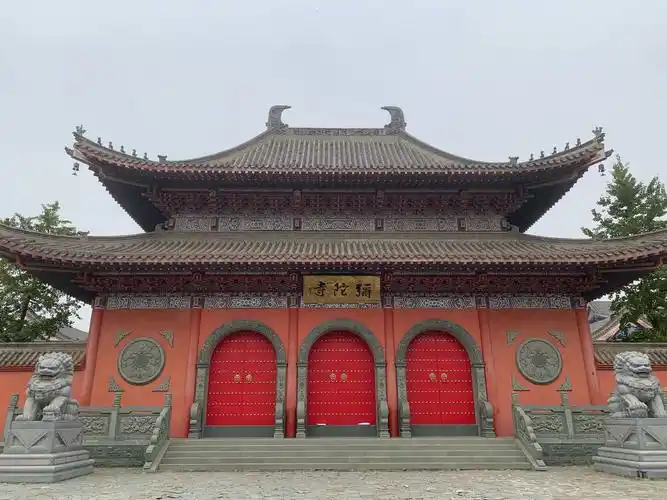 Mituo Temple belongs to the Pure Land tradition of Chinese Buddhism, a school centered on devotion to Amitabha Buddha whose name means "Measureless Light." While the temple itself is a contemporary community institution rather than a centuries-old heritage site, it stands within a region where Buddhist practice stretches back well over a millennium. The E'dong area, through which the Yangtze's great tributaries wind, has been part of the cultural corridor where Chan (Zen) meditation and Pure Land recitation flourished together since the Tang dynasty, roughly contemporary with the rise of early monastic life in Saxon England.
Architecturally, the temple follows the classic Chinese Buddhist plan: a single north-south axis leading from the mountain gate through a modest main hall, all framed by greenery rather than grand walls. Where European cathedrals of the medieval period sought to elevate the eye toward heaven with soaring stone vaults, Mituo's low eaves and timbered silhouette invite the visitor downward and inward, toward the courtyard and the foot of the altar. Inside, an image of Amitabha presides over a space kept deliberately simple, an aesthetic akin to the unadorned Quaker meeting houses of rural England or the tucked-away chapels of the Italian Apennines.
Culturally, the temple functions less as a museum piece than as a working parish: a place where local worshippers continue the daily round of incense, chanting, and quiet prayer that has shaped rural Hubei for generations. Even without the cachet of a nationally protected monument, it preserves the lived texture of grassroots Chinese Buddhism, in much the same way that a small parish church still anchors a Tuscan village today. For visitors, this means an unusually genuine encounter rather than a curated performance.
Planning a visit is refreshingly straightforward. The temple opens roughly 7:30 a.m. to 5:00 p.m., with free entry and no reservation, ticketing, or English signage, so independent exploration is the norm. Public transport in Yingshan County is thin, so driving or hiring a car and searching "Yingshan Mituo Temple" on a map app is by far the most reliable option. Aim for a weekday morning between 8:00 and 9:30 a.m., when soft light filters through the trees and the courtyard is at its quietest, and avoid the first and fifteenth of the lunar month and major Buddhist festivals, when devotional services may restrict access to the halls.
Dress modestly, with shoulders covered and trousers or knee-length skirts, and prepare to remove hats and sunglasses before entering any hall. Photography is forbidden inside the main hall, while exterior shots of the architecture should be cleared with a monk first. There are no shops or drinking water on site, so bring your own bottle, insect repellent, and a light rain layer, especially in the humid spring and summer months. Allow 30 to 60 minutes for the temple alone.
Why bother with such a humble stop? Because the best travel memories often live in the spaces between monuments, and Mituo offers something increasingly rare: an unfiltered glimpse of everyday religious life in inland China. Pair it with a half-day hike in nearby Peach Blossom Forest Park or Wujia Mountain National Forest Park, and you have a gentle "ancient temple plus mountain scenery" circuit that, like a quiet side chapel on a long European pilgrimage route, lingers longer than any single blockbuster sight.
Mituo Temple belongs to the Pure Land tradition of Chinese Buddhism, a school centered on devotion to Amitabha Buddha whose name means "Measureless Light." While the temple itself is a contemporary community institution rather than a centuries-old heritage site, it stands within a region where Buddhist practice stretches back well over a millennium. The E'dong area, through which the Yangtze's great tributaries wind, has been part of the cultural corridor where Chan (Zen) meditation and Pure Land recitation flourished together since the Tang dynasty, roughly contemporary with the rise of early monastic life in Saxon England.
Architecturally, the temple follows the classic Chinese Buddhist plan: a single north-south axis leading from the mountain gate through a modest main hall, all framed by greenery rather than grand walls. Where European cathedrals of the medieval period sought to elevate the eye toward heaven with soaring stone vaults, Mituo's low eaves and timbered silhouette invite the visitor downward and inward, toward the courtyard and the foot of the altar. Inside, an image of Amitabha presides over a space kept deliberately simple, an aesthetic akin to the unadorned Quaker meeting houses of rural England or the tucked-away chapels of the Italian Apennines.
Culturally, the temple functions less as a museum piece than as a working parish: a place where local worshippers continue the daily round of incense, chanting, and quiet prayer that has shaped rural Hubei for generations. Even without the cachet of a nationally protected monument, it preserves the lived texture of grassroots Chinese Buddhism, in much the same way that a small parish church still anchors a Tuscan village today. For visitors, this means an unusually genuine encounter rather than a curated performance.
Planning a visit is refreshingly straightforward. The temple opens roughly 7:30 a.m. to 5:00 p.m., with free entry and no reservation, ticketing, or English signage, so independent exploration is the norm. Public transport in Yingshan County is thin, so driving or hiring a car and searching "Yingshan Mituo Temple" on a map app is by far the most reliable option. Aim for a weekday morning between 8:00 and 9:30 a.m., when soft light filters through the trees and the courtyard is at its quietest, and avoid the first and fifteenth of the lunar month and major Buddhist festivals, when devotional services may restrict access to the halls.
Dress modestly, with shoulders covered and trousers or knee-length skirts, and prepare to remove hats and sunglasses before entering any hall. Photography is forbidden inside the main hall, while exterior shots of the architecture should be cleared with a monk first. There are no shops or drinking water on site, so bring your own bottle, insect repellent, and a light rain layer, especially in the humid spring and summer months. Allow 30 to 60 minutes for the temple alone.
Why bother with such a humble stop? Because the best travel memories often live in the spaces between monuments, and Mituo offers something increasingly rare: an unfiltered glimpse of everyday religious life in inland China. Pair it with a half-day hike in nearby Peach Blossom Forest Park or Wujia Mountain National Forest Park, and you have a gentle "ancient temple plus mountain scenery" circuit that, like a quiet side chapel on a long European pilgrimage route, lingers longer than any single blockbuster sight.