Huangzhou Ancient City
⭐ 3.60
Huangzhou Ancient City, Huangzhou District, Huanggang City, Hubei Province, China
 Dongpo Red Cliff, known as the "Literary Red Cliff" to distinguish it from the actual battlefield site downstream, owes its fame to Su Shi's exile here in 1080. Comparable in literary pilgrimage status to Petrarch's Vaucluse or Ovid's Tomis on the Black Sea, this riverside bluff became immortalized in "Remembering the Red Cliff" and "Red Cliff Ode," two of the most celebrated works in the Chinese literary canon. Su's tenure as a frustrated civil servant transformed the sleepy prefectural town into a wellspring of poetry, calligraphy, and philosophical musings that still resonate today.
The Dongpo Red Cliff complex clusters around cliff-face stone inscriptions, the Erfu Hall (named for Su's two surviving essays on the site), and the elegant Poxian Pavilion. A stele corridor winds through landscaped gardens echoing Suzhou's classical design vocabulary. Admission runs around 40 RMB, with the park open 08:00-17:30. Across the city, Baota Park combines a 42.44-meter Ming-dynasty pagoda, the Qingyun Tower, with the ruins of Tang-era Anguo Temple—something like a medieval European fortified church tower paired with a Romanesque cloister. The pagoda's most photographed quirk is a mature tree growing from its summit.
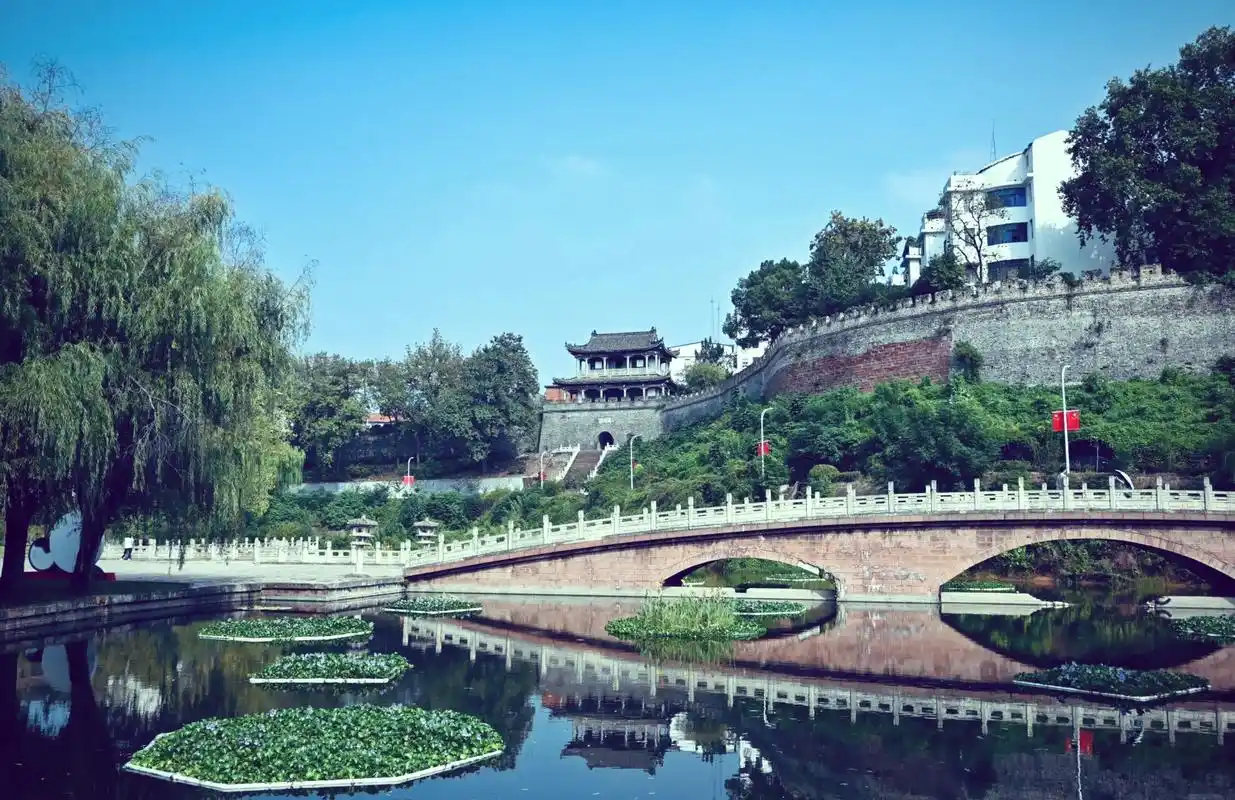
Hanchuan Gate, a Ming-dynasty northwestern city gate and provincial-level protected relic, preserves the only surviving stretch of Huangzhou's original city wall. Picture something between York's medieval Bar Gate and a minor Carcassonne tower, minus the heavy restoration. Linked to neighboring Ming-Qing streets, the area retains an authentically worn patina—crumbling brick, lived-in courtyards, family-run shops—rather than the polished faux-antique commercial strips common in many Chinese historic districts. Through 2025-2026, Baota Park is undergoing a "Meet Dongpo" themed renovation aimed at improving visitor flow and signage.
Plan on half a day to a full day. A sensible route: Dongpo Red Cliff (2 hours) → walk or short taxi to Baota Park and ascend the pagoda (1.5 hours) → wander Hanchuan Gate and the old streets (1 hour). Sunset is ideal for riverside views from the tower. Most sites have free admission zones, but services are dispersed—bring water, snacks, and wear sturdy walking shoes. Avoid the punishing midday heat of summer, especially June through August.
End your day along Dongpo Avenue, where family restaurants serve the dishes named for the poet himself: Dongpo pork (rich braised pork belly, somewhat akin to Italian porchetta) and Huangzhou shaomei, delicate steamed glutinous rice dumplings. This is a destination for travelers wanting to step away from China's marquee tourist circuits and into a quieter, text-heavy corner of the Yangtze valley—where the cliffs, walls, and old alleys still murmur with a thousand-year-old literary conversation.
Dongpo Red Cliff, known as the "Literary Red Cliff" to distinguish it from the actual battlefield site downstream, owes its fame to Su Shi's exile here in 1080. Comparable in literary pilgrimage status to Petrarch's Vaucluse or Ovid's Tomis on the Black Sea, this riverside bluff became immortalized in "Remembering the Red Cliff" and "Red Cliff Ode," two of the most celebrated works in the Chinese literary canon. Su's tenure as a frustrated civil servant transformed the sleepy prefectural town into a wellspring of poetry, calligraphy, and philosophical musings that still resonate today.
The Dongpo Red Cliff complex clusters around cliff-face stone inscriptions, the Erfu Hall (named for Su's two surviving essays on the site), and the elegant Poxian Pavilion. A stele corridor winds through landscaped gardens echoing Suzhou's classical design vocabulary. Admission runs around 40 RMB, with the park open 08:00-17:30. Across the city, Baota Park combines a 42.44-meter Ming-dynasty pagoda, the Qingyun Tower, with the ruins of Tang-era Anguo Temple—something like a medieval European fortified church tower paired with a Romanesque cloister. The pagoda's most photographed quirk is a mature tree growing from its summit.
Hanchuan Gate, a Ming-dynasty northwestern city gate and provincial-level protected relic, preserves the only surviving stretch of Huangzhou's original city wall. Picture something between York's medieval Bar Gate and a minor Carcassonne tower, minus the heavy restoration. Linked to neighboring Ming-Qing streets, the area retains an authentically worn patina—crumbling brick, lived-in courtyards, family-run shops—rather than the polished faux-antique commercial strips common in many Chinese historic districts. Through 2025-2026, Baota Park is undergoing a "Meet Dongpo" themed renovation aimed at improving visitor flow and signage.
Plan on half a day to a full day. A sensible route: Dongpo Red Cliff (2 hours) → walk or short taxi to Baota Park and ascend the pagoda (1.5 hours) → wander Hanchuan Gate and the old streets (1 hour). Sunset is ideal for riverside views from the tower. Most sites have free admission zones, but services are dispersed—bring water, snacks, and wear sturdy walking shoes. Avoid the punishing midday heat of summer, especially June through August.
End your day along Dongpo Avenue, where family restaurants serve the dishes named for the poet himself: Dongpo pork (rich braised pork belly, somewhat akin to Italian porchetta) and Huangzhou shaomei, delicate steamed glutinous rice dumplings. This is a destination for travelers wanting to step away from China's marquee tourist circuits and into a quieter, text-heavy corner of the Yangtze valley—where the cliffs, walls, and old alleys still murmur with a thousand-year-old literary conversation.