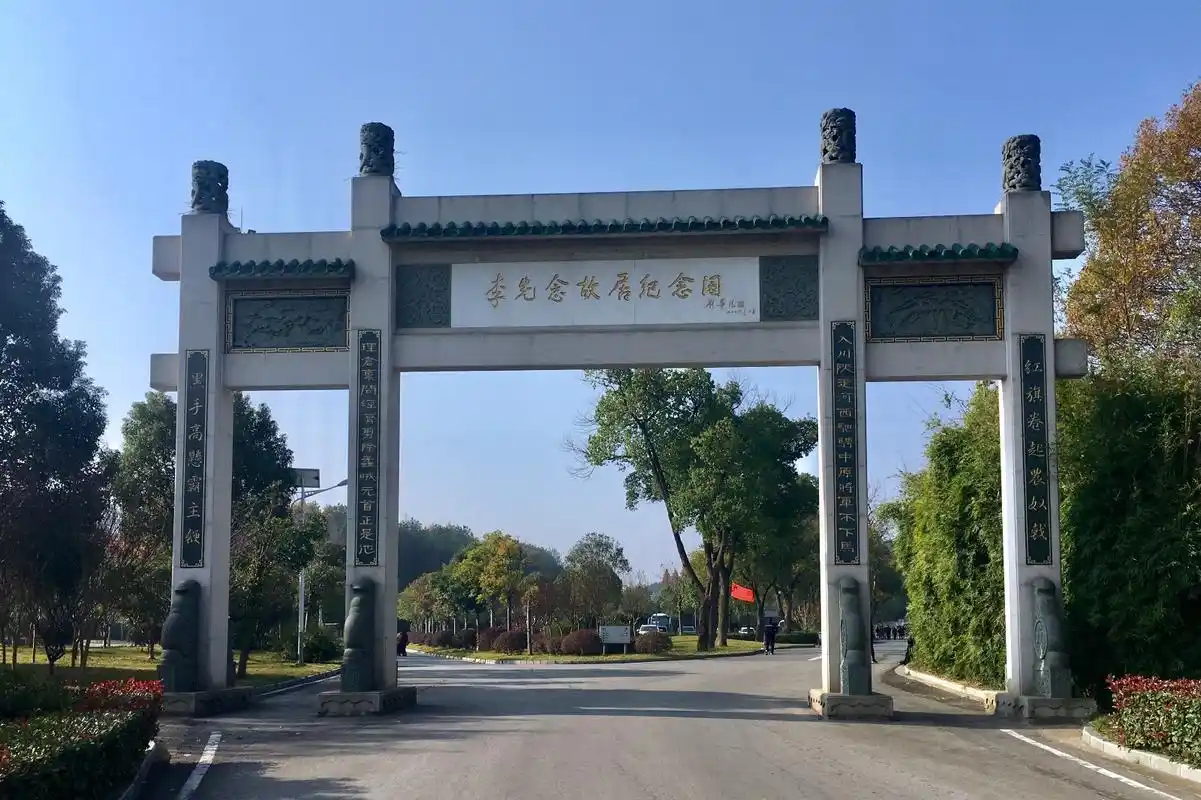
Former Residence of Li Xiannian
⭐ 4.50
Changfeng Village, Gaoqiao Town, Hong'an County, Hubei Province, China
 **Historical Context: From Rural Village to the Pinnacle of Power**
Li Xiannian (1909–1992) rose from humble peasant origins to become one of the People's Republic of China's most enduring statesmen, serving as President from 1983 to 1988 and as Vice Chairman of the Communist Party for over two decades. His birthplace sits within the storied Hubei-Henan-Anhui revolutionary base, one of the earliest strongholds of communist organizing in the late 1920s—comparable in regional significance to the cradle of the Bolshevik movement in rural Russia. Here, as a teenager, Li joined the underground resistance, organized peasant militias, and led armed struggle. His trajectory parallels that of other revolutionary leaders who emerged from agricultural poverty, such as Vietnam's Ho Chi Minh or Cuba's Fidel Castro.
**Architecture: A Time Capsule of Rural Hubei**
The main residence is a textbook example of eastern Hubei folk architecture, constructed from rammed earth, fired bricks, and dark gray tiles—materials and techniques that echo traditional farmhouses across the Yangtze valley, and not unlike the half-timbered vernacular homes of medieval Europe in their emphasis on local materials and climatic adaptation. The 130-square-meter dwelling has been restored under the strict "repair as original" principle, preserving the family bedroom, main hall, and kitchen exactly as Li's parents left them. Wooden lattice windows, whitewashed walls, and a spinning wheel by the hearth evoke the quiet rhythms of a Chinese peasant household a century ago.
**The Memorial Complex: Beyond the Birthplace**
Spread across more than 300 acres, the broader memorial park includes a museum displaying Li's personal effects, revolutionary artifacts, and family chronicles, alongside a permanent exhibition on local party history. Most striking is the 1:1 replica of Li's private study in Zhongnanhai, Beijing's walled governmental compound and the Chinese equivalent of the White House or the Kremlin. This meticulously reconstructed library offers an atmospheric glimpse into the working life of a senior leader, complete with original furniture and reading materials.
**Natural Setting: Red Horse Mountain and Lakeside Walks**
The site is framed by rolling green hills, with the modest Red Horse Mountain (202 meters) rising behind it and a serene reservoir glinting to the south. The mountain shelters the Dragon Lying Cave, once a hiding place for young revolutionaries and a playground for the boy who would become president. Hiking trails wind through bamboo groves and pavilions, blending what local promoters call "red and green" tourism—revolutionary heritage wrapped in pastoral scenery. It's an ideal spot for travelers who appreciate contemplative landscapes, much like the hilltop pilgrimages to historical sites in Tuscany or the Bavarian countryside.
**Practical Information for Visitors**
Admission is free, but advance reservation with a valid ID is required; the site closes on Mondays, so plan a Tuesday through Sunday visit. Allow two to three hours for a complete tour. Chinese-language guided tours are offered on site, so foreign visitors should arrange an interpreter or download a translation app beforehand. The property is reached most easily by car from Wuhan (about 90 minutes), or by high-speed rail to Hong'an West Station followed by a short taxi ride. Note that smoking, touching exhibits, and noisy behavior are prohibited—respect the solemnity of this nationally protected monument.
**Historical Context: From Rural Village to the Pinnacle of Power**
Li Xiannian (1909–1992) rose from humble peasant origins to become one of the People's Republic of China's most enduring statesmen, serving as President from 1983 to 1988 and as Vice Chairman of the Communist Party for over two decades. His birthplace sits within the storied Hubei-Henan-Anhui revolutionary base, one of the earliest strongholds of communist organizing in the late 1920s—comparable in regional significance to the cradle of the Bolshevik movement in rural Russia. Here, as a teenager, Li joined the underground resistance, organized peasant militias, and led armed struggle. His trajectory parallels that of other revolutionary leaders who emerged from agricultural poverty, such as Vietnam's Ho Chi Minh or Cuba's Fidel Castro.
**Architecture: A Time Capsule of Rural Hubei**
The main residence is a textbook example of eastern Hubei folk architecture, constructed from rammed earth, fired bricks, and dark gray tiles—materials and techniques that echo traditional farmhouses across the Yangtze valley, and not unlike the half-timbered vernacular homes of medieval Europe in their emphasis on local materials and climatic adaptation. The 130-square-meter dwelling has been restored under the strict "repair as original" principle, preserving the family bedroom, main hall, and kitchen exactly as Li's parents left them. Wooden lattice windows, whitewashed walls, and a spinning wheel by the hearth evoke the quiet rhythms of a Chinese peasant household a century ago.
**The Memorial Complex: Beyond the Birthplace**
Spread across more than 300 acres, the broader memorial park includes a museum displaying Li's personal effects, revolutionary artifacts, and family chronicles, alongside a permanent exhibition on local party history. Most striking is the 1:1 replica of Li's private study in Zhongnanhai, Beijing's walled governmental compound and the Chinese equivalent of the White House or the Kremlin. This meticulously reconstructed library offers an atmospheric glimpse into the working life of a senior leader, complete with original furniture and reading materials.
**Natural Setting: Red Horse Mountain and Lakeside Walks**
The site is framed by rolling green hills, with the modest Red Horse Mountain (202 meters) rising behind it and a serene reservoir glinting to the south. The mountain shelters the Dragon Lying Cave, once a hiding place for young revolutionaries and a playground for the boy who would become president. Hiking trails wind through bamboo groves and pavilions, blending what local promoters call "red and green" tourism—revolutionary heritage wrapped in pastoral scenery. It's an ideal spot for travelers who appreciate contemplative landscapes, much like the hilltop pilgrimages to historical sites in Tuscany or the Bavarian countryside.
**Practical Information for Visitors**
Admission is free, but advance reservation with a valid ID is required; the site closes on Mondays, so plan a Tuesday through Sunday visit. Allow two to three hours for a complete tour. Chinese-language guided tours are offered on site, so foreign visitors should arrange an interpreter or download a translation app beforehand. The property is reached most easily by car from Wuhan (about 90 minutes), or by high-speed rail to Hong'an West Station followed by a short taxi ride. Note that smoking, touching exhibits, and noisy behavior are prohibited—respect the solemnity of this nationally protected monument.