Zhumadian Zoo
⭐ 2.80
Northwest side of the intersection of Xuesong Road and Leshan Avenue, Yicheng District, Zhumadian City, Henan Province, China
 Zhumadian—literally "Station for Posting Horses"—has served as a wayfarer's crossroads since antiquity, lying deep in Henan Province where the Yellow River cradled early Chinese civilization. The zoo's name, Tianzhong ("Center of Heaven"), echoes the ancient cosmological belief that this region sat at the world's axis, an idea with poetic kinship to the Greeks naming Delphi the "navel of the world." While that grand philosophy lives on in temples and tombs across Henan, this small zoo offers a humble, modern echo of how central Chinese cities weave nature into urban life.
The zoo occupies a corner of Nanhai Park, a leafy municipal green space planted in 1979 as China emerged from the Cultural Revolution and reinvested in public leisure. Think of it less as Berlin's stately Tiergarten and more as a friendly British city farm nested inside a Victorian-era common. Winding paths thread between modest enclosures beneath mature trees, with separate zones for waterfowl, herbivores, and the headline predators. The layout is gentle and forgiving, designed for strollers and grandparents rather than marathon walkers.
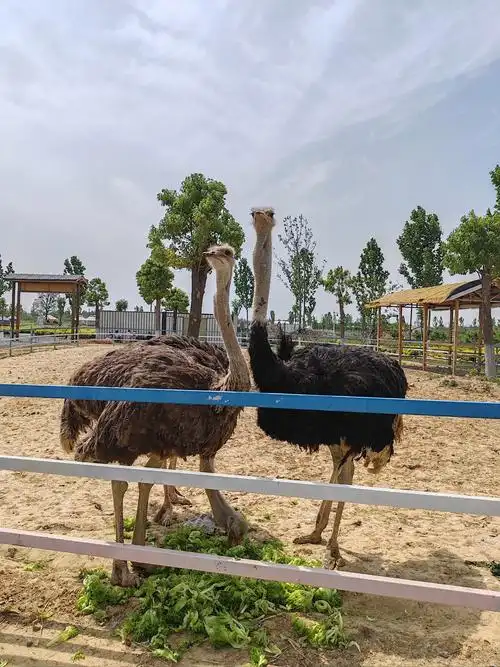
Exhibits focus on modestly sized, charismatic species: tigers, Asiatic black bears, long-tailed macaques, alpacas, peacocks, and rabbits that children may feed under supervision. The interactive paddocks echo the petting-zoo tradition familiar from European folk farms, where city kids meet sheep and goats up close. Though species diversity cannot rival Beijing Zoo or Zhengzhou's larger facilities, the relaxed atmosphere makes every encounter feel personal. The site also functions as an official wildlife rescue station, quietly contributing to conservation work that mirrors rehabilitation programs at European wildlife trusts.
For generations of Zhumadian residents, Nanhai Park has been the default escape from summer streets—a place of dance classes, chess games, and family photographs. The zoo, though young, has slotted into this older rhythm of communal recreation, becoming a backdrop for countless childhood memories. Visitors seeking authentic everyday China rather than polished tourist set-pieces will find genuine warmth here: grandparents herding toddlers, couples strolling at dusk, vendors selling sunflower seeds and chilled tea. It is small-city charm in its most unforced form.
The zoo lies in Yicheng District along Nanhai Avenue, easily reached by public bus to the "Nanhai Road" or "Zoo" stops, or by car with free parking inside the park gates. Operating hours are Tuesday through Sunday, 9:00 a.m. to 5:00 p.m., with last entry at 4 p.m.; Monday is reserved for maintenance. Admission runs 60 to 80 yuan per person, and the on-site phone line (0396-2719217) is the best way to confirm same-day conditions before traveling.
Approach this as a leisurely half-day rather than a flagship zoological destination. Pack water, sunhats, and a few carrot sticks or leafy greens for the friendly herbivores, then settle into the slow rhythm of shaded paths and curious animals. Travelers passing through Henan on the way to Shaolin Temple, Kaifeng, or Luoyang's Longmen Grottoes will find Tianzhong Zoo a delightfully human-scale detour—a reminder that in China, even the smallest city parks often hold centuries of affection and a few unexpected tigers.
Zhumadian—literally "Station for Posting Horses"—has served as a wayfarer's crossroads since antiquity, lying deep in Henan Province where the Yellow River cradled early Chinese civilization. The zoo's name, Tianzhong ("Center of Heaven"), echoes the ancient cosmological belief that this region sat at the world's axis, an idea with poetic kinship to the Greeks naming Delphi the "navel of the world." While that grand philosophy lives on in temples and tombs across Henan, this small zoo offers a humble, modern echo of how central Chinese cities weave nature into urban life.
The zoo occupies a corner of Nanhai Park, a leafy municipal green space planted in 1979 as China emerged from the Cultural Revolution and reinvested in public leisure. Think of it less as Berlin's stately Tiergarten and more as a friendly British city farm nested inside a Victorian-era common. Winding paths thread between modest enclosures beneath mature trees, with separate zones for waterfowl, herbivores, and the headline predators. The layout is gentle and forgiving, designed for strollers and grandparents rather than marathon walkers.
Exhibits focus on modestly sized, charismatic species: tigers, Asiatic black bears, long-tailed macaques, alpacas, peacocks, and rabbits that children may feed under supervision. The interactive paddocks echo the petting-zoo tradition familiar from European folk farms, where city kids meet sheep and goats up close. Though species diversity cannot rival Beijing Zoo or Zhengzhou's larger facilities, the relaxed atmosphere makes every encounter feel personal. The site also functions as an official wildlife rescue station, quietly contributing to conservation work that mirrors rehabilitation programs at European wildlife trusts.
For generations of Zhumadian residents, Nanhai Park has been the default escape from summer streets—a place of dance classes, chess games, and family photographs. The zoo, though young, has slotted into this older rhythm of communal recreation, becoming a backdrop for countless childhood memories. Visitors seeking authentic everyday China rather than polished tourist set-pieces will find genuine warmth here: grandparents herding toddlers, couples strolling at dusk, vendors selling sunflower seeds and chilled tea. It is small-city charm in its most unforced form.
The zoo lies in Yicheng District along Nanhai Avenue, easily reached by public bus to the "Nanhai Road" or "Zoo" stops, or by car with free parking inside the park gates. Operating hours are Tuesday through Sunday, 9:00 a.m. to 5:00 p.m., with last entry at 4 p.m.; Monday is reserved for maintenance. Admission runs 60 to 80 yuan per person, and the on-site phone line (0396-2719217) is the best way to confirm same-day conditions before traveling.
Approach this as a leisurely half-day rather than a flagship zoological destination. Pack water, sunhats, and a few carrot sticks or leafy greens for the friendly herbivores, then settle into the slow rhythm of shaded paths and curious animals. Travelers passing through Henan on the way to Shaolin Temple, Kaifeng, or Luoyang's Longmen Grottoes will find Tianzhong Zoo a delightfully human-scale detour—a reminder that in China, even the smallest city parks often hold centuries of affection and a few unexpected tigers.