Mount Laole Scenic Area
⭐ 4.00
Zhumadian City, Henan Province, China
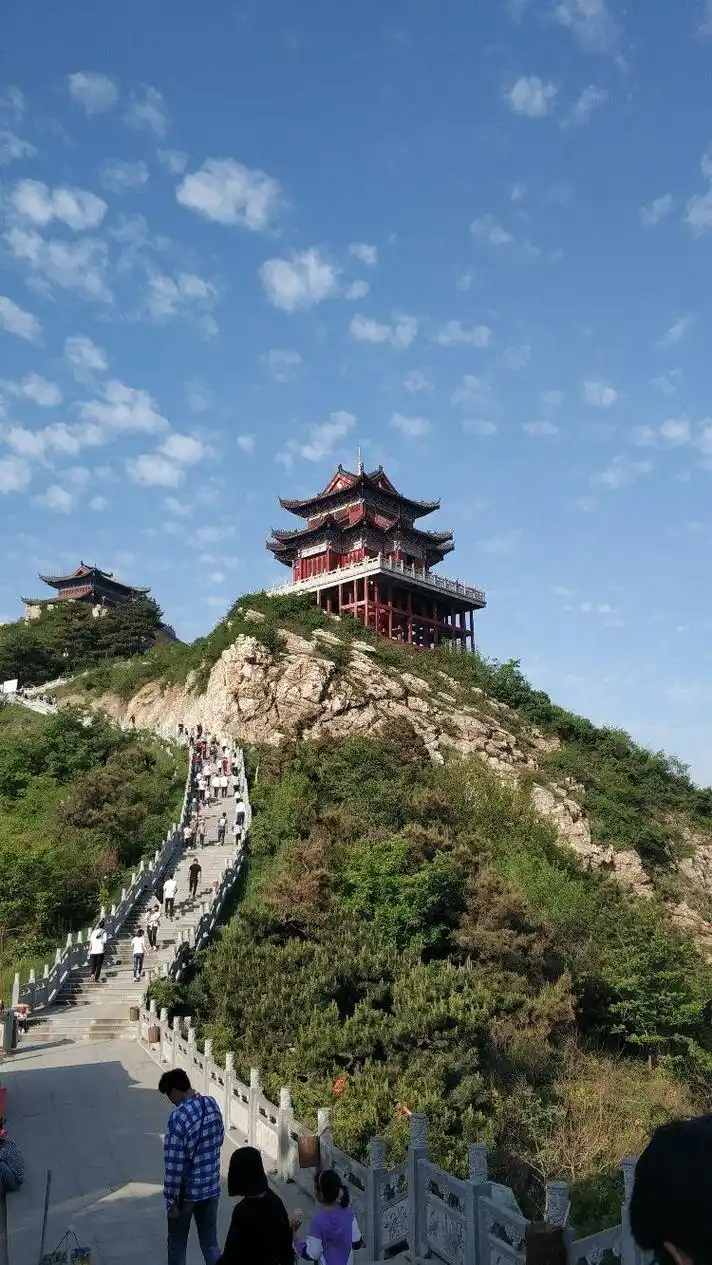 Old Le Mountain claims a spiritual lineage stretching back to the Sui and Tang dynasties (581–907 CE)—a period contemporary with the rise of Islam and Charlemagne's European renaissance. Designated one of Daoism's Three Sacred Mountains alongside the legendary Wudang Shan, it has drawn pilgrims for over a millennium. The Chongyang autumn climbing tradition observed here mirrors Europe's medieval pilgrimage routes to Santiago de Compostela. Below the mountain, North Spring Temple (Bei Quan Si), founded during the Northern Qi dynasty (550–577 CE) when Merovingian kings ruled France, embodies an era that saw Europe's earliest monastic foundations. This unique Buddhist-Daoist coexistence makes Old Le a remarkable living archive of religious continuity.
The architectural soul of Old Le lies in its "Eight Palaces and Two Temples" complex—a sprawling Ming and Qing dynasty (1368–1912) Daoist precinct that parallels the scale of European monastic compounds like Spain's El Escorial or Bavaria's Andechs Monastery. At the summit, the 28-meter three-faced Guanyin statue, carved from monolithic granite, commands sweeping views reminiscent of Sacré-Cœur raised above Paris. Uniquely combining the fertility-blessing, rain-giving, and wish-granting aspects of Guanyin, the figure is unmatched elsewhere in China. The surrounding Yuzhen Palace and Jade Emperor Hall showcase traditional timber-frame construction with painted beams and bracket sets, harmonizing with the natural topography.
Daoism, China's indigenous philosophical tradition, blends nature worship, alchemy, and the pursuit of immortality—values that echo certain strands of Western hermetic and neo-Platonic thought. Old Le's ritual landscape preserves this worldview in tangible form: incense burners weathered by centuries of devotion, stone inscriptions recording imperial visits, and the autumn temple fair that still draws thousands of pilgrims each ninth lunar month. Such gatherings parallel Europe's great saints' festivals at Lourdes or Fátima. Beyond formal worship, the mountain's very atmosphere—often shrouded in dramatic cloud seas, frost, or mist—embodies the Daoist reverence for nature's spontaneous flux.
The mountain's ecological crown jewel is its northernmost grove of Liriodendron chinense, the Chinese tulip tree—known locally as the "horse-jacket forest" for its distinctive leaf shape. As a nationally protected species, this relict population offers a botanical glimpse into the Miocene epoch when magnolia relatives carpeted the Northern Hemisphere. Forest coverage exceeding 95% produces air so pure that local measurements rank it among China's premier "natural oxygen bars." Mist-sealed valleys reveal frost-coated trees in winter, golden foliage in autumn, and a sea of clouds at dawn—atmospheric phenomena that photographers and nature lovers treasure.
The scenic area opens daily from 8:30 to 17:30. Peak-season admission runs about 50 yuan per person, with sightseeing shuttles (15 yuan each way) whisking visitors from the South Gate to a midway platform. Direct bus 302 connects Zhumadian Railway Station to the South Gate in roughly 90 minutes; self-drivers should navigate to "Old Le Mountain South Gate" where parking is plentiful. Bring ample water and snacks since summit refreshments are scarce, and wear sturdy shoes for the granite-flagged paths. Spring, autumn, and the immediate aftermath of rain promise the highest chance of cloud-sea spectacles.
A classic itinerary enters through the South Gate, rides the shuttle to the midway terrace, then ascends gently past Ruyi Lake and terraced flower fields—an ascent whose moderate gradient suits children and grandparents alike. Photographers should target three signature scenes: the colossal granite Guanyin backlit by sunrise, the golden tulip-tree canopy in October, and the incense-wreathed Daoist halls at golden hour. Families can extend the day with North Spring Temple, whose ancient ginkgo trees and quiet Buddhist halls provide a contemplative counterpoint to the mountain's grand vistas. Few destinations in central China blend accessible hiking, profound spirituality, and rich biodiversity so seamlessly.
Old Le Mountain claims a spiritual lineage stretching back to the Sui and Tang dynasties (581–907 CE)—a period contemporary with the rise of Islam and Charlemagne's European renaissance. Designated one of Daoism's Three Sacred Mountains alongside the legendary Wudang Shan, it has drawn pilgrims for over a millennium. The Chongyang autumn climbing tradition observed here mirrors Europe's medieval pilgrimage routes to Santiago de Compostela. Below the mountain, North Spring Temple (Bei Quan Si), founded during the Northern Qi dynasty (550–577 CE) when Merovingian kings ruled France, embodies an era that saw Europe's earliest monastic foundations. This unique Buddhist-Daoist coexistence makes Old Le a remarkable living archive of religious continuity.
The architectural soul of Old Le lies in its "Eight Palaces and Two Temples" complex—a sprawling Ming and Qing dynasty (1368–1912) Daoist precinct that parallels the scale of European monastic compounds like Spain's El Escorial or Bavaria's Andechs Monastery. At the summit, the 28-meter three-faced Guanyin statue, carved from monolithic granite, commands sweeping views reminiscent of Sacré-Cœur raised above Paris. Uniquely combining the fertility-blessing, rain-giving, and wish-granting aspects of Guanyin, the figure is unmatched elsewhere in China. The surrounding Yuzhen Palace and Jade Emperor Hall showcase traditional timber-frame construction with painted beams and bracket sets, harmonizing with the natural topography.
Daoism, China's indigenous philosophical tradition, blends nature worship, alchemy, and the pursuit of immortality—values that echo certain strands of Western hermetic and neo-Platonic thought. Old Le's ritual landscape preserves this worldview in tangible form: incense burners weathered by centuries of devotion, stone inscriptions recording imperial visits, and the autumn temple fair that still draws thousands of pilgrims each ninth lunar month. Such gatherings parallel Europe's great saints' festivals at Lourdes or Fátima. Beyond formal worship, the mountain's very atmosphere—often shrouded in dramatic cloud seas, frost, or mist—embodies the Daoist reverence for nature's spontaneous flux.
The mountain's ecological crown jewel is its northernmost grove of Liriodendron chinense, the Chinese tulip tree—known locally as the "horse-jacket forest" for its distinctive leaf shape. As a nationally protected species, this relict population offers a botanical glimpse into the Miocene epoch when magnolia relatives carpeted the Northern Hemisphere. Forest coverage exceeding 95% produces air so pure that local measurements rank it among China's premier "natural oxygen bars." Mist-sealed valleys reveal frost-coated trees in winter, golden foliage in autumn, and a sea of clouds at dawn—atmospheric phenomena that photographers and nature lovers treasure.
The scenic area opens daily from 8:30 to 17:30. Peak-season admission runs about 50 yuan per person, with sightseeing shuttles (15 yuan each way) whisking visitors from the South Gate to a midway platform. Direct bus 302 connects Zhumadian Railway Station to the South Gate in roughly 90 minutes; self-drivers should navigate to "Old Le Mountain South Gate" where parking is plentiful. Bring ample water and snacks since summit refreshments are scarce, and wear sturdy shoes for the granite-flagged paths. Spring, autumn, and the immediate aftermath of rain promise the highest chance of cloud-sea spectacles.
A classic itinerary enters through the South Gate, rides the shuttle to the midway terrace, then ascends gently past Ruyi Lake and terraced flower fields—an ascent whose moderate gradient suits children and grandparents alike. Photographers should target three signature scenes: the colossal granite Guanyin backlit by sunrise, the golden tulip-tree canopy in October, and the incense-wreathed Daoist halls at golden hour. Families can extend the day with North Spring Temple, whose ancient ginkgo trees and quiet Buddhist halls provide a contemplative counterpoint to the mountain's grand vistas. Few destinations in central China blend accessible hiking, profound spirituality, and rich biodiversity so seamlessly.