Queshan Shifo Temple
⭐ 2.00
Queshan Shifo Temple, Zhugou Town, Queshan County, Zhumadian City, Henan Province, China
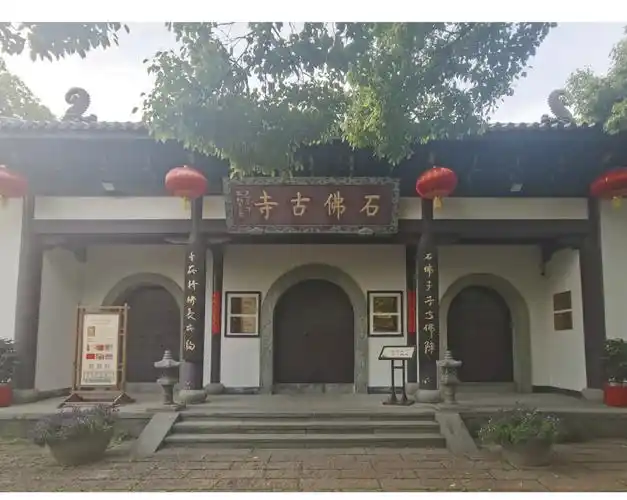 Founded during the reign of the Ming Dynasty's Jiajing Emperor (1522–1566)—a period roughly contemporary with England's Henry VIII and the early stirrings of Europe's Reformation—Queshan Shifo Temple has stood for nearly five centuries as a beacon of Han Chinese Buddhism. The original complex eventually fell into ruin, but its revival was spearheaded in modern times by the Taiwanese monk Master Mingcheng, whose decades-long restoration parallels other monastic revival movements across the Buddhist world. Today the temple serves as a vital link between mainland Chinese Buddhist traditions and the broader Chinese-speaking Buddhist community, including practitioners from Taiwan, Hong Kong, and the diaspora.
The architectural centerpiece is the Mahavira Hall, soaring 36 meters into the Henan sky with a distinctive three-tiered, overhanging-eave design crowned in glazed ceramic tiles. This xieshan style, with its dramatically upturned eaves and intricate dougong bracket systems, may remind Western visitors of the layered vertical ambition found in Romanesque cathedral towers or the tiered rooflines of historic Bavarian abbeys. Spanning some 50,000 square meters, the complex includes prayer halls, monks' quarters, and meditation spaces that blend Ming-era proportions with modern construction techniques—a fusion that creates both continuity with the past and structural longevity.
As an active house of worship within the Han Chinese Mahayana Buddhist tradition, Queshan Shifo Temple embodies centuries of religious devotion and artistic expression. The statues, sutras, and ritual objects housed within its halls reflect the deep contemplative currents of Chinese Chan (Zen) Buddhism, a tradition that has shaped spiritual life across East Asia for over a millennium. Set among tranquil groves away from urban noise, the temple offers an atmosphere similar to a European monastic retreat—a quiet sanctuary where visitors can contemplate away from the pressures of daily life, while functioning simultaneously as a working monastery and meditation center for visiting practitioners.
The temple sits in Queshan County, north of Zhumadian city in southern Henan, roughly 200 kilometers south of Zhengzhou. Reaching it requires a private vehicle, taxi, or local bus from Zhumadian; public transport is limited and English signage is minimal. Entry is essentially free, though donations are welcomed. Visitors should dress modestly—covering shoulders and knees—and speak softly within the halls. There are no amusement facilities, restaurants, or guided tour services on-site, so bringing water, snacks, and a translation app is strongly recommended. The site pairs well with nearby attractions such as Zhugou Revolutionary Memorial Hall and Boshan Lake for a full day of regional exploration.
For travelers seeking authentic spiritual and architectural experiences beyond China's most heavily touristed temples, Queshan Shifo Temple delivers remarkable scale and serenity in equal measure. Photographers will find exceptional material in the interplay of sunlight on glazed tiles, the geometric rhythm of the bracket sets, and the contemplative human moments of worshippers lighting incense. Architectural enthusiasts will appreciate a relatively intact example of large-scale Ming-influenced temple planning outside the major heritage cities. For those drawn to Buddhist pilgrimage or quiet reflection, this lesser-known sanctuary offers an experience comparable to visiting a vast, working monastery in rural Europe—reverent, unhurried, and richly atmospheric.
Founded during the reign of the Ming Dynasty's Jiajing Emperor (1522–1566)—a period roughly contemporary with England's Henry VIII and the early stirrings of Europe's Reformation—Queshan Shifo Temple has stood for nearly five centuries as a beacon of Han Chinese Buddhism. The original complex eventually fell into ruin, but its revival was spearheaded in modern times by the Taiwanese monk Master Mingcheng, whose decades-long restoration parallels other monastic revival movements across the Buddhist world. Today the temple serves as a vital link between mainland Chinese Buddhist traditions and the broader Chinese-speaking Buddhist community, including practitioners from Taiwan, Hong Kong, and the diaspora.
The architectural centerpiece is the Mahavira Hall, soaring 36 meters into the Henan sky with a distinctive three-tiered, overhanging-eave design crowned in glazed ceramic tiles. This xieshan style, with its dramatically upturned eaves and intricate dougong bracket systems, may remind Western visitors of the layered vertical ambition found in Romanesque cathedral towers or the tiered rooflines of historic Bavarian abbeys. Spanning some 50,000 square meters, the complex includes prayer halls, monks' quarters, and meditation spaces that blend Ming-era proportions with modern construction techniques—a fusion that creates both continuity with the past and structural longevity.
As an active house of worship within the Han Chinese Mahayana Buddhist tradition, Queshan Shifo Temple embodies centuries of religious devotion and artistic expression. The statues, sutras, and ritual objects housed within its halls reflect the deep contemplative currents of Chinese Chan (Zen) Buddhism, a tradition that has shaped spiritual life across East Asia for over a millennium. Set among tranquil groves away from urban noise, the temple offers an atmosphere similar to a European monastic retreat—a quiet sanctuary where visitors can contemplate away from the pressures of daily life, while functioning simultaneously as a working monastery and meditation center for visiting practitioners.
The temple sits in Queshan County, north of Zhumadian city in southern Henan, roughly 200 kilometers south of Zhengzhou. Reaching it requires a private vehicle, taxi, or local bus from Zhumadian; public transport is limited and English signage is minimal. Entry is essentially free, though donations are welcomed. Visitors should dress modestly—covering shoulders and knees—and speak softly within the halls. There are no amusement facilities, restaurants, or guided tour services on-site, so bringing water, snacks, and a translation app is strongly recommended. The site pairs well with nearby attractions such as Zhugou Revolutionary Memorial Hall and Boshan Lake for a full day of regional exploration.
For travelers seeking authentic spiritual and architectural experiences beyond China's most heavily touristed temples, Queshan Shifo Temple delivers remarkable scale and serenity in equal measure. Photographers will find exceptional material in the interplay of sunlight on glazed tiles, the geometric rhythm of the bracket sets, and the contemplative human moments of worshippers lighting incense. Architectural enthusiasts will appreciate a relatively intact example of large-scale Ming-influenced temple planning outside the major heritage cities. For those drawn to Buddhist pilgrimage or quiet reflection, this lesser-known sanctuary offers an experience comparable to visiting a vast, working monastery in rural Europe—reverent, unhurried, and richly atmospheric.