Lu'an Museum
⭐ 3.80
No. 18, Pihe Road, Jin'an District, Lu'an City, Anhui Province, China
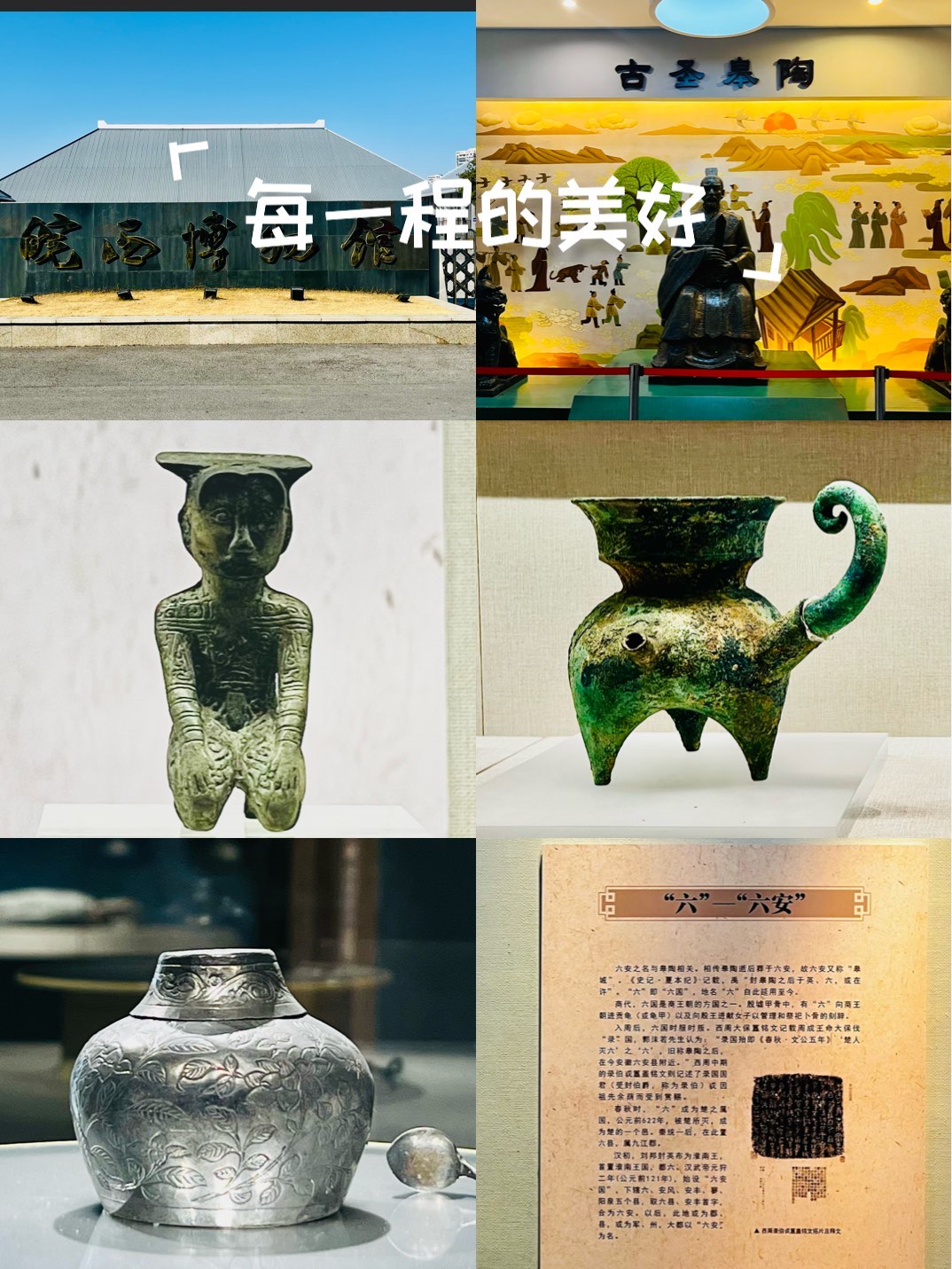 Often mislabeled by travelers as "Lu'an Museum," the official name Wanxi Museum (Museum of Western Anhui) reflects its broader regional mission. Established from a mid-twentieth-century cultural center and repeatedly expanded, the institution achieved national second-tier status and serves as a provincial patriotism education base. Comparable in scope to regional museums like the British Museum's smaller provincial outposts or Germany's Landesmuseen, it offers an authoritative lens into a region that is often overlooked on standard China itineraries despite its profound historical layers.
The museum's architecture itself rewards exploration. Approximately 12,000 square meters in floor space, the building employs Han-dynasty palace layouts harmonized with Huizhou-style courtyard traditions—think of it as a dialogue between the grandeur of Rome's imperial forums and the intimate spatial logic of an English Tudor manor. Grey bricks, dark tiles, and upswept eaves create an atmosphere that feels both monumental and refined, while the spacious forecourt invites quiet contemplation before stepping into the galleries.
Inside, the permanent exhibition "Entering Western Anhui" unfolds in three compelling sections. "Mirror of Ancient Gao" illuminates the legendary culture of Gao Tao, often considered one of China's earliest judicial figures. "Ancient Heroes" brings to life figures like the Han dynasty Prince of Huainan and the Prince of Lu'an, whose courts rivaled in cultural sophistication the contemporary literary circles of imperial Rome. "Red Banners Unfurled" chronicles the Eyuwan Soviet Region's revolutionary history, a chapter that shaped modern China's destiny much as the French Resistance did for postwar Europe.
Treasures include a Shang dynasty bronze zun decorated with dragon and phoenix motifs, artifacts linked to the Sword of the King of Yue (a parallel to the mythic Excalibur of Arthurian legend), exquisite bronzes from the Han-era Shuangdun No.1 Tomb, and the prized Ejun Qi golden tally—an ancient trade permit akin to a medieval guild seal. Among approximately 300 first-grade national relics, the collection ranks among Anhui's most significant, offering tangible connections to dynasties that shaped East Asian civilization.
The museum welcomes visitors Tuesday through Sunday from 9:00 to 17:00, closing Mondays, with last entry at 16:30. Admission is free and no advance booking is required. Free Chinese-language guided tours run daily at 10:00 and 14:00, though English-speaking guides can occasionally be arranged with notice. Air-conditioned galleries, rest areas, and a creative souvenir shop enhance comfort. Bus routes 11, 16, 24, 33, and 34 serve the site, and free parking is available for those driving—rare generosity by Chinese museum standards.
For the culturally curious traveler, Wanxi Museum offers something the Great Wall's crowds and Shanghai's gleaming skyscrapers cannot: an unhurried encounter with a region's soul. Few places so compactly weave together mythic antiquity, aristocratic refinement, revolutionary sacrifice, and living folk traditions like Lu'an's distinctive opera and celebrated tea culture. It is, in essence, a secret chapter of China waiting to be read.
Often mislabeled by travelers as "Lu'an Museum," the official name Wanxi Museum (Museum of Western Anhui) reflects its broader regional mission. Established from a mid-twentieth-century cultural center and repeatedly expanded, the institution achieved national second-tier status and serves as a provincial patriotism education base. Comparable in scope to regional museums like the British Museum's smaller provincial outposts or Germany's Landesmuseen, it offers an authoritative lens into a region that is often overlooked on standard China itineraries despite its profound historical layers.
The museum's architecture itself rewards exploration. Approximately 12,000 square meters in floor space, the building employs Han-dynasty palace layouts harmonized with Huizhou-style courtyard traditions—think of it as a dialogue between the grandeur of Rome's imperial forums and the intimate spatial logic of an English Tudor manor. Grey bricks, dark tiles, and upswept eaves create an atmosphere that feels both monumental and refined, while the spacious forecourt invites quiet contemplation before stepping into the galleries.
Inside, the permanent exhibition "Entering Western Anhui" unfolds in three compelling sections. "Mirror of Ancient Gao" illuminates the legendary culture of Gao Tao, often considered one of China's earliest judicial figures. "Ancient Heroes" brings to life figures like the Han dynasty Prince of Huainan and the Prince of Lu'an, whose courts rivaled in cultural sophistication the contemporary literary circles of imperial Rome. "Red Banners Unfurled" chronicles the Eyuwan Soviet Region's revolutionary history, a chapter that shaped modern China's destiny much as the French Resistance did for postwar Europe.
Treasures include a Shang dynasty bronze zun decorated with dragon and phoenix motifs, artifacts linked to the Sword of the King of Yue (a parallel to the mythic Excalibur of Arthurian legend), exquisite bronzes from the Han-era Shuangdun No.1 Tomb, and the prized Ejun Qi golden tally—an ancient trade permit akin to a medieval guild seal. Among approximately 300 first-grade national relics, the collection ranks among Anhui's most significant, offering tangible connections to dynasties that shaped East Asian civilization.
The museum welcomes visitors Tuesday through Sunday from 9:00 to 17:00, closing Mondays, with last entry at 16:30. Admission is free and no advance booking is required. Free Chinese-language guided tours run daily at 10:00 and 14:00, though English-speaking guides can occasionally be arranged with notice. Air-conditioned galleries, rest areas, and a creative souvenir shop enhance comfort. Bus routes 11, 16, 24, 33, and 34 serve the site, and free parking is available for those driving—rare generosity by Chinese museum standards.
For the culturally curious traveler, Wanxi Museum offers something the Great Wall's crowds and Shanghai's gleaming skyscrapers cannot: an unhurried encounter with a region's soul. Few places so compactly weave together mythic antiquity, aristocratic refinement, revolutionary sacrifice, and living folk traditions like Lu'an's distinctive opera and celebrated tea culture. It is, in essence, a secret chapter of China waiting to be read.