Dabieshan Main Peak Scenic Area
⭐ 3.80
Dabieshan Main Peak Scenic Area, Huoshan County, Lu'an City, Anhui Province, China
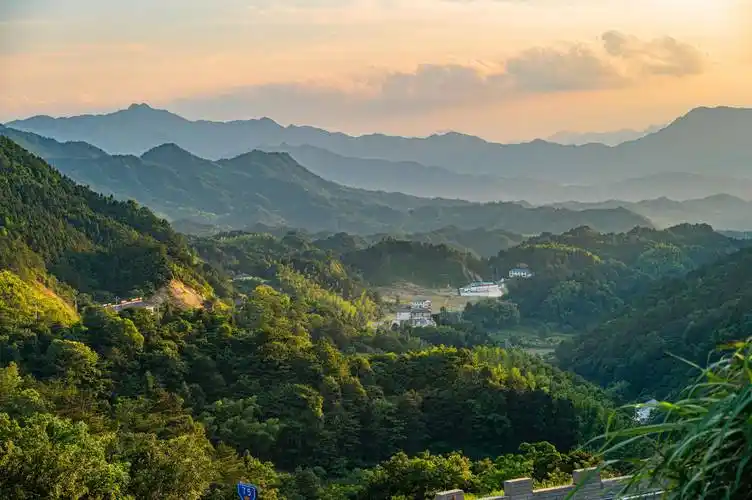 The Dabie Mountains form a thousand-kilometer backbone separating China's Yangtze civilization from its northern Huai heartland—a watershed divide roughly analogous to the Pyrenees between Atlantic and Mediterranean, or the Carpathians guarding the Pannonian plain. Geologically ancient granite uplifts, these peaks sheltered human retreat for millennia and later served as a revolutionary stronghold during the 1940s Chinese Civil War, when communist forces used the dense forests as cover. Today the area remains one of the few corners of eastern China where primary forest has never been commercially logged.
Baima Jian's summit push covers six to seven kilometers one-way, the lower half stone-stepped and gentle, the upper half scrambling over granite outcrops reminiscent of Scotland's Cairngorms or the Italian Dolomite foothills. No cable car mars the approach; hikers traverse millennial rhododendron groves in May and June, then pierce corridors of twisted pines and fantastical rock formations. A stone marker at the top proclaims "1777," offering on clear days a horizon of rolling ranges dissolving into cloud seas—visual theater rivaling anything in the European Alps.
The park's second pillar, Longjing Gorge, threads through a sequence of waterfalls—the Dragon King's Cup, Dragon Gate Leap, and Divine Dragon Hand—whose tiered cascades recall Switzerland's Lauterbrunnen or Norway's Geiranger cliffs in miniature. Below lies Bieshan Lake, a high-altitude tarn where summer boat rides skim glassy water framed by forested ridges. The combined mountain-gorge-lake circuit gives a layered experience similar to pairing Scotland's Loch Lomond with a Glencoe traverse.
Peak season admission (March through October) runs 110 yuan, dropping to 66 in winter; Longjing Gorge charges 90 separately. Gates open 07:00 to 17:00 year-round. There is no summit café, so pack water and trail food. Lodging clusters at the mountain's base, where the Dabieshan Villa Resort and family-run guesthouses offer meals and beds—summer and holiday weekends require advance booking. The nearest city, Lu'an, lies roughly 90 kilometers east with bus connections to Hefei and Wuhan.
The prime windows are May and June, when ancient rhododendrons bloom in crimson drifts, and September through October, when autumn foliage ignites the ridges and cloud seas swirl below. Summer remains popular for its cool 22°C average escape from the Yangtze lowlands, though mosquitoes and occasional snakes merit caution. Sturdy hiking boots with grip, trekking poles or knee braces, rain shells, sun protection, and insect repellent form the essential kit. Enter before 9 a.m. and reserve a half-day for the summit; less ambitious visitors can stick to Longjing Gorge's gentle boardwalks or add a summer lake cruise.
Weather flips fast on the peak—afternoon storms can slick the granite steps within minutes, so descend early if clouds build. Those with cardiac or hypertension issues should forgo the summit push. Smoking, campfires, and littering are prohibited throughout; straying off marked trails damages fragile ecosystems harboring endangered species such as Reeves's pheasant. The park embraces Leave No Trace principles, asking visitors to honor both the wilderness and the rural mountain communities who steward this extraordinary highland sanctuary.
The Dabie Mountains form a thousand-kilometer backbone separating China's Yangtze civilization from its northern Huai heartland—a watershed divide roughly analogous to the Pyrenees between Atlantic and Mediterranean, or the Carpathians guarding the Pannonian plain. Geologically ancient granite uplifts, these peaks sheltered human retreat for millennia and later served as a revolutionary stronghold during the 1940s Chinese Civil War, when communist forces used the dense forests as cover. Today the area remains one of the few corners of eastern China where primary forest has never been commercially logged.
Baima Jian's summit push covers six to seven kilometers one-way, the lower half stone-stepped and gentle, the upper half scrambling over granite outcrops reminiscent of Scotland's Cairngorms or the Italian Dolomite foothills. No cable car mars the approach; hikers traverse millennial rhododendron groves in May and June, then pierce corridors of twisted pines and fantastical rock formations. A stone marker at the top proclaims "1777," offering on clear days a horizon of rolling ranges dissolving into cloud seas—visual theater rivaling anything in the European Alps.
The park's second pillar, Longjing Gorge, threads through a sequence of waterfalls—the Dragon King's Cup, Dragon Gate Leap, and Divine Dragon Hand—whose tiered cascades recall Switzerland's Lauterbrunnen or Norway's Geiranger cliffs in miniature. Below lies Bieshan Lake, a high-altitude tarn where summer boat rides skim glassy water framed by forested ridges. The combined mountain-gorge-lake circuit gives a layered experience similar to pairing Scotland's Loch Lomond with a Glencoe traverse.
Peak season admission (March through October) runs 110 yuan, dropping to 66 in winter; Longjing Gorge charges 90 separately. Gates open 07:00 to 17:00 year-round. There is no summit café, so pack water and trail food. Lodging clusters at the mountain's base, where the Dabieshan Villa Resort and family-run guesthouses offer meals and beds—summer and holiday weekends require advance booking. The nearest city, Lu'an, lies roughly 90 kilometers east with bus connections to Hefei and Wuhan.
The prime windows are May and June, when ancient rhododendrons bloom in crimson drifts, and September through October, when autumn foliage ignites the ridges and cloud seas swirl below. Summer remains popular for its cool 22°C average escape from the Yangtze lowlands, though mosquitoes and occasional snakes merit caution. Sturdy hiking boots with grip, trekking poles or knee braces, rain shells, sun protection, and insect repellent form the essential kit. Enter before 9 a.m. and reserve a half-day for the summit; less ambitious visitors can stick to Longjing Gorge's gentle boardwalks or add a summer lake cruise.
Weather flips fast on the peak—afternoon storms can slick the granite steps within minutes, so descend early if clouds build. Those with cardiac or hypertension issues should forgo the summit push. Smoking, campfires, and littering are prohibited throughout; straying off marked trails damages fragile ecosystems harboring endangered species such as Reeves's pheasant. The park embraces Leave No Trace principles, asking visitors to honor both the wilderness and the rural mountain communities who steward this extraordinary highland sanctuary.