Mint Valley Ecological Park
⭐ 4.20
Mint Valley Ecological Park, Zhugou Town, Queshan County, Zhumadian City, Henan Province, China
 Humanity's love affair with mint stretches back to ancient Egypt, where it appeared in the Ebers Papyrus around 1550 BCE, and to the Greeks and Romans who wove it into festival garlands. In China, mint has been a cornerstone of traditional herbal medicine for over two millennia, prescribed for clearing internal heat and easing headaches. Mint Valley continues this dual East-West legacy on an unusually grand scale. While the formal knot beds of Oxford's physic garden or the manicured herb terraces of Provence may feel more sculpted, here the herb sprawls in fragrant waves reminiscent of a Tuscan lavender field in summer—only green, and bracingly cool to the nose.
The park's defining feature is more than a thousand mu of continuous mint cultivation that transforms rolling farmland into a shimmering emerald sea. From midsummer to early autumn the plants reach peak aromatic intensity, releasing menthol-rich oils with every breeze. Walking the field paths becomes a multi-sensory experience: visitors see the uniform geometric rows, hear the rustle of leaves, and—most distinctively—are enveloped in a clean, invigorating scent uncommon to most outdoor destinations. The visual similarity to the lavender plains of Valensole in southern France is striking, though the fragrance here leans sharp and refreshing rather than floral and sweet.
What sets Mint Valley apart from purely scenic herb gardens is its participatory design. Guests wander into designated plots and harvest fresh mint leaves by hand, then carry them to on-site craft workshops where instructors guide them in making herbal sachets, distilled hydrosols, and brewed teas. This "pick-and-make" model echoes the harvest traditions of European herb festivals in places like Provence, but mirrors equally the Chinese practice of gathering medicinal plants from the wild. Finished products make lightweight, fragrant souvenirs that capture the visit long after the journey home.
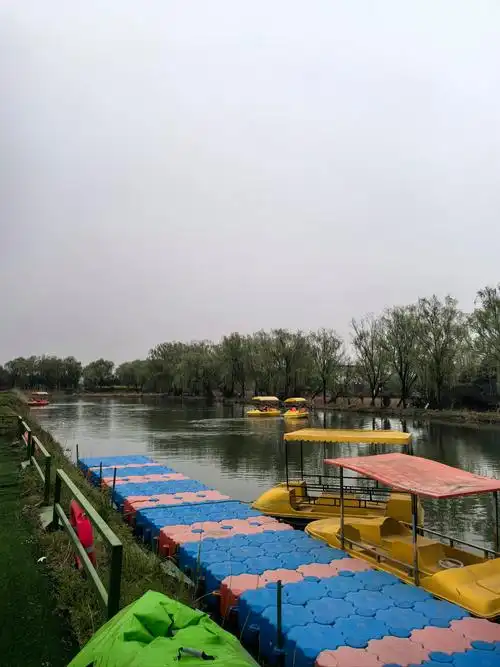
A flat, three-kilometre ecological path loops around a central lake, weaving past wetlands planted with native water flora, secondary forest stands, and bird-watching hides that attract kingfishers and egrets. The gentle gradient makes the loop suitable for toddlers and grandparents alike. A dedicated camping area shaded by willows welcomes those wishing to overnight, while a small petting zone features gentle goats and rabbits alongside timber play structures and rope climbing nets—comparable in spirit to a Scandinavian open-air-life farm park. Parents appreciate the unhurried rhythm and the chance for children to burn off energy.
The on-site restaurant leans fully into the mint theme, serving dishes where the local farm-to-table ethos meets herbal creativity. Specialties include chilled jelly noodles tossed with crushed mint, mint-scented rice pudding drizzled with brown sugar syrup, and slow-braised free-range chicken finished with handfuls of fresh leaves—a flavour profile that marries rural Henan cooking with subtle herbal European techniques. Beverages range from iced mint lemonade to small pots of brewed mint tea, all prepared that morning from garden-fresh cuttings.
Entry to Mint Valley costs around 20 RMB, with modest separate fees for picking plots and craft workshops. The park lies roughly thirty minutes by car from central Zhumadian and is easiest reached by private vehicle or taxi. Summer visitors should pack mosquito repellent, sun hats, and sturdy shoes; spring brings wildflowers to the surrounding hills, autumn paints them gold, and winter is quiet but cold. Sticking to marked paths protects the mint roots and ensures the landscape remains fragrant for seasons to come.
Humanity's love affair with mint stretches back to ancient Egypt, where it appeared in the Ebers Papyrus around 1550 BCE, and to the Greeks and Romans who wove it into festival garlands. In China, mint has been a cornerstone of traditional herbal medicine for over two millennia, prescribed for clearing internal heat and easing headaches. Mint Valley continues this dual East-West legacy on an unusually grand scale. While the formal knot beds of Oxford's physic garden or the manicured herb terraces of Provence may feel more sculpted, here the herb sprawls in fragrant waves reminiscent of a Tuscan lavender field in summer—only green, and bracingly cool to the nose.
The park's defining feature is more than a thousand mu of continuous mint cultivation that transforms rolling farmland into a shimmering emerald sea. From midsummer to early autumn the plants reach peak aromatic intensity, releasing menthol-rich oils with every breeze. Walking the field paths becomes a multi-sensory experience: visitors see the uniform geometric rows, hear the rustle of leaves, and—most distinctively—are enveloped in a clean, invigorating scent uncommon to most outdoor destinations. The visual similarity to the lavender plains of Valensole in southern France is striking, though the fragrance here leans sharp and refreshing rather than floral and sweet.
What sets Mint Valley apart from purely scenic herb gardens is its participatory design. Guests wander into designated plots and harvest fresh mint leaves by hand, then carry them to on-site craft workshops where instructors guide them in making herbal sachets, distilled hydrosols, and brewed teas. This "pick-and-make" model echoes the harvest traditions of European herb festivals in places like Provence, but mirrors equally the Chinese practice of gathering medicinal plants from the wild. Finished products make lightweight, fragrant souvenirs that capture the visit long after the journey home.
A flat, three-kilometre ecological path loops around a central lake, weaving past wetlands planted with native water flora, secondary forest stands, and bird-watching hides that attract kingfishers and egrets. The gentle gradient makes the loop suitable for toddlers and grandparents alike. A dedicated camping area shaded by willows welcomes those wishing to overnight, while a small petting zone features gentle goats and rabbits alongside timber play structures and rope climbing nets—comparable in spirit to a Scandinavian open-air-life farm park. Parents appreciate the unhurried rhythm and the chance for children to burn off energy.
The on-site restaurant leans fully into the mint theme, serving dishes where the local farm-to-table ethos meets herbal creativity. Specialties include chilled jelly noodles tossed with crushed mint, mint-scented rice pudding drizzled with brown sugar syrup, and slow-braised free-range chicken finished with handfuls of fresh leaves—a flavour profile that marries rural Henan cooking with subtle herbal European techniques. Beverages range from iced mint lemonade to small pots of brewed mint tea, all prepared that morning from garden-fresh cuttings.
Entry to Mint Valley costs around 20 RMB, with modest separate fees for picking plots and craft workshops. The park lies roughly thirty minutes by car from central Zhumadian and is easiest reached by private vehicle or taxi. Summer visitors should pack mosquito repellent, sun hats, and sturdy shoes; spring brings wildflowers to the surrounding hills, autumn paints them gold, and winter is quiet but cold. Sticking to marked paths protects the mint roots and ensures the landscape remains fragrant for seasons to come.