Zhu Gou Revolutionary Memorial Hall
⭐ 4.40
Zhumadian City, Henan Province, China
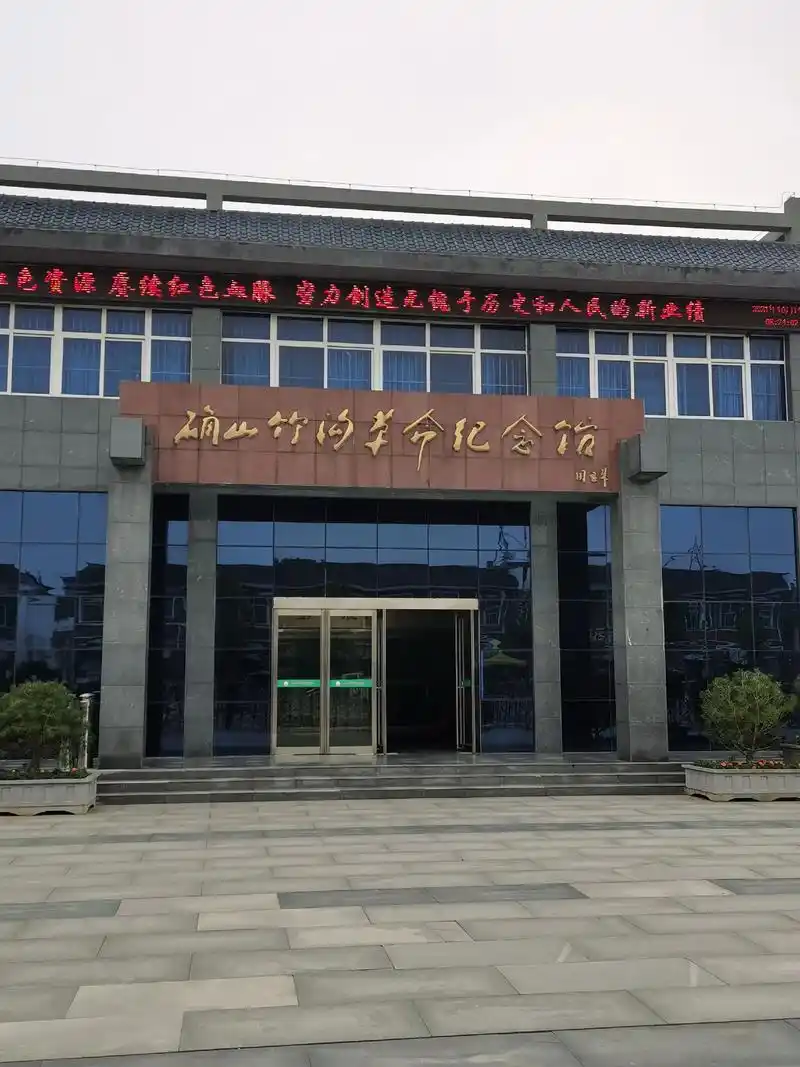 Established in 1956 and inaugurated in 1958 under a name personally inscribed by Premier Zhou Enlai, the memorial hall preserves the legacy of a critical wartime headquarters during China's Anti-Japanese War (1937–1945), roughly contemporary with European resistance movements against Axis powers. While Mao Zedong's main base at Yan'an in Shaanxi remains the most famous CCP wartime stronghold, Zhugou served as the Central Plains Bureau's command center from 1938 to 1939, earning its "Little Yan'an" epithet. Senior leaders including Liu Shaoqi (later President of the PRC), Li Xiannian, and the famed commander Peng Xuefeng coordinated military strategy and grassroots mobilization here, making it second in strategic importance only to Yan'an for the Central Plains region.
The 580-acre memorial complex encompasses 8,200 square meters of exhibition space, with the historical core comprising 182 preserved buildings arranged in traditional Chinese courtyard style (siheyuan) reminiscent of Beijing's hutong neighborhoods or classical compounds found in historic cities like Luoyang. The Gushanchong old site group nestles within verdant mountain folds, where modest dwellings once housed revolutionary leaders. The most poignant feature remains a pomegranate tree personally planted by Liu Shaoqi beside his former office—a living monument echoing the symbolic gardens of European political memorials like Lenin's preserved dacha or Roosevelt's Hyde Park retreat. The layout balances authentic revolutionary-era atmosphere with the regional architectural character of southern Henan.
With over 6,300 artifacts including 1,500 classified as nationally precious items, the exhibitions unfold across six thematic sections chronicling early revolutionary activities, base area construction, strategic support from the Central Plains Bureau, armed struggle, martyrdom, and post-1949 development. Display techniques blend original documents, period photographs, and immersive scene reconstructions—methodology comparable to European war museums such as London's Imperial War Museum or Berlin's German Historical Museum. The adjacent Martyrs' Cemetery adds solemn gravity, functioning much like military cemeteries such as Normandy's American Cemetery or Moscow's Novodevichy.
Admission is free, though visitors must present valid identification (passport for foreign tourists) for registration. The hall closes Mondays, operating Tuesday through Sunday from 8:30 AM to 4:30 PM in winter and spring, extending to 5:30 PM in summer and autumn, with final entry one hour before closing. Advance booking is recommended via telephone (0396-7100010), particularly for guided tour services catering to groups. Allow two to three hours for a meaningful visit; audio guides and professional docents significantly enhance comprehension of the dense historical narrative.
Beyond its political significance, the memorial offers Western travelers a rare window into the lesser-known Central Plains theater of WWII-era resistance, complementing visits to Yan'an or Jinggangshan with a more intimate, less crowded experience. The site pairs naturally with the Zhugou Revolutionary Martyrs' Cemetery and extends into a half-day or full-day red heritage circuit combining the Queshan Provisional Security Committee Memorial and the dramatic granite landscapes of Chayashan Scenic Area. As a National Patriotic Education Demonstration Base and one of China's first National Defense Education Sites, it remains a living classroom where revolutionary history, architectural preservation, and rural Henan scenery converge—offering profound insight into the human dimensions of twentieth-century Chinese history.
Established in 1956 and inaugurated in 1958 under a name personally inscribed by Premier Zhou Enlai, the memorial hall preserves the legacy of a critical wartime headquarters during China's Anti-Japanese War (1937–1945), roughly contemporary with European resistance movements against Axis powers. While Mao Zedong's main base at Yan'an in Shaanxi remains the most famous CCP wartime stronghold, Zhugou served as the Central Plains Bureau's command center from 1938 to 1939, earning its "Little Yan'an" epithet. Senior leaders including Liu Shaoqi (later President of the PRC), Li Xiannian, and the famed commander Peng Xuefeng coordinated military strategy and grassroots mobilization here, making it second in strategic importance only to Yan'an for the Central Plains region.
The 580-acre memorial complex encompasses 8,200 square meters of exhibition space, with the historical core comprising 182 preserved buildings arranged in traditional Chinese courtyard style (siheyuan) reminiscent of Beijing's hutong neighborhoods or classical compounds found in historic cities like Luoyang. The Gushanchong old site group nestles within verdant mountain folds, where modest dwellings once housed revolutionary leaders. The most poignant feature remains a pomegranate tree personally planted by Liu Shaoqi beside his former office—a living monument echoing the symbolic gardens of European political memorials like Lenin's preserved dacha or Roosevelt's Hyde Park retreat. The layout balances authentic revolutionary-era atmosphere with the regional architectural character of southern Henan.
With over 6,300 artifacts including 1,500 classified as nationally precious items, the exhibitions unfold across six thematic sections chronicling early revolutionary activities, base area construction, strategic support from the Central Plains Bureau, armed struggle, martyrdom, and post-1949 development. Display techniques blend original documents, period photographs, and immersive scene reconstructions—methodology comparable to European war museums such as London's Imperial War Museum or Berlin's German Historical Museum. The adjacent Martyrs' Cemetery adds solemn gravity, functioning much like military cemeteries such as Normandy's American Cemetery or Moscow's Novodevichy.
Admission is free, though visitors must present valid identification (passport for foreign tourists) for registration. The hall closes Mondays, operating Tuesday through Sunday from 8:30 AM to 4:30 PM in winter and spring, extending to 5:30 PM in summer and autumn, with final entry one hour before closing. Advance booking is recommended via telephone (0396-7100010), particularly for guided tour services catering to groups. Allow two to three hours for a meaningful visit; audio guides and professional docents significantly enhance comprehension of the dense historical narrative.
Beyond its political significance, the memorial offers Western travelers a rare window into the lesser-known Central Plains theater of WWII-era resistance, complementing visits to Yan'an or Jinggangshan with a more intimate, less crowded experience. The site pairs naturally with the Zhugou Revolutionary Martyrs' Cemetery and extends into a half-day or full-day red heritage circuit combining the Queshan Provisional Security Committee Memorial and the dramatic granite landscapes of Chayashan Scenic Area. As a National Patriotic Education Demonstration Base and one of China's first National Defense Education Sites, it remains a living classroom where revolutionary history, architectural preservation, and rural Henan scenery converge—offering profound insight into the human dimensions of twentieth-century Chinese history.