Ma'anshan Cultural Center
⭐ 3.80
Yushan District, Ma'anshan City, Anhui Province, China
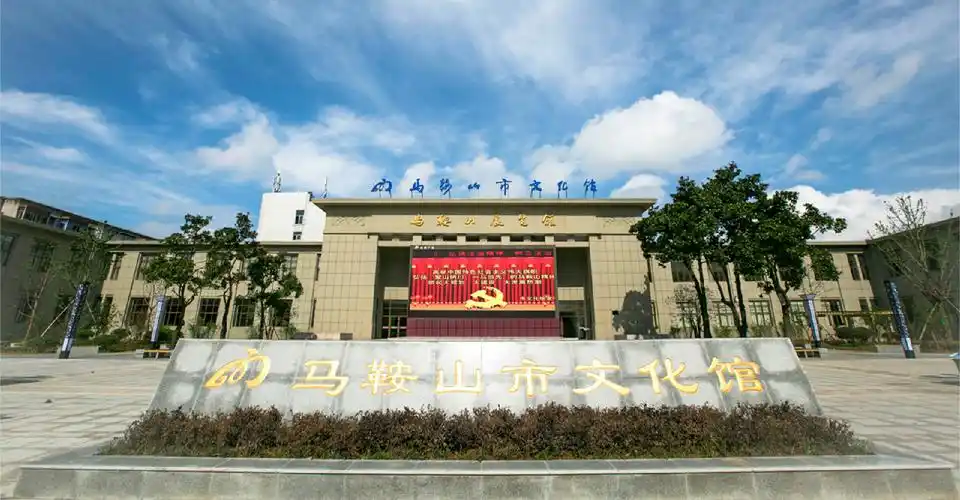 Established in 1971 during the early years of China's reform-minded opening up, the Ma'anshan Cultural Center has served the community for over five decades from its location on Jiefang Road in Huashan District. In the global context of civic cultural institutions, it plays a role similar to a combined municipal arts council and folk museum—think of it as Ma'anshan's equivalent of a community arts complex like the Barbican Centre in London or Lincoln Center in New York, but with a stronger emphasis on local heritage preservation. In 2023, it earned a perfect score in Anhui Province's public cultural service assessment, a testament to its programming excellence.
The 5,600-square-meter complex occupies a late-twentieth-century building that has been thoughtfully modernized through successive renovations. Internally, the layout is functional rather than monumental, prioritizing visitor flow and exhibition flexibility over architectural grandeur—much like a contemporary European cultural center rather than a palatial museum. Three permanent zones anchor the experience: a heritage gallery showcasing local traditions such as the Caishijump and Hehe folk performances, a rotating fine art gallery hosting calligraphy, painting, and photography exhibitions, and the standout digital experience pavilion that bridges ancient culture with twenty-first-century technology.
Culturally, the center functions as the beating heart of Ma'anshan's grassroots artistic life, training tens of thousands of residents annually in disciplines ranging from calligraphy and piano to traditional paper-cutting—all completely free of charge. During Spring Festival and Lantern Festival celebrations, the adjacent public square transforms into an open-air theater with mass performances that recall European town-square festivals. The intangible heritage zone allows visitors to try traditional crafts firsthand, offering the kind of tactile cultural exchange rarely available in standard museum settings.
Practical planning is straightforward: visit weekday mornings from 9:30 to 11:30 or afternoons from 14:30 to 16:00, allowing 1.5 to 2 hours for a complete tour. The center is fully accessible and, notably for international visitors, the VR installations and interactive digital exhibits minimize language barriers—gesture and visual immersion carry most of the storytelling. Check the "Ma'anshan Culture and Tourism" WeChat account or official website for current event listings; weekend "Big Stage" performances and special exhibitions are common. Remember that photography without flash, quiet voices, and no food or drink are required.
The center pairs beautifully with Ma'anshan's other heritage sites to form a half-day cultural circuit. Combine your visit with the nearby City Museum, which showcases the area's famous Three Kingdoms-era history, and the Li Bai Cultural Garden, honoring the Tang Dynasty poet who is said to have drowned at nearby Caishi Rock while reaching for the moon's reflection. This trio offers foreign travelers a remarkably compact journey through Chinese literary legend, ancient military history, and living contemporary folk culture—all within walking distance of one another in this steel-city-turned-cultural-destination along the Yangtze River.
Established in 1971 during the early years of China's reform-minded opening up, the Ma'anshan Cultural Center has served the community for over five decades from its location on Jiefang Road in Huashan District. In the global context of civic cultural institutions, it plays a role similar to a combined municipal arts council and folk museum—think of it as Ma'anshan's equivalent of a community arts complex like the Barbican Centre in London or Lincoln Center in New York, but with a stronger emphasis on local heritage preservation. In 2023, it earned a perfect score in Anhui Province's public cultural service assessment, a testament to its programming excellence.
The 5,600-square-meter complex occupies a late-twentieth-century building that has been thoughtfully modernized through successive renovations. Internally, the layout is functional rather than monumental, prioritizing visitor flow and exhibition flexibility over architectural grandeur—much like a contemporary European cultural center rather than a palatial museum. Three permanent zones anchor the experience: a heritage gallery showcasing local traditions such as the Caishijump and Hehe folk performances, a rotating fine art gallery hosting calligraphy, painting, and photography exhibitions, and the standout digital experience pavilion that bridges ancient culture with twenty-first-century technology.
Culturally, the center functions as the beating heart of Ma'anshan's grassroots artistic life, training tens of thousands of residents annually in disciplines ranging from calligraphy and piano to traditional paper-cutting—all completely free of charge. During Spring Festival and Lantern Festival celebrations, the adjacent public square transforms into an open-air theater with mass performances that recall European town-square festivals. The intangible heritage zone allows visitors to try traditional crafts firsthand, offering the kind of tactile cultural exchange rarely available in standard museum settings.
Practical planning is straightforward: visit weekday mornings from 9:30 to 11:30 or afternoons from 14:30 to 16:00, allowing 1.5 to 2 hours for a complete tour. The center is fully accessible and, notably for international visitors, the VR installations and interactive digital exhibits minimize language barriers—gesture and visual immersion carry most of the storytelling. Check the "Ma'anshan Culture and Tourism" WeChat account or official website for current event listings; weekend "Big Stage" performances and special exhibitions are common. Remember that photography without flash, quiet voices, and no food or drink are required.
The center pairs beautifully with Ma'anshan's other heritage sites to form a half-day cultural circuit. Combine your visit with the nearby City Museum, which showcases the area's famous Three Kingdoms-era history, and the Li Bai Cultural Garden, honoring the Tang Dynasty poet who is said to have drowned at nearby Caishi Rock while reaching for the moon's reflection. This trio offers foreign travelers a remarkably compact journey through Chinese literary legend, ancient military history, and living contemporary folk culture—all within walking distance of one another in this steel-city-turned-cultural-destination along the Yangtze River.