Tiantangzhai Scenic Area
⭐ 4.60
Tiantangzhai Scenic Area, Jinzhai County, Lu'an City, Anhui Province, China
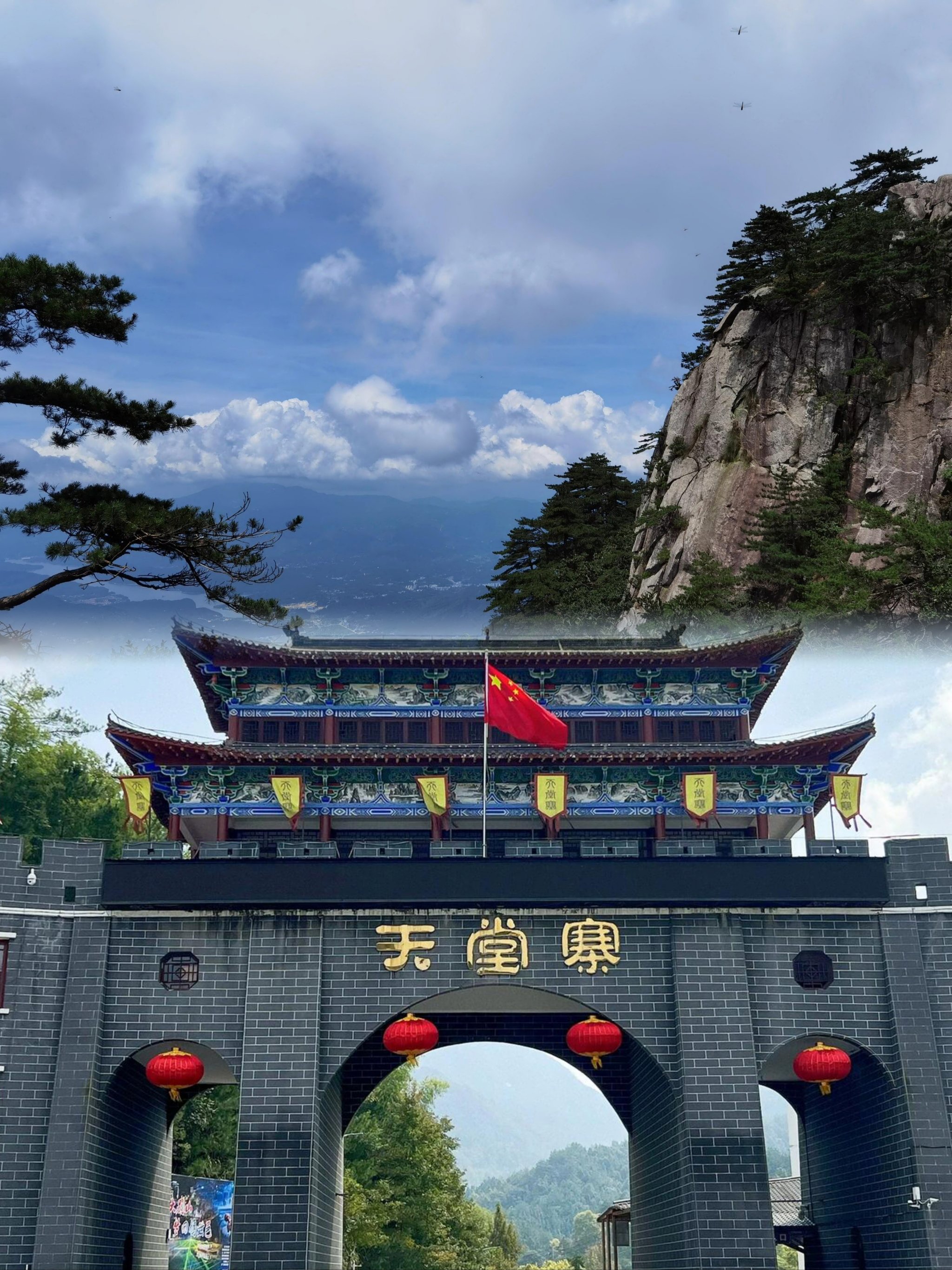 Perched astride the watershed divide between the Yangtze and Huai river systems, Tiantangzhai commands a strategic position where Anhui meets Hubei—ancient travelers spoke of "one foot in two provinces." This rugged spine of the Dabie Mountains served as a natural fortress throughout Chinese history, but its defining chapter came in August 1947, when Liu Bocheng and Deng Xiaoping led their People's Liberation Army forces on one of the Chinese Civil War's most audacious maneuvers: a 500-kilometer lightning thrust into Dabie that cracked open the Nationalist defensive cordon and foreshadowed the communist victory three years later. Hikers can still visit the modest Forward Command Post, a humble cluster of stone cottages that once coordinated this game-changing campaign.
The mountain's signature spectacle is a remarkable fifty-tier waterfall system plunging along its central gorge. Jiuying, or Nine Shadows, Falls drops a thunderous 71 meters—comparable in drama to Slovenia's Savica—while the aptly named Spilling Jade and Lovers' Falls cascade in sequence, transforming the entire valley into a roaring white ribbon after summer rains. The accompanying White Horse Grand Canyon offers an easy, shaded boardwalk threaded through fern-clad ravines where families can wade into ice-cold streams, making the area equally rewarding for casual strollers and serious trekkers seeking alpine solitude.
Tiantangzhai's geology delivers a thousand-meter wall of granite cliffs and fantastically weathered pinnacles—Dragon Sword Peak, General Rock, and White Horse Peak—carved into shapes that have inspired Chinese mythology for millennia. Like a smaller-scale Yellowstone meets the Italian Dolomites, the park showcases dramatic ridgelines that vanish into rolling cloud seas at dawn. Photographers flock to the main peak and Wuchu Pass for sunrise, when summer thunderstorms clear overnight and golden light pierces the mist across both Anhui and Hubei—a phenomenon rivaling the famed cloud vistas of Huangshan, but with a fraction of the crowds.
Designated a national forest park as early as 1992, Tiantangzhai remains one of the last pockets of East China's original subtropical evergreen broadleaf forest, with 96.5% canopy coverage and over 1,881 documented plant species. Its old-growth stands harbor rare fauna including the clouded leopard and the Chinese giant salamander, while the air carries negative-ion concentrations typical of deep wilderness. With midsummer temperatures around a refreshing 22°C—roughly ten degrees cooler than Shanghai or Nanjing—the park has earned its reputation as the Yangtze Delta's premier escape from the humid plains below.
Beyond its natural splendor, Tiantangzhai functions as a living classroom for "red tourism," the nationwide educational initiative that draws Chinese visitors to revolutionary heritage sites. The preserved Forward Command Post, Red Post Office, and various memorial markers along the summit trails contextualize the Liu-Deng campaign within the mountain's sublime scenery. For Western visitors, this layering of political history onto pristine landscape offers a uniquely Chinese perspective on how nature, ideology, and national memory can intertwine—comparable to encountering WWI trenches in the French Alps or partisan memorials in the Italian Apennines.
Admission runs approximately 100 RMB per person, with a mandatory shuttle bus (28 RMB) connecting the entrance to the cable car station. Cable cars operate in segments, each leg requiring a separate ticket. Plan a two-day visit: arrive at a village guesthouse on day one, explore the gentle White Horse Canyon in the afternoon, then ride the cable car to Wuchu Pass on day two before descending on foot past the five main waterfalls (five to six hours total). Sturdy hiking shoes, trekking poles, rain gear, and at least two liters of water per person are essential; bring a light jacket for the summit, where temperatures drop sharply. Book tickets online during peak season (July through October) to skip entrance queues.
Perched astride the watershed divide between the Yangtze and Huai river systems, Tiantangzhai commands a strategic position where Anhui meets Hubei—ancient travelers spoke of "one foot in two provinces." This rugged spine of the Dabie Mountains served as a natural fortress throughout Chinese history, but its defining chapter came in August 1947, when Liu Bocheng and Deng Xiaoping led their People's Liberation Army forces on one of the Chinese Civil War's most audacious maneuvers: a 500-kilometer lightning thrust into Dabie that cracked open the Nationalist defensive cordon and foreshadowed the communist victory three years later. Hikers can still visit the modest Forward Command Post, a humble cluster of stone cottages that once coordinated this game-changing campaign.
The mountain's signature spectacle is a remarkable fifty-tier waterfall system plunging along its central gorge. Jiuying, or Nine Shadows, Falls drops a thunderous 71 meters—comparable in drama to Slovenia's Savica—while the aptly named Spilling Jade and Lovers' Falls cascade in sequence, transforming the entire valley into a roaring white ribbon after summer rains. The accompanying White Horse Grand Canyon offers an easy, shaded boardwalk threaded through fern-clad ravines where families can wade into ice-cold streams, making the area equally rewarding for casual strollers and serious trekkers seeking alpine solitude.
Tiantangzhai's geology delivers a thousand-meter wall of granite cliffs and fantastically weathered pinnacles—Dragon Sword Peak, General Rock, and White Horse Peak—carved into shapes that have inspired Chinese mythology for millennia. Like a smaller-scale Yellowstone meets the Italian Dolomites, the park showcases dramatic ridgelines that vanish into rolling cloud seas at dawn. Photographers flock to the main peak and Wuchu Pass for sunrise, when summer thunderstorms clear overnight and golden light pierces the mist across both Anhui and Hubei—a phenomenon rivaling the famed cloud vistas of Huangshan, but with a fraction of the crowds.
Designated a national forest park as early as 1992, Tiantangzhai remains one of the last pockets of East China's original subtropical evergreen broadleaf forest, with 96.5% canopy coverage and over 1,881 documented plant species. Its old-growth stands harbor rare fauna including the clouded leopard and the Chinese giant salamander, while the air carries negative-ion concentrations typical of deep wilderness. With midsummer temperatures around a refreshing 22°C—roughly ten degrees cooler than Shanghai or Nanjing—the park has earned its reputation as the Yangtze Delta's premier escape from the humid plains below.
Beyond its natural splendor, Tiantangzhai functions as a living classroom for "red tourism," the nationwide educational initiative that draws Chinese visitors to revolutionary heritage sites. The preserved Forward Command Post, Red Post Office, and various memorial markers along the summit trails contextualize the Liu-Deng campaign within the mountain's sublime scenery. For Western visitors, this layering of political history onto pristine landscape offers a uniquely Chinese perspective on how nature, ideology, and national memory can intertwine—comparable to encountering WWI trenches in the French Alps or partisan memorials in the Italian Apennines.
Admission runs approximately 100 RMB per person, with a mandatory shuttle bus (28 RMB) connecting the entrance to the cable car station. Cable cars operate in segments, each leg requiring a separate ticket. Plan a two-day visit: arrive at a village guesthouse on day one, explore the gentle White Horse Canyon in the afternoon, then ride the cable car to Wuchu Pass on day two before descending on foot past the five main waterfalls (five to six hours total). Sturdy hiking shoes, trekking poles, rain gear, and at least two liters of water per person are essential; bring a light jacket for the summit, where temperatures drop sharply. Book tickets online during peak season (July through October) to skip entrance queues.