Mount Lao Scenic Area
⭐ 4.60
Laoshan Scenic Area, Laoshan District, Qingdao, Shandong, China
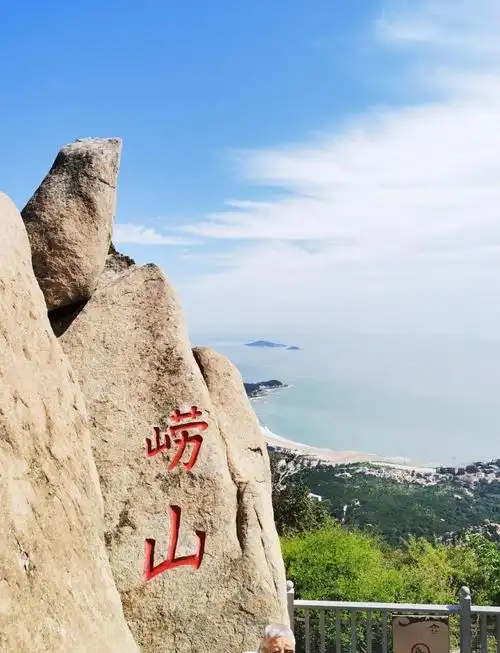 Geologically and visually, Laoshan belongs to the same family of dramatic coastal mountains as Japan's Mt. Koya or the Italian Apuan Alps that tumble into the Tyrrhenian Sea—but with a uniquely Chinese twist. Its weathered granite pinnacles, including the lion-shaped Shizifeng and the calligraphic "Shou" longevity peak, plunge sheer into turquoise water, creating the celebrated "mountain-meets-sea" scenery that has astonished poets since the Han dynasty. Summer temperatures run 3–5°C cooler than downtown Qingdao, and the dense forests release a steady stream of negative ions, making it both a literal and figurative breath of fresh air.
The mountain's soul, however, is Taoist. Taiqing Palace, founded in the Western Han era (roughly contemporary with the Roman Empire's heyday), ranks as the "Second Sacred Grove" under the Quanzhen school—the dominant Taoist tradition that swept China during the Mongol-led Yuan dynasty, much as Benedictine monasticism reshaped medieval Europe. Eminent masters including Qiu Chuji, who famously counseled Genghis Khan in the 13th century, and the legendary sword-wielding sage Zhang Sanfeng reportedly practiced here. Centuries-old ginkgo and camellia trees shade temple courtyards in a quietly contemplative atmosphere that mirrors the Taoist principle of harmony between humanity and nature.
Pu Songling's late-17th-century Liaozhai Zhiyi—China's equivalent of Boccaccio's Decameron or Canterbury Tales in its blending of the supernatural and the moral—drew heavily on Laoshan's mystique. The classic tale "The Taoist of Mount Lao," in which a lazy scholar masters the art of slicing paper into moonlit butterflies, and "Fragrant Jade," about a牡丹 flower spirit, are both set here. Visitors walking the coastal boardwalks can almost picture fox spirits gliding between the rocks.
For first-time visitors with only a day to spare, the Taiqing-Yankou southern route is unbeatable: spend the morning exploring Taiqing Palace and its sea-view boardwalk, then head to Yankou in the afternoon to climb the cliffside Mietian Cave and summit Tianyuan Pavilion for sweeping views across the Yellow Sea. Tickets run around 180 yuan in peak season; reach the park via Metro Line 4 to Dahedong Station, then transfer to the scenic shuttle bus. Plan a full single theme per visit—the park spans too much for any one trip.
Practical notes: August brings frequent fog and rain—pack non-slip hiking shoes, a light rain jacket, and a layer for the summit. Mietian Cave involves steep, narrow ladders unsuitable for those with vertigo. Drivers must reserve entry passes in advance and park in designated lots outside the core area. During peak season (May–October), book tickets online three to seven days ahead under your real name, as gates close at 16:30 sharp.
Geologically and visually, Laoshan belongs to the same family of dramatic coastal mountains as Japan's Mt. Koya or the Italian Apuan Alps that tumble into the Tyrrhenian Sea—but with a uniquely Chinese twist. Its weathered granite pinnacles, including the lion-shaped Shizifeng and the calligraphic "Shou" longevity peak, plunge sheer into turquoise water, creating the celebrated "mountain-meets-sea" scenery that has astonished poets since the Han dynasty. Summer temperatures run 3–5°C cooler than downtown Qingdao, and the dense forests release a steady stream of negative ions, making it both a literal and figurative breath of fresh air.
The mountain's soul, however, is Taoist. Taiqing Palace, founded in the Western Han era (roughly contemporary with the Roman Empire's heyday), ranks as the "Second Sacred Grove" under the Quanzhen school—the dominant Taoist tradition that swept China during the Mongol-led Yuan dynasty, much as Benedictine monasticism reshaped medieval Europe. Eminent masters including Qiu Chuji, who famously counseled Genghis Khan in the 13th century, and the legendary sword-wielding sage Zhang Sanfeng reportedly practiced here. Centuries-old ginkgo and camellia trees shade temple courtyards in a quietly contemplative atmosphere that mirrors the Taoist principle of harmony between humanity and nature.
Pu Songling's late-17th-century Liaozhai Zhiyi—China's equivalent of Boccaccio's Decameron or Canterbury Tales in its blending of the supernatural and the moral—drew heavily on Laoshan's mystique. The classic tale "The Taoist of Mount Lao," in which a lazy scholar masters the art of slicing paper into moonlit butterflies, and "Fragrant Jade," about a牡丹 flower spirit, are both set here. Visitors walking the coastal boardwalks can almost picture fox spirits gliding between the rocks.
For first-time visitors with only a day to spare, the Taiqing-Yankou southern route is unbeatable: spend the morning exploring Taiqing Palace and its sea-view boardwalk, then head to Yankou in the afternoon to climb the cliffside Mietian Cave and summit Tianyuan Pavilion for sweeping views across the Yellow Sea. Tickets run around 180 yuan in peak season; reach the park via Metro Line 4 to Dahedong Station, then transfer to the scenic shuttle bus. Plan a full single theme per visit—the park spans too much for any one trip.
Practical notes: August brings frequent fog and rain—pack non-slip hiking shoes, a light rain jacket, and a layer for the summit. Mietian Cave involves steep, narrow ladders unsuitable for those with vertigo. Drivers must reserve entry passes in advance and park in designated lots outside the core area. During peak season (May–October), book tickets online three to seven days ahead under your real name, as gates close at 16:30 sharp.