Badaguan Scenic Area
⭐ 4.50
Badaguan Scenic Area, Shinan District, Qingdao, Shandong Province, China
 **A 20th-Century Resort Born from Geopolitics**
Badaguan rose to prominence during the 1930s, when Qingdao had only recently emerged from its era as a German and then Japanese treaty port. Planners, keen to rival the great European spa towns like Baden-Baden or Biarritz, designated this coastal stretch south of the old city as an exclusive convalescent and holiday quarter. The ten avenues were named after China's great defensive passes—Shanhaiguan, Juyongguan, Shaoguan, and others—lending a poetic gravitas to what is essentially a seaside garden suburb. Over the decades, the district hosted Chairman Mao Zedong, Premier Zhou Enlai, and Cambodian Prince Norodom Sihanouk, making its salons an unlikely stage for 20th-century Chinese diplomacy.
**An Open-Air Museum of World Architecture**
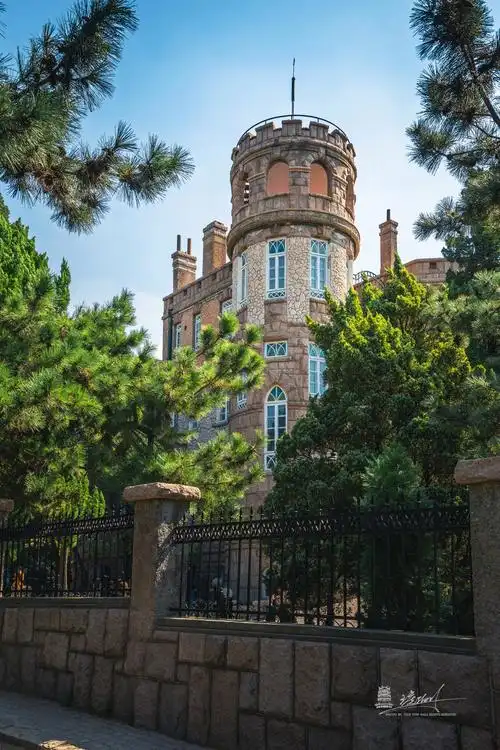
The neighborhood's signature feature is its astonishing architectural diversity: more than 300 villas, designed in over twenty national styles, including Gothic, Baroque, Rococo, Russian country, Danish, and Japanese. The Chinese-American architect Liang Sicheng, who helped save Beijing's ancient city walls, called Badaguan Qingdao's finest urban "drawing room." Standout buildings include the castle-like Huashi Lou ("Stone Flower Villa") with its clifftop sea views, the fairy-tale Princess Tower on Juyongguan Road, the Japanese-style Marshal's Building on Shanhaiguan Road, and the grand VIP Guesthouse, once reserved for visiting heads of state. A combined ticket (around ¥50) unlocks the interiors of the most celebrated villas.
**Streets of Bloom and Seasonal Color**
What distinguishes Badaguan from other historic enclaves is its deliberate horticultural choreography: each of the ten streets is lined with a signature tree species, producing a year-round palette of changing color. Peach blossoms herald spring on Shaoguan Road, crape myrtles blaze through summer on Zhengyangguan Road, ginkgo trees turn Shaoguan Road to gold in autumn, and the cedars of Zijingguan Road stay evergreen through winter. This red-roof, green-leaf, blue-sea tableau draws so many wedding photographers that the area is effectively China's largest outdoor bridal studio.
**Practical Visitor Information**
The streets themselves are open around the clock and free of charge, with no advance reservation needed. Individual villa entrances cost roughly ¥8.5 for Huashi Lou and ¥20 for the Princess Tower. The district is well served by Metro Line 3 (Zhongshan Park Station Exit C or Taipingjiao Park Station Exit B) and city buses 26, 31, 202, and 316. Allow two to three hours for a leisurely stroll, or three to four if you intend to tour the villas and linger by the sea. Early mornings before 8 a.m. or evenings after 5 p.m. offer the softest light and fewest crowds; April–May and October–November are the most pleasant months.
**How to Make the Most of Your Visit**
Pair your walk through Badaguan with a swim at the adjacent No. 2 Bathing Beach, a stroll through Taipingjiao Park, and a longer coastal wander out to Wheat Island for a fuller sense of Qingdao's seaboard. Bring water and a snack, as cafés inside the historic zone are scarce, and observe the heritage-protection rules: do not climb on or carve the century-old masonry, and respect the privacy of villas still used as residences or offices. Finish the day with a seafood dinner and a cold glass of Qingdao's world-famous Tsingtao beer to complete a uniquely cosmopolitan Chinese seaside experience.
**A 20th-Century Resort Born from Geopolitics**
Badaguan rose to prominence during the 1930s, when Qingdao had only recently emerged from its era as a German and then Japanese treaty port. Planners, keen to rival the great European spa towns like Baden-Baden or Biarritz, designated this coastal stretch south of the old city as an exclusive convalescent and holiday quarter. The ten avenues were named after China's great defensive passes—Shanhaiguan, Juyongguan, Shaoguan, and others—lending a poetic gravitas to what is essentially a seaside garden suburb. Over the decades, the district hosted Chairman Mao Zedong, Premier Zhou Enlai, and Cambodian Prince Norodom Sihanouk, making its salons an unlikely stage for 20th-century Chinese diplomacy.
**An Open-Air Museum of World Architecture**
The neighborhood's signature feature is its astonishing architectural diversity: more than 300 villas, designed in over twenty national styles, including Gothic, Baroque, Rococo, Russian country, Danish, and Japanese. The Chinese-American architect Liang Sicheng, who helped save Beijing's ancient city walls, called Badaguan Qingdao's finest urban "drawing room." Standout buildings include the castle-like Huashi Lou ("Stone Flower Villa") with its clifftop sea views, the fairy-tale Princess Tower on Juyongguan Road, the Japanese-style Marshal's Building on Shanhaiguan Road, and the grand VIP Guesthouse, once reserved for visiting heads of state. A combined ticket (around ¥50) unlocks the interiors of the most celebrated villas.
**Streets of Bloom and Seasonal Color**
What distinguishes Badaguan from other historic enclaves is its deliberate horticultural choreography: each of the ten streets is lined with a signature tree species, producing a year-round palette of changing color. Peach blossoms herald spring on Shaoguan Road, crape myrtles blaze through summer on Zhengyangguan Road, ginkgo trees turn Shaoguan Road to gold in autumn, and the cedars of Zijingguan Road stay evergreen through winter. This red-roof, green-leaf, blue-sea tableau draws so many wedding photographers that the area is effectively China's largest outdoor bridal studio.
**Practical Visitor Information**
The streets themselves are open around the clock and free of charge, with no advance reservation needed. Individual villa entrances cost roughly ¥8.5 for Huashi Lou and ¥20 for the Princess Tower. The district is well served by Metro Line 3 (Zhongshan Park Station Exit C or Taipingjiao Park Station Exit B) and city buses 26, 31, 202, and 316. Allow two to three hours for a leisurely stroll, or three to four if you intend to tour the villas and linger by the sea. Early mornings before 8 a.m. or evenings after 5 p.m. offer the softest light and fewest crowds; April–May and October–November are the most pleasant months.
**How to Make the Most of Your Visit**
Pair your walk through Badaguan with a swim at the adjacent No. 2 Bathing Beach, a stroll through Taipingjiao Park, and a longer coastal wander out to Wheat Island for a fuller sense of Qingdao's seaboard. Bring water and a snack, as cafés inside the historic zone are scarce, and observe the heritage-protection rules: do not climb on or carve the century-old masonry, and respect the privacy of villas still used as residences or offices. Finish the day with a seafood dinner and a cold glass of Qingdao's world-famous Tsingtao beer to complete a uniquely cosmopolitan Chinese seaside experience.