Fuyang Science and Technology Museum
⭐ 4.60
Northwest Corner of the Intersection of West Lake Avenue and Qinghe Road, Yingzhou District, Fuyang City, Anhui Province, China
 China's wave of contemporary science museums—following the late-1980s launch of Beijing's flagship China Science and Technology Museum—has spread ambitious interactive centers across the country. Fuyang, an ancient city in northwestern Anhui Province with roots stretching back centuries, channels modern ambitions into this free facility. Like Berlin's Deutsches Museum or London's Science Museum, the venue prioritizes tactile engagement over static observation, reflecting a worldwide shift in science communication that treats curiosity and discovery as essential civic virtues rather than mere educational tools.
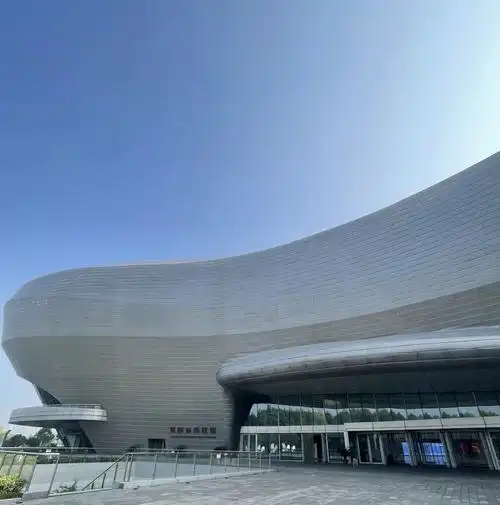
The building, part of a broader cultural complex in Fuyang's New South District, occupies roughly 13,900 square meters with 7,250 square meters dedicated to exhibits. Its purposeful, contemporary design serves function over flourish—four above-ground floors plus one subterranean level are organized into five distinct zones, each linked by clear wayfinding. Glassy, light-filled interiors echo the airy aesthetic of Singapore's ArtScience Museum, while the proximity to Shuangqing Bay Park's landscaped waterfront lends an inviting, campus-like setting that encourages leisurely exploration rather than rushed tourism.
The five halls each carve out a distinct intellectual niche: a basement virtual-reality and optical-illusion zone; a ground-floor "Science Wonderland" for young children; a second-floor "Smart Creation" hall featuring electromagnetic stage shows and robot painters; a third-floor "Me and My Home" celebrating regional innovation, including a wall honoring Fuyang-born academicians; and a fourth-floor "Between Heaven and Earth" where starry ceilings and space-travel simulators create cosmic awe. As with Stockholm's Cosmonova or Chicago's Adler Planetarium, immersive environments aim to spark scientific imagination.
Beyond the permanent installations—highlights include high-speed rail driving simulators and walk-through digestive system models—the museum hosts rotating events like drone demonstrations and science-themed theatrical performances. Visitors can easily dedicate half a day to a full day here, and the venue's 3A tourism rating plus 4.6/5 visitor satisfaction score suggest broad appeal. Families benefit from age-tailored content, while adults rediscover physics principles they may have forgotten since school. For travelers seeking an unscripted, screen-free diversion from China's ancient temples and pagodas, this museum offers a refreshingly contemporary counterpoint.
The museum opens Wednesday through Sunday from 9:00 a.m. to noon and 2:00 to 5:00 p.m., with last admission at 4:30 p.m.; it closes Mondays and Tuesdays. Since April 2026, individual advance reservations have been scrapped—simply present your passport or ID to collect free tickets on-site. Arriving at 9:00 a.m. or 2:00 p.m. sharp helps avoid the busiest stretches. Bus lines 31, 65, and 71 stop at Shuangqing Bay Park, steps from the entrance, and free parking is available for drivers. Water and rest zones exist inside, but bringing snacks is wise; abundant restaurants line the surrounding streets, and the adjacent non-heritage museum and women's-and-children's activity center make easy add-on stops.
China's wave of contemporary science museums—following the late-1980s launch of Beijing's flagship China Science and Technology Museum—has spread ambitious interactive centers across the country. Fuyang, an ancient city in northwestern Anhui Province with roots stretching back centuries, channels modern ambitions into this free facility. Like Berlin's Deutsches Museum or London's Science Museum, the venue prioritizes tactile engagement over static observation, reflecting a worldwide shift in science communication that treats curiosity and discovery as essential civic virtues rather than mere educational tools.
The building, part of a broader cultural complex in Fuyang's New South District, occupies roughly 13,900 square meters with 7,250 square meters dedicated to exhibits. Its purposeful, contemporary design serves function over flourish—four above-ground floors plus one subterranean level are organized into five distinct zones, each linked by clear wayfinding. Glassy, light-filled interiors echo the airy aesthetic of Singapore's ArtScience Museum, while the proximity to Shuangqing Bay Park's landscaped waterfront lends an inviting, campus-like setting that encourages leisurely exploration rather than rushed tourism.
The five halls each carve out a distinct intellectual niche: a basement virtual-reality and optical-illusion zone; a ground-floor "Science Wonderland" for young children; a second-floor "Smart Creation" hall featuring electromagnetic stage shows and robot painters; a third-floor "Me and My Home" celebrating regional innovation, including a wall honoring Fuyang-born academicians; and a fourth-floor "Between Heaven and Earth" where starry ceilings and space-travel simulators create cosmic awe. As with Stockholm's Cosmonova or Chicago's Adler Planetarium, immersive environments aim to spark scientific imagination.
Beyond the permanent installations—highlights include high-speed rail driving simulators and walk-through digestive system models—the museum hosts rotating events like drone demonstrations and science-themed theatrical performances. Visitors can easily dedicate half a day to a full day here, and the venue's 3A tourism rating plus 4.6/5 visitor satisfaction score suggest broad appeal. Families benefit from age-tailored content, while adults rediscover physics principles they may have forgotten since school. For travelers seeking an unscripted, screen-free diversion from China's ancient temples and pagodas, this museum offers a refreshingly contemporary counterpoint.
The museum opens Wednesday through Sunday from 9:00 a.m. to noon and 2:00 to 5:00 p.m., with last admission at 4:30 p.m.; it closes Mondays and Tuesdays. Since April 2026, individual advance reservations have been scrapped—simply present your passport or ID to collect free tickets on-site. Arriving at 9:00 a.m. or 2:00 p.m. sharp helps avoid the busiest stretches. Bus lines 31, 65, and 71 stop at Shuangqing Bay Park, steps from the entrance, and free parking is available for drivers. Water and rest zones exist inside, but bringing snacks is wise; abundant restaurants line the surrounding streets, and the adjacent non-heritage museum and women's-and-children's activity center make easy add-on stops.