Geng Family Ancestral Hall in Yingshang County
⭐ 1.50
Geng Family Ancestral Hall, Yingshang County, Fuyang City, Anhui Province, China
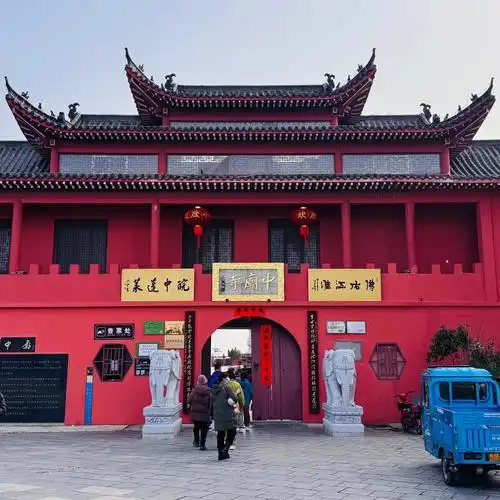 The Wu Family Ancestral Hall, situated in the village of Shizigou in Gengpeng Town, traces its origins to the Ming Hongwu era (1368–1398), the founding reign of the Ming dynasty under the Hongwu Emperor, an era roughly contemporary with the late medieval kingdoms of Europe and the rise of England's House of Tudor. Rebuilt in 1887 during the twilight years of Qing imperial rule—a period when Empress Dowager Cixi presided over a fading empire, much as the Habsburgs ruled a declining Austria-Hungary—the temple reflects centuries of clan endurance through dynastic upheaval and rural transformation.
What survives today is a single late-Qing timber hall employing traditional Chinese post-and-beam construction, with dougong bracket sets layered between columns and eaves. Unlike the soaring stone cathedrals of contemporary Europe, this structure embodies the restrained, pragmatic aesthetic of rural northern Anhui, featuring gently sloping roof lines and sturdy wooden columns that have weathered more than a century of monsoons. The craftsmanship parallels vernacular timber-framed halls found across the Yangtze basin, offering tangible insights into folk building traditions that flourished far from imperial capitals.
The hall served as the spiritual and administrative heart of the Wu clan—a community bound together by ancestor worship and Confucian filial piety, traditions that mirror Europe's medieval parish churches and noble family chapels. Within these walls, the clan would have gathered to venerate forebears, settle disputes, and recite genealogies. As a "temple-meets-council-hall" hybrid typical of northern Anhui villages, it offers researchers tangible evidence of how rural kinship networks sustained social order in late imperial China, before twentieth-century revolutions reshaped Chinese society.
Centuries of wind, rain, and neglect have taken their toll. The main hall retains its beam framework and bracket sets largely intact, yet the outer walls show alarming cracks, and all ancillary structures—the gatehouse, enclosing walls, and side chambers—have long since vanished. The temple has not been formally designated as a protected cultural relic, nor developed for tourism, leaving it in a precarious limbo similar to many undocumented European medieval ruins awaiting official recognition.
The temple lies in a remote village in YingShang County, Fuyang City, accessible only by rural roads with limited public transport. There is no entrance fee, visitor center, or interpretive signage, and the site is watched over by local villagers on a voluntary basis. Travelers should contact the YingShang County Cultural Tourism Bureau or the Fuyang Municipal Museum in advance to seek visitation permission and inquire about safety conditions, given the cracked walls and partially unstable structure.
For travelers seeking authentic encounters beyond China's polished tourist trail, this forgotten ancestral hall rewards those with curiosity about clan culture, vernacular architecture, and the quieter corners of Chinese rural heritage. Researchers of Qing-era building techniques, descendants of the Wu clan tracing their roots, and field-study enthusiasts will find this site especially valuable. Casual tourists, however, should temper expectations—come prepared for a raw, unembellished glimpse into a vanishing world rather than a curated museum experience.
The Wu Family Ancestral Hall, situated in the village of Shizigou in Gengpeng Town, traces its origins to the Ming Hongwu era (1368–1398), the founding reign of the Ming dynasty under the Hongwu Emperor, an era roughly contemporary with the late medieval kingdoms of Europe and the rise of England's House of Tudor. Rebuilt in 1887 during the twilight years of Qing imperial rule—a period when Empress Dowager Cixi presided over a fading empire, much as the Habsburgs ruled a declining Austria-Hungary—the temple reflects centuries of clan endurance through dynastic upheaval and rural transformation.
What survives today is a single late-Qing timber hall employing traditional Chinese post-and-beam construction, with dougong bracket sets layered between columns and eaves. Unlike the soaring stone cathedrals of contemporary Europe, this structure embodies the restrained, pragmatic aesthetic of rural northern Anhui, featuring gently sloping roof lines and sturdy wooden columns that have weathered more than a century of monsoons. The craftsmanship parallels vernacular timber-framed halls found across the Yangtze basin, offering tangible insights into folk building traditions that flourished far from imperial capitals.
The hall served as the spiritual and administrative heart of the Wu clan—a community bound together by ancestor worship and Confucian filial piety, traditions that mirror Europe's medieval parish churches and noble family chapels. Within these walls, the clan would have gathered to venerate forebears, settle disputes, and recite genealogies. As a "temple-meets-council-hall" hybrid typical of northern Anhui villages, it offers researchers tangible evidence of how rural kinship networks sustained social order in late imperial China, before twentieth-century revolutions reshaped Chinese society.
Centuries of wind, rain, and neglect have taken their toll. The main hall retains its beam framework and bracket sets largely intact, yet the outer walls show alarming cracks, and all ancillary structures—the gatehouse, enclosing walls, and side chambers—have long since vanished. The temple has not been formally designated as a protected cultural relic, nor developed for tourism, leaving it in a precarious limbo similar to many undocumented European medieval ruins awaiting official recognition.
The temple lies in a remote village in YingShang County, Fuyang City, accessible only by rural roads with limited public transport. There is no entrance fee, visitor center, or interpretive signage, and the site is watched over by local villagers on a voluntary basis. Travelers should contact the YingShang County Cultural Tourism Bureau or the Fuyang Municipal Museum in advance to seek visitation permission and inquire about safety conditions, given the cracked walls and partially unstable structure.
For travelers seeking authentic encounters beyond China's polished tourist trail, this forgotten ancestral hall rewards those with curiosity about clan culture, vernacular architecture, and the quieter corners of Chinese rural heritage. Researchers of Qing-era building techniques, descendants of the Wu clan tracing their roots, and field-study enthusiasts will find this site especially valuable. Casual tourists, however, should temper expectations—come prepared for a raw, unembellished glimpse into a vanishing world rather than a curated museum experience.