Guangwu Square, Jieshou City
⭐ 3.50
Guangwu Square, Jieshou City, Fuyang City, Anhui Province, China
 Guangwu Town holds a distinction unmatched elsewhere in China: it is the only administrative place name in the country derived from an imperial reign title—"Guangwu" (光武), meaning "Radiant Martial," was the era name adopted by Liu Xiu when he restored the Han dynasty in 25 AD after years of civil war. In Western terms, the story parallels Emperor Augustus reunifying Rome after a protracted conflict—Liu Xiu's military campaigns against rival warlords culminated in his coronation as Emperor Guangwu, and his legacy shaped Chinese governance for centuries. The town preserves fragments of that founding mythology in ways no history book can replicate.
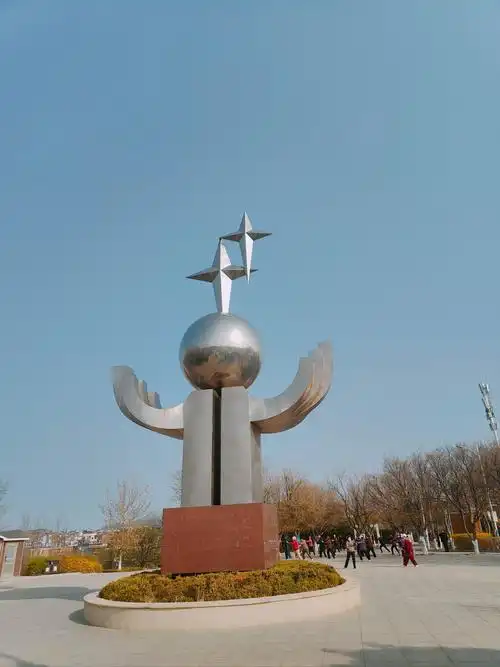
The square itself is an unpretentious civic plaza typical of small northern Anhui settlements, surrounded by low-rise shops, modest homes, and the occasional tea stall. Near the center stands the Liu Xiu Temple, modest in scale but charged with local devotion; villagers still gather here to commemorate the emperor whose name the town bears. Though far smaller than Beijing's Temple of Heaven or any European imperial basilica, the shrine offers an intimate glimpse into grassroots Han-era veneration largely absent from China's polished tourist circuits.
Scattered within walking distance are additional relics that reward curious walkers. The Elephant Trunk Well, named for the shape of its stone rim, is tied to oral traditions about Liu Xiu's flight from his rival Wang Mang's forces—a tale locals recount with the same relish that Mediterranean villagers tell stories of Roman emperors. Nearby lie the foundations of Xinyang City, a Han-period fortress whose earthwork remnants hint at a once-impressive walled settlement. Together these sites form an open-air museum of early imperial China without admission fees or crowds.
What truly distinguishes a visit is the living atmosphere rather than the stone. Market days transform the square into a bustling scene of farmers trading produce, sizzling vendors, and children weaving between stalls—a slice of authentic rural life that contrasts sharply with the choreographed heritage experiences of cities like Xi'an or Luoyang. Visitors can sample Jieshou fried meatballs (crisp outside, tender within), zhuang mo (a hearty griddled flatbread), and bowls of fragrant lamb soup, staples of the Anhui–Henan borderlands cuisine.
Practical planning is straightforward but requires forethought. Guangwu Town sits about 16 kilometers from Jieshou's urban center, near the Anhui–Henan provincial boundary; driving yourself or hiring a taxi from Jieshou is strongly advised, as public bus connections are infrequent and slow. Spring and autumn offer the most comfortable temperatures, while summer visitors should plan outings for the cooler evening hours. English signage is virtually nonexistent, so a translation app is essential, and engaging a local guide—often arranged through Jieshou's cultural tourism office—will enrich the experience considerably. Those with extra time can pair the visit with Jieshou's Li Street cultural market and a hands-on workshop at the local painted pottery heritage park.
Guangwu Town holds a distinction unmatched elsewhere in China: it is the only administrative place name in the country derived from an imperial reign title—"Guangwu" (光武), meaning "Radiant Martial," was the era name adopted by Liu Xiu when he restored the Han dynasty in 25 AD after years of civil war. In Western terms, the story parallels Emperor Augustus reunifying Rome after a protracted conflict—Liu Xiu's military campaigns against rival warlords culminated in his coronation as Emperor Guangwu, and his legacy shaped Chinese governance for centuries. The town preserves fragments of that founding mythology in ways no history book can replicate.
The square itself is an unpretentious civic plaza typical of small northern Anhui settlements, surrounded by low-rise shops, modest homes, and the occasional tea stall. Near the center stands the Liu Xiu Temple, modest in scale but charged with local devotion; villagers still gather here to commemorate the emperor whose name the town bears. Though far smaller than Beijing's Temple of Heaven or any European imperial basilica, the shrine offers an intimate glimpse into grassroots Han-era veneration largely absent from China's polished tourist circuits.
Scattered within walking distance are additional relics that reward curious walkers. The Elephant Trunk Well, named for the shape of its stone rim, is tied to oral traditions about Liu Xiu's flight from his rival Wang Mang's forces—a tale locals recount with the same relish that Mediterranean villagers tell stories of Roman emperors. Nearby lie the foundations of Xinyang City, a Han-period fortress whose earthwork remnants hint at a once-impressive walled settlement. Together these sites form an open-air museum of early imperial China without admission fees or crowds.
What truly distinguishes a visit is the living atmosphere rather than the stone. Market days transform the square into a bustling scene of farmers trading produce, sizzling vendors, and children weaving between stalls—a slice of authentic rural life that contrasts sharply with the choreographed heritage experiences of cities like Xi'an or Luoyang. Visitors can sample Jieshou fried meatballs (crisp outside, tender within), zhuang mo (a hearty griddled flatbread), and bowls of fragrant lamb soup, staples of the Anhui–Henan borderlands cuisine.
Practical planning is straightforward but requires forethought. Guangwu Town sits about 16 kilometers from Jieshou's urban center, near the Anhui–Henan provincial boundary; driving yourself or hiring a taxi from Jieshou is strongly advised, as public bus connections are infrequent and slow. Spring and autumn offer the most comfortable temperatures, while summer visitors should plan outings for the cooler evening hours. English signage is virtually nonexistent, so a translation app is essential, and engaging a local guide—often arranged through Jieshou's cultural tourism office—will enrich the experience considerably. Those with extra time can pair the visit with Jieshou's Li Street cultural market and a hands-on workshop at the local painted pottery heritage park.