Happy Camp
⭐ 4.60
Yuelu Mountain Scenic Area, Yuelu District, Changsha City, Hunan Province, China
 [Historical Context]
"Happy Camp" debuted in 1997, the same year Hong Kong returned to China and the year after Dolly the Sheep became the first cloned mammal. Over its 24-year run, it became one of Asia's longest-running variety shows, broadcasting live from Hunan Broadcasting System's studios in Changsha. Think of it as a Chinese cousin to America's "The Carol Burnett Show" or Britain's "Blue Peter" in its cultural footprint, mixing celebrity interviews, music, and game-show antics. When production ceased in 2021, the original studio transitioned to "Hello Saturday," leaving no dedicated museum at the Changsha site. Enthusiasts seeking the show's legacy must travel roughly 50 kilometers south to Xiangtan.
[Architecture and Setting]
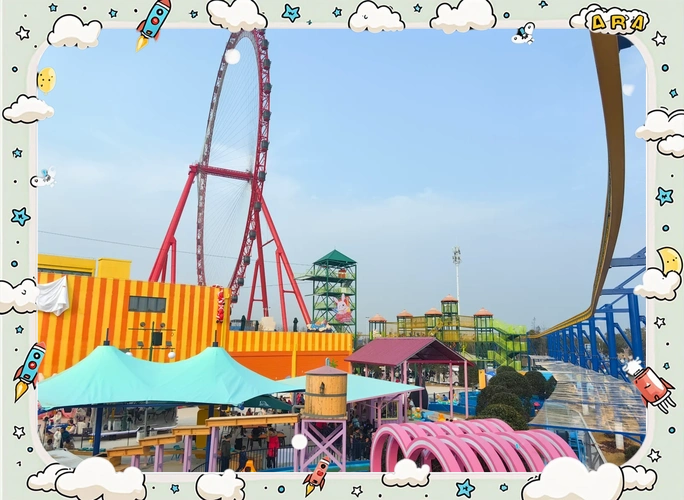
The Xiangtan venue sits within the Mango Youth Wharf, a riverside entertainment district along the Xiang River, the same waterway that flows through Changsha and feeds into the mighty Yangtze. Unlike the centuries-old temples and Confucian academies that define much of Hunan's heritage architecture, this park is thoroughly modern and purpose-built for play. The design language borrows directly from the show's iconic stage graphics, neon color palettes, and oversized typography. Visitors move between pavilions housing science-experiment stations, climbing walls, trampoline zones, and racing tracks rather than admiring ancient courtyards or carved wooden beams.
[Cultural Significance]
Happy Camp played a similar role in Chinese youth culture that variety shows like "Total Wipeout" or "It's a Knockout" played in Europe, transforming passive viewers into engaged participants who dreamed of someday joining the studio audience. The theme park crystallizes that aspiration by letting fans physically step into familiar game segments. For domestic travelers, particularly families, it represents a rare crossover between broadcast nostalgia and edutainment, blending STEM activities with the slapstick physicality of traditional Chinese festival games. For international visitors, it offers an accessible window into contemporary pop culture that you cannot find in any guidebook.
[Practical Visit Information]
The park is located at Wanlou Mango Youth Wharf in Xiangtan, not in Changsha as many expect, so plan an extra hour's drive or a short high-speed-train ride south of the provincial capital. Always check the official Mango Youth Wharf platforms for current opening hours, ticket prices, height restrictions, and any online reservation requirements before traveling. The original Changsha broadcasting complex is a working production facility, not a tourist attraction, and visitors should not attempt to enter. Ride the X-bus aerial route for the best views over the Xiang River and the surrounding parkland, especially in the late afternoon when the light softens over the water.
[Why Visit]
For Western travelers who have grown up watching game shows and crave something interactive rather than contemplative, this park offers a refreshing change from Hunan's famous ancient sites such as Yuelu Academy or the Mawangdui tomb museum. Children and teenagers will love the hands-on science stations, trampolines, and bumper cars, while parents can appreciate the nostalgic conversations the experience sparks. Combine it with a morning exploring Changsha's historic sites and an afternoon crossing to Xiangtan for the park, creating a day that balances two millennium of Chinese history with one of its most recognizable modern entertainment exports.
[Historical Context]
"Happy Camp" debuted in 1997, the same year Hong Kong returned to China and the year after Dolly the Sheep became the first cloned mammal. Over its 24-year run, it became one of Asia's longest-running variety shows, broadcasting live from Hunan Broadcasting System's studios in Changsha. Think of it as a Chinese cousin to America's "The Carol Burnett Show" or Britain's "Blue Peter" in its cultural footprint, mixing celebrity interviews, music, and game-show antics. When production ceased in 2021, the original studio transitioned to "Hello Saturday," leaving no dedicated museum at the Changsha site. Enthusiasts seeking the show's legacy must travel roughly 50 kilometers south to Xiangtan.
[Architecture and Setting]
The Xiangtan venue sits within the Mango Youth Wharf, a riverside entertainment district along the Xiang River, the same waterway that flows through Changsha and feeds into the mighty Yangtze. Unlike the centuries-old temples and Confucian academies that define much of Hunan's heritage architecture, this park is thoroughly modern and purpose-built for play. The design language borrows directly from the show's iconic stage graphics, neon color palettes, and oversized typography. Visitors move between pavilions housing science-experiment stations, climbing walls, trampoline zones, and racing tracks rather than admiring ancient courtyards or carved wooden beams.
[Cultural Significance]
Happy Camp played a similar role in Chinese youth culture that variety shows like "Total Wipeout" or "It's a Knockout" played in Europe, transforming passive viewers into engaged participants who dreamed of someday joining the studio audience. The theme park crystallizes that aspiration by letting fans physically step into familiar game segments. For domestic travelers, particularly families, it represents a rare crossover between broadcast nostalgia and edutainment, blending STEM activities with the slapstick physicality of traditional Chinese festival games. For international visitors, it offers an accessible window into contemporary pop culture that you cannot find in any guidebook.
[Practical Visit Information]
The park is located at Wanlou Mango Youth Wharf in Xiangtan, not in Changsha as many expect, so plan an extra hour's drive or a short high-speed-train ride south of the provincial capital. Always check the official Mango Youth Wharf platforms for current opening hours, ticket prices, height restrictions, and any online reservation requirements before traveling. The original Changsha broadcasting complex is a working production facility, not a tourist attraction, and visitors should not attempt to enter. Ride the X-bus aerial route for the best views over the Xiang River and the surrounding parkland, especially in the late afternoon when the light softens over the water.
[Why Visit]
For Western travelers who have grown up watching game shows and crave something interactive rather than contemplative, this park offers a refreshing change from Hunan's famous ancient sites such as Yuelu Academy or the Mawangdui tomb museum. Children and teenagers will love the hands-on science stations, trampolines, and bumper cars, while parents can appreciate the nostalgic conversations the experience sparks. Combine it with a morning exploring Changsha's historic sites and an afternoon crossing to Xiangtan for the park, creating a day that balances two millennium of Chinese history with one of its most recognizable modern entertainment exports.