Changsha Eco-Zoo
⭐ 4.30
Changsha Eco-Zoo, Changsha City, Hunan Province, China
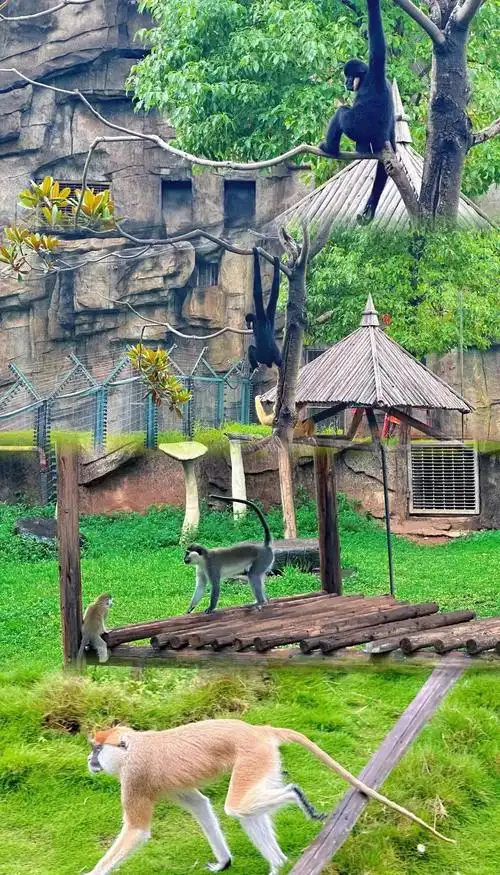 The concept of keeping wild animals for public viewing stretches back millennia—from King Solomon's legendary menagerie to the imperial gardens of China's Zhou Dynasty and Europe's Baroque-era royal collections. The modern zoological garden, however, emerged in 19th-century Europe with London's zoo (opened 1828) and Berlin's Tierpark, pioneering the idea of scientific conservation alongside public entertainment. Changsha Ecological Zoo traces its lineage to the city's original zoo, which has been progressively transformed through multiple expansions into one of central China's most ambitious wildlife facilities. Its 1,500-mu footprint—roughly the size of Monaco—blends seamlessly into forested hills, recalling the landscape-immersion philosophy pioneered by Hagenbeck's Tierpark in Hamburg over a century ago.
The park's signature feature is its drive-through safari zone, where reinforced shuttle buses transport visitors through open-range enclosures inhabited by African lions, Siberian tigers, black bears, and wolf packs. This concept echoes safari parks established in the American Midwest during the 1970s and Africa's pioneering conservancies, but with the added safety of perimeter fencing and armored vehicles. The full circuit takes 20 to 30 minutes, with right-side seats offering the best vantage. Optional paid feeding experiences allow guests to toss meat from specially equipped vehicles, adding a thrilling dimension to the traditional zoo visit.
Beyond the big cats, the pedestrian zones showcase a remarkable diversity of species across themed pavilions. The Giant Panda House stars "Damei" and "Qingqing," whose bamboo-munching antics between 9 and 11 AM have made them regional celebrities—a reminder of how China's "panda diplomacy" has captured global imagination since the 1950s. Golden snub-nosed monkeys leap through canopy walkways, while the giraffe plaza offers officially sanctioned feeding encounters where children can touch a giraffe's neck under staff supervision. Flamingos gather on a dedicated island, evoking the bird sanctuaries of southern Spain or Kenya's Lake Nakuru.
The Polar Pavilion—among the largest in south-central China—maintains year-round sub-zero temperatures, offering Changsha residents a refreshing escape during the sweltering summer months. Inside, visitors encounter penguins, Arctic wolves, and otters amid glittering ice sculptures, an experience that recalls Iceland's Blue Lagoon winter tours or the refrigerated galleries of Copenhagen's Den Blå Planet aquarium. Daily performances at the Forest Theatre feature trained sea lions and parrots, though visitors seeking a quieter experience can skip these and instead linger at the smaller mammal pavilions scattered throughout the wooded paths.
Admission runs approximately 40 yuan for pedestrian access only, 75–80 yuan for the combined drive-through and walking ticket, and 148–180 yuan for premium packages including the Polar Pavilion and animal shows. The park opens daily from 9 AM to 5 PM (last entry at 4 PM), with extended summer hours often stretching to 9 PM in July and August; the drive-through closes at 4 PM. Subway Line 1 to Shangshuangtang Station connects to bus 125 or 27 for the south gate, while drivers should navigate to the north gate where parking is plentiful.
What distinguishes Changsha Ecological Zoo from more famous counterparts like Beijing Zoo or Shanghai Wild Animal Park is its intimate scale and thoughtfully designed dual-mode layout, allowing families to tailor their visit from a brisk two-hour circuit to a leisurely full-day affair. Strict no-feeding policies protect both visitors and animals—only officially distributed food may be offered under staff guidance. Summer visitors should pack sunscreen, insect repellent, and refillable water bottles, as Hunan's notorious humidity can be punishing even in shaded woodland. The park represents one of central China's most rewarding intersections of conservation, education, and accessible family entertainment, ideal for travelers seeking an unhurried immersion into the region's biodiversity.
The concept of keeping wild animals for public viewing stretches back millennia—from King Solomon's legendary menagerie to the imperial gardens of China's Zhou Dynasty and Europe's Baroque-era royal collections. The modern zoological garden, however, emerged in 19th-century Europe with London's zoo (opened 1828) and Berlin's Tierpark, pioneering the idea of scientific conservation alongside public entertainment. Changsha Ecological Zoo traces its lineage to the city's original zoo, which has been progressively transformed through multiple expansions into one of central China's most ambitious wildlife facilities. Its 1,500-mu footprint—roughly the size of Monaco—blends seamlessly into forested hills, recalling the landscape-immersion philosophy pioneered by Hagenbeck's Tierpark in Hamburg over a century ago.
The park's signature feature is its drive-through safari zone, where reinforced shuttle buses transport visitors through open-range enclosures inhabited by African lions, Siberian tigers, black bears, and wolf packs. This concept echoes safari parks established in the American Midwest during the 1970s and Africa's pioneering conservancies, but with the added safety of perimeter fencing and armored vehicles. The full circuit takes 20 to 30 minutes, with right-side seats offering the best vantage. Optional paid feeding experiences allow guests to toss meat from specially equipped vehicles, adding a thrilling dimension to the traditional zoo visit.
Beyond the big cats, the pedestrian zones showcase a remarkable diversity of species across themed pavilions. The Giant Panda House stars "Damei" and "Qingqing," whose bamboo-munching antics between 9 and 11 AM have made them regional celebrities—a reminder of how China's "panda diplomacy" has captured global imagination since the 1950s. Golden snub-nosed monkeys leap through canopy walkways, while the giraffe plaza offers officially sanctioned feeding encounters where children can touch a giraffe's neck under staff supervision. Flamingos gather on a dedicated island, evoking the bird sanctuaries of southern Spain or Kenya's Lake Nakuru.
The Polar Pavilion—among the largest in south-central China—maintains year-round sub-zero temperatures, offering Changsha residents a refreshing escape during the sweltering summer months. Inside, visitors encounter penguins, Arctic wolves, and otters amid glittering ice sculptures, an experience that recalls Iceland's Blue Lagoon winter tours or the refrigerated galleries of Copenhagen's Den Blå Planet aquarium. Daily performances at the Forest Theatre feature trained sea lions and parrots, though visitors seeking a quieter experience can skip these and instead linger at the smaller mammal pavilions scattered throughout the wooded paths.
Admission runs approximately 40 yuan for pedestrian access only, 75–80 yuan for the combined drive-through and walking ticket, and 148–180 yuan for premium packages including the Polar Pavilion and animal shows. The park opens daily from 9 AM to 5 PM (last entry at 4 PM), with extended summer hours often stretching to 9 PM in July and August; the drive-through closes at 4 PM. Subway Line 1 to Shangshuangtang Station connects to bus 125 or 27 for the south gate, while drivers should navigate to the north gate where parking is plentiful.
What distinguishes Changsha Ecological Zoo from more famous counterparts like Beijing Zoo or Shanghai Wild Animal Park is its intimate scale and thoughtfully designed dual-mode layout, allowing families to tailor their visit from a brisk two-hour circuit to a leisurely full-day affair. Strict no-feeding policies protect both visitors and animals—only officially distributed food may be offered under staff guidance. Summer visitors should pack sunscreen, insect repellent, and refillable water bottles, as Hunan's notorious humidity can be punishing even in shaded woodland. The park represents one of central China's most rewarding intersections of conservation, education, and accessible family entertainment, ideal for travelers seeking an unhurried immersion into the region's biodiversity.