Tianxin Pavilion
⭐ 3.80
Tianxin Pavilion, Changsha, Hunan Province, China
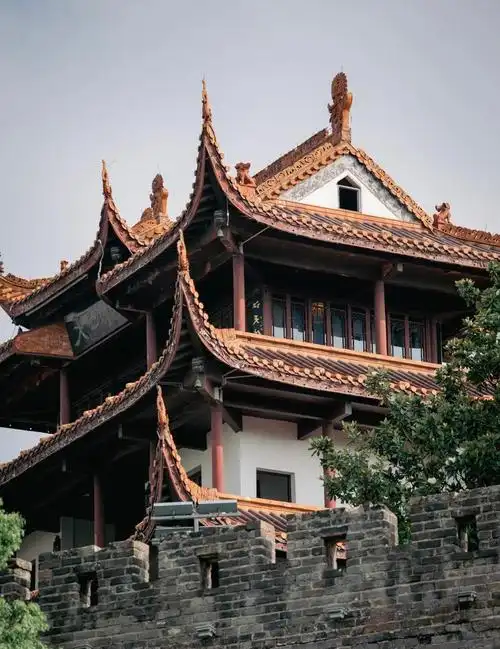 Rising from the southeastern corner of Changsha's ancient citadel, Tianxin Pavilion was first raised during the Wanli reign of the Ming Dynasty (1573–1620) as a watchtower and garrison keep. The 251-meter wall beneath it harbors even older bricks still bearing Hongwu-era (1368–1398) inscriptions, making it a younger cousin to Europe's medieval fortifications like Ávila or Carcassonne. The site has witnessed Changsha's 3,000-year evolution and remains scarred by the 1938 Wenxi conflagration—often called China's "Dresden moment"—when the Imperial Japanese Army firebombed the city in a five-day inferno that gutted the old town yet somehow left this tower standing.
The main pavilion is a dignified three-story structure of brick and timber, its upturned eaves and crimson columns echoing the Ming aesthetic that travellers will recognize from Beijing's Drum Tower or Kyoto's pagodas. Climb 55 uneven steps—12, then 22, then 21—to the top, and you'll be rewarded with the same commanding sightlines soldiers once used to spot approaching armies. The adjoining ramparts retain their original defensive features—cannon platforms, barbican gates, and crenellations—while a solemn memorial complex called the Chonglie ("Honoring the Valiant") Gate, Pagoda, and Pavilion pays tribute to those who fell defending Changsha during the Second Sino-Japanese War.
Designated a National Key Cultural Heritage Site and a 4A-rated scenic area, Tianxin Pavilion stands as the spiritual heart of Huxiang culture, the regional tradition that produced figures from the ancient poet Qu Yuan to modern revolutionary leaders. The pavilion's celebrated plaque inscription—"All four directions of cloud-capped mountains fall within the eye; ten thousand households' smoke and fire are always my concern"—captures the bond between ruler and city that echoes across cultures. Historians often compare its layered significance to Rome's Capitoline Hill, where imperial, religious, and military memory converge in a single skyline.
The complex sits at No. 17 Tianxin Road in Tianxin District, a short five-minute stroll from Nanmenkou subway station on Line 1. Park grounds are free to wander, while entry to the tower and wall ramparts costs roughly 28–32 yuan (student tickets half-price; foreign visitors should bring passports for ID). Daytime hours run 08:00–17:30 with ticket sales stopping at 16:30; the tower section closes every Monday for maintenance. From Friday to Sunday, evening sessions run 18:30–22:00 (last entry 21:30), when lantern-lit corridors create a fairytale atmosphere along the walls.
Plan to arrive around 15:30, entering through the northeast gate to first pay respects at the Chonglie war memorial before tracing the Ming ramparts for "then-and-now" photographs. By 17:30, ascend the tower for the day's defining moment: a sunset panorama that frames Yuelu Mountain, the silvery Xiang River, Orange Isle, and the modern skyline in one sweeping composition—Changsha's signature "mountain, water, islet, and city" tableau. Wear flat non-slip shoes (the ancient steps are steep), carry a light jacket for summer evenings, and observe solemn silence in the memorial zone. Driving isn't recommended; parking in the old quarter is notoriously scarce.
Rising from the southeastern corner of Changsha's ancient citadel, Tianxin Pavilion was first raised during the Wanli reign of the Ming Dynasty (1573–1620) as a watchtower and garrison keep. The 251-meter wall beneath it harbors even older bricks still bearing Hongwu-era (1368–1398) inscriptions, making it a younger cousin to Europe's medieval fortifications like Ávila or Carcassonne. The site has witnessed Changsha's 3,000-year evolution and remains scarred by the 1938 Wenxi conflagration—often called China's "Dresden moment"—when the Imperial Japanese Army firebombed the city in a five-day inferno that gutted the old town yet somehow left this tower standing.
The main pavilion is a dignified three-story structure of brick and timber, its upturned eaves and crimson columns echoing the Ming aesthetic that travellers will recognize from Beijing's Drum Tower or Kyoto's pagodas. Climb 55 uneven steps—12, then 22, then 21—to the top, and you'll be rewarded with the same commanding sightlines soldiers once used to spot approaching armies. The adjoining ramparts retain their original defensive features—cannon platforms, barbican gates, and crenellations—while a solemn memorial complex called the Chonglie ("Honoring the Valiant") Gate, Pagoda, and Pavilion pays tribute to those who fell defending Changsha during the Second Sino-Japanese War.
Designated a National Key Cultural Heritage Site and a 4A-rated scenic area, Tianxin Pavilion stands as the spiritual heart of Huxiang culture, the regional tradition that produced figures from the ancient poet Qu Yuan to modern revolutionary leaders. The pavilion's celebrated plaque inscription—"All four directions of cloud-capped mountains fall within the eye; ten thousand households' smoke and fire are always my concern"—captures the bond between ruler and city that echoes across cultures. Historians often compare its layered significance to Rome's Capitoline Hill, where imperial, religious, and military memory converge in a single skyline.
The complex sits at No. 17 Tianxin Road in Tianxin District, a short five-minute stroll from Nanmenkou subway station on Line 1. Park grounds are free to wander, while entry to the tower and wall ramparts costs roughly 28–32 yuan (student tickets half-price; foreign visitors should bring passports for ID). Daytime hours run 08:00–17:30 with ticket sales stopping at 16:30; the tower section closes every Monday for maintenance. From Friday to Sunday, evening sessions run 18:30–22:00 (last entry 21:30), when lantern-lit corridors create a fairytale atmosphere along the walls.
Plan to arrive around 15:30, entering through the northeast gate to first pay respects at the Chonglie war memorial before tracing the Ming ramparts for "then-and-now" photographs. By 17:30, ascend the tower for the day's defining moment: a sunset panorama that frames Yuelu Mountain, the silvery Xiang River, Orange Isle, and the modern skyline in one sweeping composition—Changsha's signature "mountain, water, islet, and city" tableau. Wear flat non-slip shoes (the ancient steps are steep), carry a light jacket for summer evenings, and observe solemn silence in the memorial zone. Driving isn't recommended; parking in the old quarter is notoriously scarce.