Zhenlei Mountain
⭐ 3.80
Zhenlei Mountain Scenic Area, Shihe District, Xinyang City, Henan Province, China
 Rising modestly above the Shi River in Henan Province, Zhenlei Mountain belongs to the southern tail of the Dabie range, a chain that has shaped the military and cultural history of central China for over two millennia. The site's recorded history stretches back to the Tang Dynasty (618–907 CE), an era contemporary with the rise of Charlemagne's empire in Europe, when Leifeng Temple was first established as a Buddhist sanctuary. Pilgrims have climbed these slopes for more than a thousand years, leaving behind Ming and Qing dynasty inscriptions that lend the mountain the same timeless, layered character found at venerable European pilgrimage sites such as Monte Cassino or the Camino routes of northern Spain.
The mountain's signature spectacle, "Thunder Pool Spouting Clouds," centers on two natural stone basins near the summit. Before rainfall, vapor mysteriously billows from these pools, creating swirling formations that ancient literati ranked first among Xinyang's classical Eight Scenes. Comparable to the mist-wrapped peaks that inspired Romantic painters in the Scottish Highlands, this phenomenon shares the slopes with the aptly named Double-Breast Peak, century-old ginkgo trees that blaze gold each autumn, and the pure Shengquan (Holy Spring), whose waters locals prize for brewing the celebrated Xinyang Maojian green tea.
Leifeng Temple anchors the mountain's human heritage. Founded in the Tang era and rebuilt through the Song, Ming, and Qing dynasties, it remains a living Buddhist sanctuary, much like Italy's still-active hilltop monasteries. Each year on the third day of the third lunar month, the temple fair transforms the paths into a lively procession of worshippers and merchants, blending religious devotion with folk celebration. Scattered around the slopes are the ruins of Shengquan Temple, the legendary Wufeng Cave, and weathered Ming-era stone inscriptions, while the Pingshan Pagoda rewards those who climb its steps with sweeping views over Xinyang's urban grid and surrounding river plains.
Terraced tea gardens cascade along the lower slopes, connecting Zhenlei to Xinyang's identity as one of China's premier green-tea regions. Spring, when tender shoots emerge between March and April, invites visitors to try their hand at picking leaves alongside local farmers—an experience as immersive as participating in Tuscany's olive harvest or Provence's lavender season. Rain-soaked mornings followed by clearing skies offer the best chance to witness the famed cloud phenomenon, while early dawn brings misty sunrises and late afternoon provides soft, golden light ideal for photography.
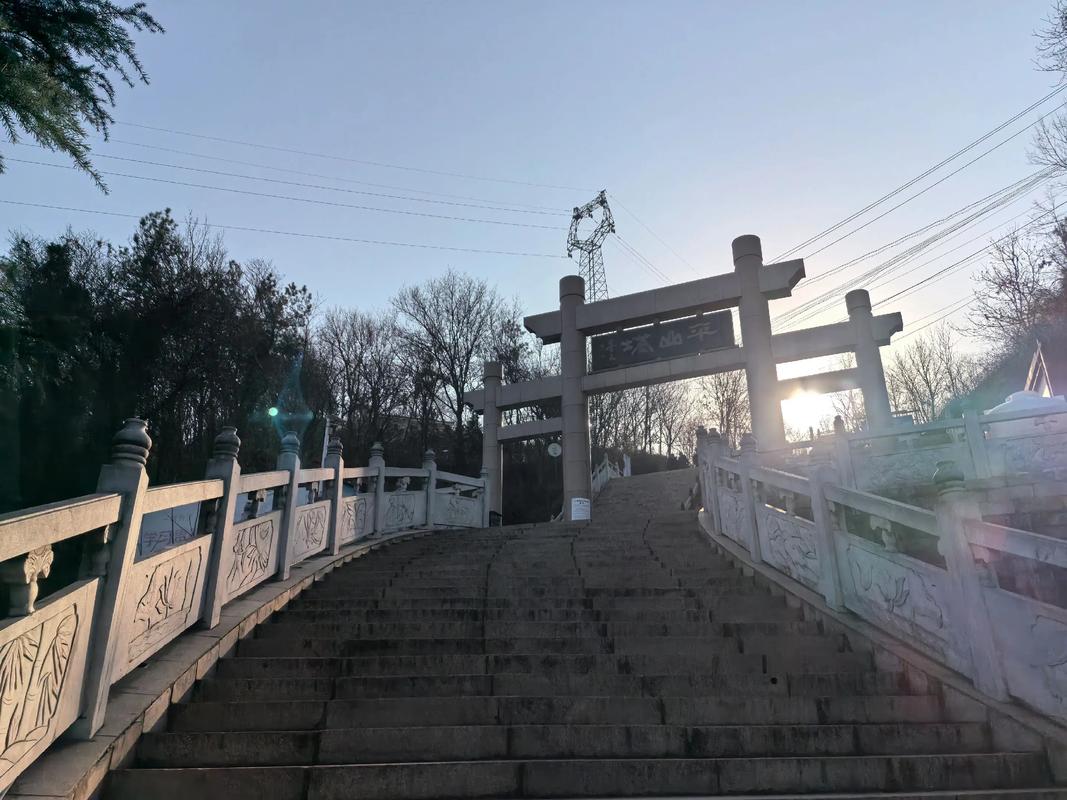
The scenic area charges no admission fee and welcomes visitors around the clock. From the eastern gate, a stone-step trail leads to the summit in roughly one to one-and-a-half hours, a manageable climb suited to families and casual hikers—comparable in effort to ascending Edinburgh's Arthur's Seat. Comfortable walking shoes, water, and light snacks are essential, as on-site refreshments are limited. City bus 26 runs directly to the entrance from central Xinyang; drivers pay modest parking fees of 5 to 10 yuan. For a fuller day, combine Zhenlei with nearby Lianghekou National Wetland Park and the crescent-shaped Yueya Lake footbridge to experience the full breadth of Xinyang's river-laced landscape.
Rising modestly above the Shi River in Henan Province, Zhenlei Mountain belongs to the southern tail of the Dabie range, a chain that has shaped the military and cultural history of central China for over two millennia. The site's recorded history stretches back to the Tang Dynasty (618–907 CE), an era contemporary with the rise of Charlemagne's empire in Europe, when Leifeng Temple was first established as a Buddhist sanctuary. Pilgrims have climbed these slopes for more than a thousand years, leaving behind Ming and Qing dynasty inscriptions that lend the mountain the same timeless, layered character found at venerable European pilgrimage sites such as Monte Cassino or the Camino routes of northern Spain.
The mountain's signature spectacle, "Thunder Pool Spouting Clouds," centers on two natural stone basins near the summit. Before rainfall, vapor mysteriously billows from these pools, creating swirling formations that ancient literati ranked first among Xinyang's classical Eight Scenes. Comparable to the mist-wrapped peaks that inspired Romantic painters in the Scottish Highlands, this phenomenon shares the slopes with the aptly named Double-Breast Peak, century-old ginkgo trees that blaze gold each autumn, and the pure Shengquan (Holy Spring), whose waters locals prize for brewing the celebrated Xinyang Maojian green tea.
Leifeng Temple anchors the mountain's human heritage. Founded in the Tang era and rebuilt through the Song, Ming, and Qing dynasties, it remains a living Buddhist sanctuary, much like Italy's still-active hilltop monasteries. Each year on the third day of the third lunar month, the temple fair transforms the paths into a lively procession of worshippers and merchants, blending religious devotion with folk celebration. Scattered around the slopes are the ruins of Shengquan Temple, the legendary Wufeng Cave, and weathered Ming-era stone inscriptions, while the Pingshan Pagoda rewards those who climb its steps with sweeping views over Xinyang's urban grid and surrounding river plains.
Terraced tea gardens cascade along the lower slopes, connecting Zhenlei to Xinyang's identity as one of China's premier green-tea regions. Spring, when tender shoots emerge between March and April, invites visitors to try their hand at picking leaves alongside local farmers—an experience as immersive as participating in Tuscany's olive harvest or Provence's lavender season. Rain-soaked mornings followed by clearing skies offer the best chance to witness the famed cloud phenomenon, while early dawn brings misty sunrises and late afternoon provides soft, golden light ideal for photography.
The scenic area charges no admission fee and welcomes visitors around the clock. From the eastern gate, a stone-step trail leads to the summit in roughly one to one-and-a-half hours, a manageable climb suited to families and casual hikers—comparable in effort to ascending Edinburgh's Arthur's Seat. Comfortable walking shoes, water, and light snacks are essential, as on-site refreshments are limited. City bus 26 runs directly to the entrance from central Xinyang; drivers pay modest parking fees of 5 to 10 yuan. For a fuller day, combine Zhenlei with nearby Lianghekou National Wetland Park and the crescent-shaped Yueya Lake footbridge to experience the full breadth of Xinyang's river-laced landscape.