Puppet Manchukuo Imperial Palace
⭐ 4.20
No. 2579, Shengli Street, Kuancheng District, Changchun City, Jilin Province, China
 PARAGRAPH 1 - Historical Context
The palace served as the seat of Puyi, the last emperor of the Qing Dynasty, who was installed as "Emperor" of the Japanese puppet state of Manchukuo in 1932, mirroring other Axis-era collaborators like France's Vichy regime or Norway's Quisling government. Following Japan's defeat in August 1945, Puyi fled and the elaborate facade of state collapsed overnight. What remains today is the physical testimony to fourteen years of colonial occupation, offering visitors parallels to other contested sites across twentieth-century Europe. The complex stands as a powerful counterweight to historical revisionism, preserving evidence of imperial Japan's aggressive expansion across Northeast China.
PARAGRAPH 2 - Architecture and Layout
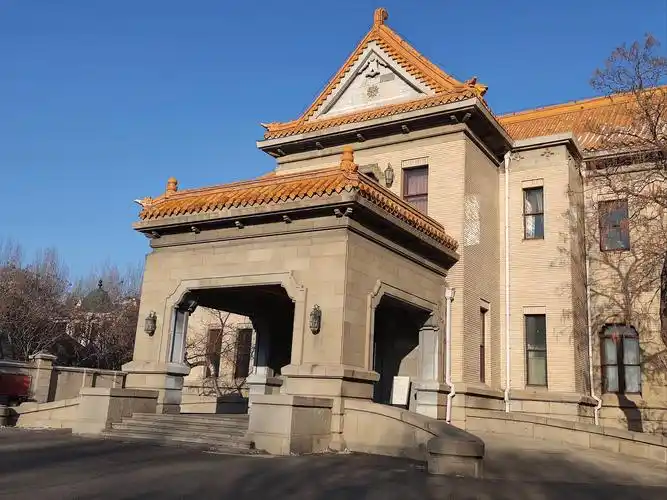
Divided by the central Zhonghe Gate into outer and inner courts, the complex resembles a diminished Forbidden City fused with 1930s colonial modernism. The outer court functioned as the political stage: the Qinmin Building housed Puyi's office and ceremonial spaces, while the Huaiyuan Building served ancestral rites and the Jiale Hall hosted banquets. The inner court's Tongde Palace, though grandest in design with striking Art Deco influences, was paradoxically never occupied by Puyi, who feared Japanese surveillance within its walls. The result is a fascinating architectural palimpsest where traditional Chinese motifs clash with European neoclassical columns and Japanese sukiya-style detailing.
PARAGRAPH 3 - Cultural Significance
Beyond the palace proper, the on-site Calligraphy Hall safeguards treasures evacuated from Beijing's Forbidden City during the Japanese occupation, while the Japanese-styled East Garden retains poignant relics including an air-raid bunker, swimming pool, and the foundation of the controversial State-Building Shrine. The Northeast China Occupation History Exhibition delivers the most emotionally intense experience, featuring harrowing documentation of Unit 731's biological warfare atrocities and the broader suffering endured from 1931 to 1945. Comparable in gravity to Berlin's Topography of Terror museum, this exhibition contextualizes individual tragedy within systemic wartime violence, making abstract history visceral and immediate.
PARAGRAPH 4 - Why Visit
For Western travelers, the site offers something most imperial palaces cannot: an unflinching confrontation with twentieth-century atrocity within a setting of deliberate opulence. The juxtaposition of refined craftsmanship and moral compromise creates a uniquely unsettling atmosphere that lingers long after departure. Unlike restored palace museums designed primarily to dazzle, this complex confronts visitors with uncomfortable questions about sovereignty, legitimacy, and the human cost of geopolitical ambition, making it an indispensable stop for those seeking to understand modern East Asian history beyond surface narratives.
PARAGRAPH 5 - Practical Information
The museum covers approximately 250,000 square meters with 137,000 square meters of built space, requiring at least three to four hours for a thorough visit. Summer opening hours run from 8:30 to 18:00, with ticket sales ending at 16:40; the site closes entirely on Mondays. Foreign visitors must reserve tickets in advance through the official WeChat mini-program and present their passport for entry. English-language guided tours can typically be arranged upon arrival, though booking ahead through your hotel concierge is recommended during peak season. Comfortable walking shoes are essential given the expansive grounds.
PARAGRAPH 1 - Historical Context
The palace served as the seat of Puyi, the last emperor of the Qing Dynasty, who was installed as "Emperor" of the Japanese puppet state of Manchukuo in 1932, mirroring other Axis-era collaborators like France's Vichy regime or Norway's Quisling government. Following Japan's defeat in August 1945, Puyi fled and the elaborate facade of state collapsed overnight. What remains today is the physical testimony to fourteen years of colonial occupation, offering visitors parallels to other contested sites across twentieth-century Europe. The complex stands as a powerful counterweight to historical revisionism, preserving evidence of imperial Japan's aggressive expansion across Northeast China.
PARAGRAPH 2 - Architecture and Layout
Divided by the central Zhonghe Gate into outer and inner courts, the complex resembles a diminished Forbidden City fused with 1930s colonial modernism. The outer court functioned as the political stage: the Qinmin Building housed Puyi's office and ceremonial spaces, while the Huaiyuan Building served ancestral rites and the Jiale Hall hosted banquets. The inner court's Tongde Palace, though grandest in design with striking Art Deco influences, was paradoxically never occupied by Puyi, who feared Japanese surveillance within its walls. The result is a fascinating architectural palimpsest where traditional Chinese motifs clash with European neoclassical columns and Japanese sukiya-style detailing.
PARAGRAPH 3 - Cultural Significance
Beyond the palace proper, the on-site Calligraphy Hall safeguards treasures evacuated from Beijing's Forbidden City during the Japanese occupation, while the Japanese-styled East Garden retains poignant relics including an air-raid bunker, swimming pool, and the foundation of the controversial State-Building Shrine. The Northeast China Occupation History Exhibition delivers the most emotionally intense experience, featuring harrowing documentation of Unit 731's biological warfare atrocities and the broader suffering endured from 1931 to 1945. Comparable in gravity to Berlin's Topography of Terror museum, this exhibition contextualizes individual tragedy within systemic wartime violence, making abstract history visceral and immediate.
PARAGRAPH 4 - Why Visit
For Western travelers, the site offers something most imperial palaces cannot: an unflinching confrontation with twentieth-century atrocity within a setting of deliberate opulence. The juxtaposition of refined craftsmanship and moral compromise creates a uniquely unsettling atmosphere that lingers long after departure. Unlike restored palace museums designed primarily to dazzle, this complex confronts visitors with uncomfortable questions about sovereignty, legitimacy, and the human cost of geopolitical ambition, making it an indispensable stop for those seeking to understand modern East Asian history beyond surface narratives.
PARAGRAPH 5 - Practical Information
The museum covers approximately 250,000 square meters with 137,000 square meters of built space, requiring at least three to four hours for a thorough visit. Summer opening hours run from 8:30 to 18:00, with ticket sales ending at 16:40; the site closes entirely on Mondays. Foreign visitors must reserve tickets in advance through the official WeChat mini-program and present their passport for entry. English-language guided tours can typically be arranged upon arrival, though booking ahead through your hotel concierge is recommended during peak season. Comfortable walking shoes are essential given the expansive grounds.