Confucius Temple
⭐ 3.60
Wenmiao Street, Kuancheng District, Changchun City, Jilin Province, China
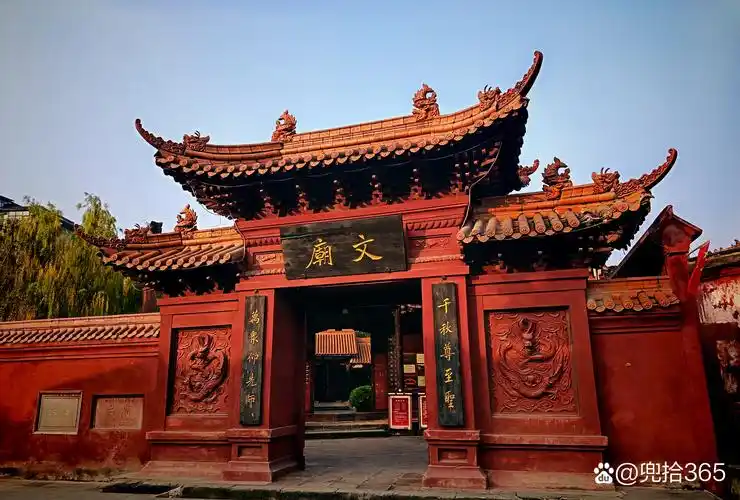 The temple was founded in 1872, during the Tongzhi Restoration—an era of Chinese modernization often compared to Japan's Meiji reforms or post-unification Germany's cultural revival. As one of the few Confucian shrines in Manchuria to survive the upheavals of the twentieth century, the original served scholars, officials, and examination candidates on the empire's northeastern frontier. After decades of decay, the government restored the complex to its original appearance in 2002 and expanded it into a cultural park in 2011, transforming it into both a working place of Confucian worship and a living museum of imperial China's scholarly traditions.
Architecturally, the complex mirrors the symmetrical grandeur of a European cathedral precinct, with fifteen buildings unfolding along a central north-south axis. Visitors pass a spirit wall, cross the Pan Bridge (symbolically reserved for the top imperial examination graduate), and move through the Lingxing Gate and Dacheng Gate into the soaring Dacheng Hall, where Confucius and his twelve principal disciples are enshrined. A second main hall, Chongsheng Hall, anchors the northern end. The timber-frame structures employ traditional mortise-and-tenon joinery beneath grey tiles and vermilion columns, displaying the restrained elegance of late-Qing official architecture—comparable in atmosphere to a stately baroque seminary or monastic cloister.
Confucianism shaped East Asian governance, education, and ethics for more than two millennia, much as Christianity shaped medieval Europe. The temple celebrates this legacy through permanent exhibitions on the imperial examination system, China's merit-based civil service exams that selected officials by scholarly achievement from the seventh century until 1905—centuries before similar competitive examinations became standard in the West. Halls along the eastern and western wings display illustrated panels tracing Confucius's life and recreate vivid examination-hall scenes, giving visitors a tangible sense of the rigorous scholarly culture that once defined imperial China.
Cultural events bring the site vividly to life. Every September 28th, the temple hosts a solemn ceremony honoring Confucius's birthday, while Spring Festival, Dragon Boat, and Mid-Autumn celebrations feature temple fairs, traditional coming-of-age rituals, and children's first-writing ceremonies. Visitors can try traditional pot-tossing games, make ink rubbings of classical inscriptions, or rent Hanfu robes for atmospheric photographs—an experience roughly equivalent to dressing in period costume at a European heritage festival.
The temple lies in Nanguan District at 239 Dongtian Street. Admission is free, though visitors should bring valid ID for on-site registration, and groups should book 24 hours ahead by phone. Opening hours are Tuesday to Sunday, 9:00 to 16:00 (last entry 15:30); the site is closed Mondays. Free public lectures are usually held Saturday mornings. Take the bus to "Wenmiao Station," or Metro Line 2 to Jiefang Da Lu Station, followed by a 15-minute walk. Before visiting, check the "Changchun Wenmiao Museum" WeChat account for current activities.
For the best experience, follow the central axis south to north, pausing at the Pan Bridge, Lingxing Gate, and Dacheng Hall—and keep voices low to respect the sacred atmosphere. Mornings before 10 a.m. and late afternoons after 3 p.m. are least crowded; during festivals, allow two to three hours. On the western side, the Confucius Culture Square features a classical archway and lotus pond, ideal for atmospheric photography and quiet contemplation away from the main halls.
The temple was founded in 1872, during the Tongzhi Restoration—an era of Chinese modernization often compared to Japan's Meiji reforms or post-unification Germany's cultural revival. As one of the few Confucian shrines in Manchuria to survive the upheavals of the twentieth century, the original served scholars, officials, and examination candidates on the empire's northeastern frontier. After decades of decay, the government restored the complex to its original appearance in 2002 and expanded it into a cultural park in 2011, transforming it into both a working place of Confucian worship and a living museum of imperial China's scholarly traditions.
Architecturally, the complex mirrors the symmetrical grandeur of a European cathedral precinct, with fifteen buildings unfolding along a central north-south axis. Visitors pass a spirit wall, cross the Pan Bridge (symbolically reserved for the top imperial examination graduate), and move through the Lingxing Gate and Dacheng Gate into the soaring Dacheng Hall, where Confucius and his twelve principal disciples are enshrined. A second main hall, Chongsheng Hall, anchors the northern end. The timber-frame structures employ traditional mortise-and-tenon joinery beneath grey tiles and vermilion columns, displaying the restrained elegance of late-Qing official architecture—comparable in atmosphere to a stately baroque seminary or monastic cloister.
Confucianism shaped East Asian governance, education, and ethics for more than two millennia, much as Christianity shaped medieval Europe. The temple celebrates this legacy through permanent exhibitions on the imperial examination system, China's merit-based civil service exams that selected officials by scholarly achievement from the seventh century until 1905—centuries before similar competitive examinations became standard in the West. Halls along the eastern and western wings display illustrated panels tracing Confucius's life and recreate vivid examination-hall scenes, giving visitors a tangible sense of the rigorous scholarly culture that once defined imperial China.
Cultural events bring the site vividly to life. Every September 28th, the temple hosts a solemn ceremony honoring Confucius's birthday, while Spring Festival, Dragon Boat, and Mid-Autumn celebrations feature temple fairs, traditional coming-of-age rituals, and children's first-writing ceremonies. Visitors can try traditional pot-tossing games, make ink rubbings of classical inscriptions, or rent Hanfu robes for atmospheric photographs—an experience roughly equivalent to dressing in period costume at a European heritage festival.
The temple lies in Nanguan District at 239 Dongtian Street. Admission is free, though visitors should bring valid ID for on-site registration, and groups should book 24 hours ahead by phone. Opening hours are Tuesday to Sunday, 9:00 to 16:00 (last entry 15:30); the site is closed Mondays. Free public lectures are usually held Saturday mornings. Take the bus to "Wenmiao Station," or Metro Line 2 to Jiefang Da Lu Station, followed by a 15-minute walk. Before visiting, check the "Changchun Wenmiao Museum" WeChat account for current activities.
For the best experience, follow the central axis south to north, pausing at the Pan Bridge, Lingxing Gate, and Dacheng Hall—and keep voices low to respect the sacred atmosphere. Mornings before 10 a.m. and late afternoons after 3 p.m. are least crowded; during festivals, allow two to three hours. On the western side, the Confucius Culture Square features a classical archway and lotus pond, ideal for atmospheric photography and quiet contemplation away from the main halls.