Liberation Monument
⭐ 2.50
Liberation Monument, Kuancheng District, Changchun City, Jilin Province, China
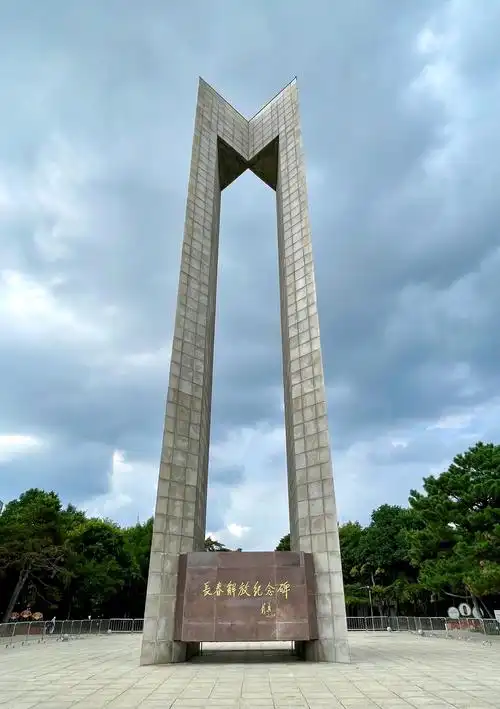 On October 18, 1948, after months of grueling blockade that left Changchun among the most devastated cities of the late Chinese Civil War, the city was finally liberated, ending years of upheaval that had begun with the Japanese occupation and continued through the puppet Manchukuo era. Forty years later, on the exact anniversary, the municipal government unveiled this monument to honor the revolutionaries and civilians whose sacrifices made the city's rebirth possible. For Western visitors familiar with Berlin's fall in 1945 or the liberation of Paris in 1944, the monument offers a poignant parallel: another war-torn capital finding peace at the close of a continent-defining conflict, this time in Northeast Asia.
The monument is a masterclass in symbolic engineering. Carved from polished granite in a grand gate-like form, it soars 30.39 meters above a 48-by-55-meter plinth, its proportions deliberately echoing triumphal arches such as Paris's Arc de Triomphe. The base is split into two tiers—one measuring 10.18 meters and the other 19.48 meters—cleverly encoding the liberation date of October 18, 1948. Along the southern face stretches a 22-meter-long, three-meter-tall relief wall depicting battle scenes and heroic figures with remarkable craftsmanship, ambitious in scale and tone much like the marble friezes of Berlin's Soviet War Memorial in Treptower Park.
Beyond its commemorative role, the monument functions as a cornerstone of contemporary Chinese civic memory. Designated a provincial patriotic education base, a protected cultural heritage site, and a center for party-history study, it draws school groups, veterans, and families who gather to pay respects and pass revolutionary stories to younger generations. For international travelers, it provides rare insight into how modern China curates the memory of its civil-war era, much as the Kremlin Wall Necropolis or London's Cenotaph shape national identity through solemn architecture and ritual.
The monument sits at No. 51 Gongnong Road, Chaoyang District, inside Gate 3 of South Lake Park, roughly 200 meters south of the entrance. Admission is free, with no tickets or reservations required. The most convenient access is Metro Line 1 to Renmin Square Station, followed by an 8-to-10-minute walk. Parking nearby is limited, so public transit is strongly recommended. Be aware that there are no restrooms, shops, or refreshment stands within the monument precinct, so bring drinking water, especially in summer.
The best time to visit is early morning or late afternoon, when soft light accentuates the granite's texture and the relief wall's depth—ideal conditions for photography. The atmosphere grows especially poignant around Qingming Festival in early April and on October 18 itself. Plan for 20 to 30 minutes to absorb the inscriptions and sculptural detail. Pair the monument with a stroll along South Lake and a visit to the nearby Puppet Manchukuo-era buildings on Xinmin Street for a compelling half-day "Modern Changchun" history trail, then reward yourself with hearty Northeastern cuisine at one of the city's long-established restaurants.
On October 18, 1948, after months of grueling blockade that left Changchun among the most devastated cities of the late Chinese Civil War, the city was finally liberated, ending years of upheaval that had begun with the Japanese occupation and continued through the puppet Manchukuo era. Forty years later, on the exact anniversary, the municipal government unveiled this monument to honor the revolutionaries and civilians whose sacrifices made the city's rebirth possible. For Western visitors familiar with Berlin's fall in 1945 or the liberation of Paris in 1944, the monument offers a poignant parallel: another war-torn capital finding peace at the close of a continent-defining conflict, this time in Northeast Asia.
The monument is a masterclass in symbolic engineering. Carved from polished granite in a grand gate-like form, it soars 30.39 meters above a 48-by-55-meter plinth, its proportions deliberately echoing triumphal arches such as Paris's Arc de Triomphe. The base is split into two tiers—one measuring 10.18 meters and the other 19.48 meters—cleverly encoding the liberation date of October 18, 1948. Along the southern face stretches a 22-meter-long, three-meter-tall relief wall depicting battle scenes and heroic figures with remarkable craftsmanship, ambitious in scale and tone much like the marble friezes of Berlin's Soviet War Memorial in Treptower Park.
Beyond its commemorative role, the monument functions as a cornerstone of contemporary Chinese civic memory. Designated a provincial patriotic education base, a protected cultural heritage site, and a center for party-history study, it draws school groups, veterans, and families who gather to pay respects and pass revolutionary stories to younger generations. For international travelers, it provides rare insight into how modern China curates the memory of its civil-war era, much as the Kremlin Wall Necropolis or London's Cenotaph shape national identity through solemn architecture and ritual.
The monument sits at No. 51 Gongnong Road, Chaoyang District, inside Gate 3 of South Lake Park, roughly 200 meters south of the entrance. Admission is free, with no tickets or reservations required. The most convenient access is Metro Line 1 to Renmin Square Station, followed by an 8-to-10-minute walk. Parking nearby is limited, so public transit is strongly recommended. Be aware that there are no restrooms, shops, or refreshment stands within the monument precinct, so bring drinking water, especially in summer.
The best time to visit is early morning or late afternoon, when soft light accentuates the granite's texture and the relief wall's depth—ideal conditions for photography. The atmosphere grows especially poignant around Qingming Festival in early April and on October 18 itself. Plan for 20 to 30 minutes to absorb the inscriptions and sculptural detail. Pair the monument with a stroll along South Lake and a visit to the nearby Puppet Manchukuo-era buildings on Xinmin Street for a compelling half-day "Modern Changchun" history trail, then reward yourself with hearty Northeastern cuisine at one of the city's long-established restaurants.