Wanda Plaza (Runzhou District)
⭐ 3.80
Wanda Plaza, Runzhou District, Zhenjiang, Jiangsu, China
 Zhenjiang itself is a city of deep historical pedigree, founded over 2,500 years ago and once a strategic Yangtze River garrison during the Three Kingdoms era (220–280 AD) and the heyday of the Grand Canal. Runzhou Wanda Plaza sits in sharp contrast to that antiquity, representing the China of the 2010s and 2020s: a standardised, investor-driven commercial formula that has reshaped Chinese urban centres. Where medieval visitors to Zhenjiang would have found bustling tea warehouses and rice merchants, today's travellers find climate-controlled retail halls and neon-lit food streets. The juxtaposition is precisely the point – the plaza is best understood as a window onto contemporary Chinese consumer life, rather than a sight in the heritage sense.
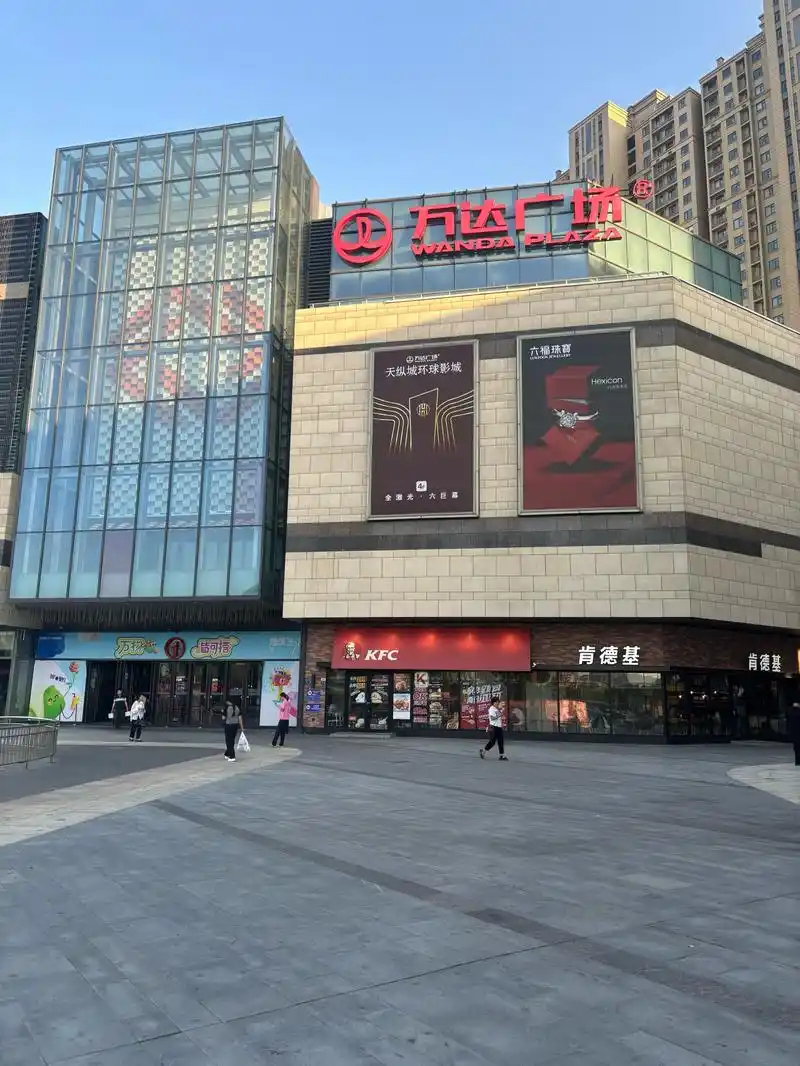
Architecturally, the complex follows the global vocabulary of "third-generation" Chinese urban综合体, a mixed-use model that fuses retail, hospitality and leisure in a single footprint. The exterior is dominated by a full-height glass curtain wall and gently curving, streamlined volumes that catch the Yangtze-side sun – a sleek, almost transatlantic-cruise-liner aesthetic rather than anything rooted in local vernacular. Inside, the layout is ruthlessly logical: a subterranean supermarket (Suguo, a Jiangsu regional chain similar in feel to a German Kaiser's or a French Carrefour City), ground and first floors dedicated to accessible fast-fashion and lifestyle brands, an entire dining level, and a top-floor cinema and entertainment zone. The result feels closer to a Roppongi Hills wing or a London Westfield than to any traditional Chinese bazaar.
Culturally, the plaza matters less for what it is and more for what it reveals about modern Zhenjiang. It is where the German discount supermarket ALDI chose to make its Zhenjiang debut, where KKV, Miniso's oversized flagship and a rotating cast of "internet-famous" restaurants signal the tastes of younger consumers. Seasonal events – anniversary sales, New Year's balloon drops, outdoor music festivals – turn the plaza into the city's de facto town square for the Instagram age. Visitors reading this will get a more honest slice of today's Zhenjiang here than in any museum: this is how the city's residents shop, eat, date and socialise after sundown.
Practically, the complex is hard to miss: located at 19 Huangshan West Road in Runzhou District, it sits a short walk or taxi ride from Zhenjiang Railway Station, with bus routes and underground car parking (the latter is essential if arriving by car). Opening hours run roughly 10:00 to 22:00, with restaurants and the Wanda Cinema staying later; weekdays are markedly calmer than weekends, when crowds can feel reminiscent of Covent Garden at Christmas. Payment is overwhelmingly mobile – Alipay and WeChat Pay dominate – so foreign visitors should either set up the apps in advance or rely on the small number of counters accepting Visa, Mastercard or UnionPay. Most staff in international-brand stores speak some English, but outside those, a translation app is useful.
The case for visiting is not the building itself, but how it plugs into a broader Zhenjiang itinerary. Pair a half-day at the plaza with the lantern-lit lanes and Ming-Qing stone houses of nearby Xijin Old Street, where the air still carries echoes of the Tang-dynasty canal trade, and with the waterfront Jinshan Temple complex, immortalised in the classical novel "Legend of the White Snake." Together they trace a complete arc – from ancient river-port spirituality, through Republican-era alleys, to the neon present – with Runzhou Wanda Plaza serving as the brightest, busiest bookmark of the modern chapter.
Zhenjiang itself is a city of deep historical pedigree, founded over 2,500 years ago and once a strategic Yangtze River garrison during the Three Kingdoms era (220–280 AD) and the heyday of the Grand Canal. Runzhou Wanda Plaza sits in sharp contrast to that antiquity, representing the China of the 2010s and 2020s: a standardised, investor-driven commercial formula that has reshaped Chinese urban centres. Where medieval visitors to Zhenjiang would have found bustling tea warehouses and rice merchants, today's travellers find climate-controlled retail halls and neon-lit food streets. The juxtaposition is precisely the point – the plaza is best understood as a window onto contemporary Chinese consumer life, rather than a sight in the heritage sense.
Architecturally, the complex follows the global vocabulary of "third-generation" Chinese urban综合体, a mixed-use model that fuses retail, hospitality and leisure in a single footprint. The exterior is dominated by a full-height glass curtain wall and gently curving, streamlined volumes that catch the Yangtze-side sun – a sleek, almost transatlantic-cruise-liner aesthetic rather than anything rooted in local vernacular. Inside, the layout is ruthlessly logical: a subterranean supermarket (Suguo, a Jiangsu regional chain similar in feel to a German Kaiser's or a French Carrefour City), ground and first floors dedicated to accessible fast-fashion and lifestyle brands, an entire dining level, and a top-floor cinema and entertainment zone. The result feels closer to a Roppongi Hills wing or a London Westfield than to any traditional Chinese bazaar.
Culturally, the plaza matters less for what it is and more for what it reveals about modern Zhenjiang. It is where the German discount supermarket ALDI chose to make its Zhenjiang debut, where KKV, Miniso's oversized flagship and a rotating cast of "internet-famous" restaurants signal the tastes of younger consumers. Seasonal events – anniversary sales, New Year's balloon drops, outdoor music festivals – turn the plaza into the city's de facto town square for the Instagram age. Visitors reading this will get a more honest slice of today's Zhenjiang here than in any museum: this is how the city's residents shop, eat, date and socialise after sundown.
Practically, the complex is hard to miss: located at 19 Huangshan West Road in Runzhou District, it sits a short walk or taxi ride from Zhenjiang Railway Station, with bus routes and underground car parking (the latter is essential if arriving by car). Opening hours run roughly 10:00 to 22:00, with restaurants and the Wanda Cinema staying later; weekdays are markedly calmer than weekends, when crowds can feel reminiscent of Covent Garden at Christmas. Payment is overwhelmingly mobile – Alipay and WeChat Pay dominate – so foreign visitors should either set up the apps in advance or rely on the small number of counters accepting Visa, Mastercard or UnionPay. Most staff in international-brand stores speak some English, but outside those, a translation app is useful.
The case for visiting is not the building itself, but how it plugs into a broader Zhenjiang itinerary. Pair a half-day at the plaza with the lantern-lit lanes and Ming-Qing stone houses of nearby Xijin Old Street, where the air still carries echoes of the Tang-dynasty canal trade, and with the waterfront Jinshan Temple complex, immortalised in the classical novel "Legend of the White Snake." Together they trace a complete arc – from ancient river-port spirituality, through Republican-era alleys, to the neon present – with Runzhou Wanda Plaza serving as the brightest, busiest bookmark of the modern chapter.