Nanshan (Southern Mountain)
⭐ 4.20
Zhenjiang, Jiangsu, China
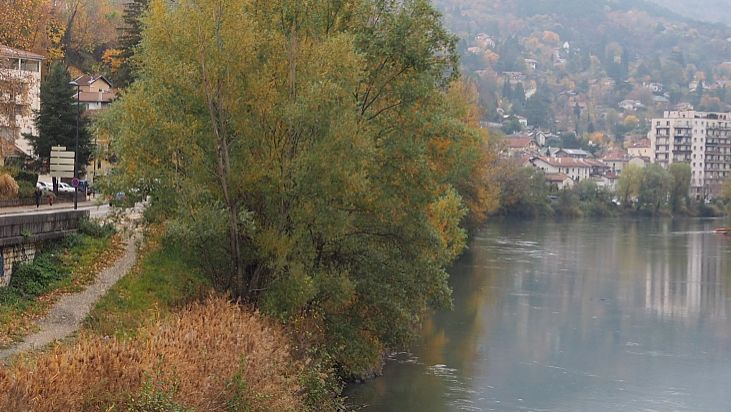 Set against the sixth century—the era of Europe's early medieval literary compilations—Nanshan hosted one of Chinese civilization's most consequential gatherings of the mind. Crown Prince Xiao Tong, a patron comparable to the Medici of Renaissance Florence, convened scholars at his Reading Platform to compile the Wenxuan, an anthology that shaped Chinese literary taste for sixteen centuries, much as the Greek Anthology or Latin collections shaped Western letters. Soon after, theorist Liu Xie drafted his Wenxin Diaolong at the same site, a treatise functioning for Chinese poetics much as Aristotle's Poetics does for Western criticism. Their overlapping presence makes Nanshan a kind of "Mount Parnassus" of East Asian letters.
In the eleventh century, eccentric Song Dynasty painter-calligrapher Mi Fu retreated to these slopes and invented the "Mi Family Cloud Mountains" style—depicting mist-shrouded peaks with ink dots and washes that anticipated atmospheric Western landscape painting by some five centuries. His technique recalls the soft tonal harmonies of J.M.W. Turner, working centuries later. Visitors can walk the same paths that inspired one of China's most influential artistic visions. The cultural density of a single mountain is remarkable: few European locales compress so many foundational texts and artistic breakthroughs into one walking route.
The mountain's built heritage weaves seamlessly into its forested terrain. Zhaoyin Temple, a venerable Buddhist complex dating back over a millennium, anchors the eastern slopes with its solemn halls of weathered wood and stone. Nearby, Zhulin Temple almost disappears into groves of rustling bamboo, recalling the hermitages of Kyoto's Arashiyama. Climbing higher, visitors encounter Zenghua Pavilion, erected to honor Xiao Tong's editorial labors, and the Tiger Run Spring, whose crystalline waters have quenched thirsty scholars for centuries. The Reading Platform, where the Wenxuan editors toiled, remains a simple stone terrace commanding serene views across the Yangtze plain.
Covering roughly 13 square kilometers, Nanshan lies at 98 Zhulin Road in the Runzhou District, just minutes from central Zhenjiang and a short taxi ride from the railway station. Public bus 15 delivers visitors directly to the entrance gate, which opens daily from 7:30 a.m. to 5:30 p.m., with last entry at 4:30. Tickets run 30–40 yuan depending on season, with student discounts commonly offered in summer. The recommended counter-clockwise cultural trail covers 3–4 kilometers on gentle gradients, passing each major monument in sequence: Zhaoyin Temple, Reading Platform, Zenghua Pavilion, Tiger Run Spring, Bamboo Forest Path, Literary Garden, and exit.
Nanshan rewards travelers seeking contemplation and cultural depth without the crowds of China's mega-attractions. Morning visits or hours after rainfall reveal the famous "Misty Rain Nanshan" atmosphere that has inspired poets since the Liang Dynasty—a phenomenon comparable to the romantic mists of England's Lake District or Venice's winter haze. Summer visitors should bring insect repellent, sun hats, sturdy walking shoes, and water; on-site dining is limited, so carry light snacks. Allow three to four hours for a meaningful visit, and consider pairing the trip with Zhenjiang's Yangtze riverfront and its famous vinegar museum.
Set against the sixth century—the era of Europe's early medieval literary compilations—Nanshan hosted one of Chinese civilization's most consequential gatherings of the mind. Crown Prince Xiao Tong, a patron comparable to the Medici of Renaissance Florence, convened scholars at his Reading Platform to compile the Wenxuan, an anthology that shaped Chinese literary taste for sixteen centuries, much as the Greek Anthology or Latin collections shaped Western letters. Soon after, theorist Liu Xie drafted his Wenxin Diaolong at the same site, a treatise functioning for Chinese poetics much as Aristotle's Poetics does for Western criticism. Their overlapping presence makes Nanshan a kind of "Mount Parnassus" of East Asian letters.
In the eleventh century, eccentric Song Dynasty painter-calligrapher Mi Fu retreated to these slopes and invented the "Mi Family Cloud Mountains" style—depicting mist-shrouded peaks with ink dots and washes that anticipated atmospheric Western landscape painting by some five centuries. His technique recalls the soft tonal harmonies of J.M.W. Turner, working centuries later. Visitors can walk the same paths that inspired one of China's most influential artistic visions. The cultural density of a single mountain is remarkable: few European locales compress so many foundational texts and artistic breakthroughs into one walking route.
The mountain's built heritage weaves seamlessly into its forested terrain. Zhaoyin Temple, a venerable Buddhist complex dating back over a millennium, anchors the eastern slopes with its solemn halls of weathered wood and stone. Nearby, Zhulin Temple almost disappears into groves of rustling bamboo, recalling the hermitages of Kyoto's Arashiyama. Climbing higher, visitors encounter Zenghua Pavilion, erected to honor Xiao Tong's editorial labors, and the Tiger Run Spring, whose crystalline waters have quenched thirsty scholars for centuries. The Reading Platform, where the Wenxuan editors toiled, remains a simple stone terrace commanding serene views across the Yangtze plain.
Covering roughly 13 square kilometers, Nanshan lies at 98 Zhulin Road in the Runzhou District, just minutes from central Zhenjiang and a short taxi ride from the railway station. Public bus 15 delivers visitors directly to the entrance gate, which opens daily from 7:30 a.m. to 5:30 p.m., with last entry at 4:30. Tickets run 30–40 yuan depending on season, with student discounts commonly offered in summer. The recommended counter-clockwise cultural trail covers 3–4 kilometers on gentle gradients, passing each major monument in sequence: Zhaoyin Temple, Reading Platform, Zenghua Pavilion, Tiger Run Spring, Bamboo Forest Path, Literary Garden, and exit.
Nanshan rewards travelers seeking contemplation and cultural depth without the crowds of China's mega-attractions. Morning visits or hours after rainfall reveal the famous "Misty Rain Nanshan" atmosphere that has inspired poets since the Liang Dynasty—a phenomenon comparable to the romantic mists of England's Lake District or Venice's winter haze. Summer visitors should bring insect repellent, sun hats, sturdy walking shoes, and water; on-site dining is limited, so carry light snacks. Allow three to four hours for a meaningful visit, and consider pairing the trip with Zhenjiang's Yangtze riverfront and its famous vinegar museum.