Mount Yuntai
⭐ 4.70
Hejiang Village, Yucheng District, Ya'an City, Sichuan Province, China
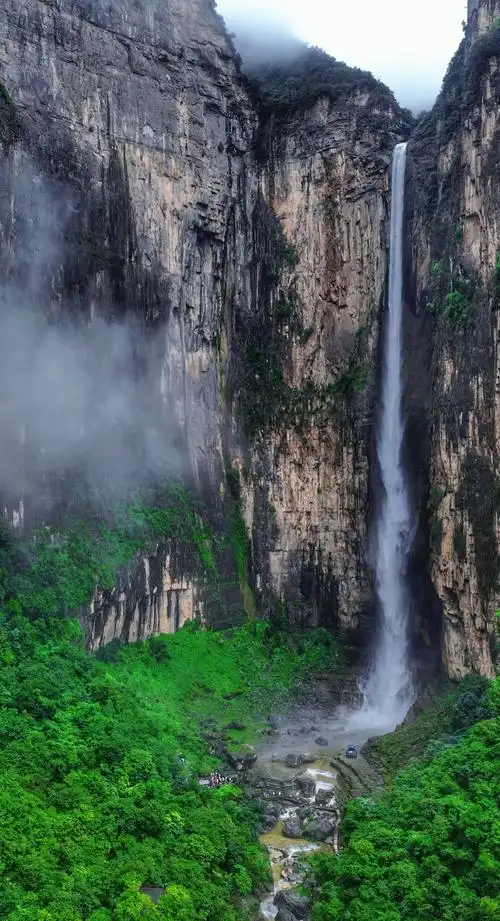 Long before tea became an English afternoon ritual or a morning staple in cafés from Paris to Portland, it began here. The Ya'an region is celebrated as one of the world's earliest tea cultivation centers, with legends tracing tea planting back over two millennia to the Western Han Dynasty. Local lore credits the farmer Wu Lizhen, around 53 BC, as the first to deliberately cultivate tea—a heritage that later traveled west along the Silk Road, ultimately reaching European courts and inspiring the British love affair with the leaf. Today, Yuntai Mountain continues this lineage as part of the revered Mengding Mountain tea system.
Rising from the western edge of the Sichuan Basin, Yuntai enjoys a humid subtropical monsoon climate wrapped in over two hundred foggy days a year, an atmosphere that gives the estate's tea its celebrated delicate fragrance. The terraced slopes resemble the vineyard-clad hills of Portugal's Douro Valley, with rows of tea bushes cascading like green waves toward the valley floor. At dawn and dusk, ribbons of cloud drift through the plantations, evoking comparisons to the ethereal landscapes of the Scottish Highlands or Italy's misty Lake District, an irresistible canvas for photographers chasing atmosphere as much as scenery.
What distinguishes Yuntai from a simple scenic park is its immersive tea culture program. Guided by experienced farmers, visitors can join every stage of traditional production—plucking fresh leaves, pan-firing, rolling, and roasting—to craft a personal batch as a living souvenir. A dedicated cultural exhibition traces tea's three-thousand-year journey from sacred medicinal brew to global commodity, contextualizing what visitors taste. The region also forms part of the ancient Tea Horse Road network, where caravans once carried bricks of compressed tea across mountain passes into Tibet, creating one of history's great trading arteries.
Beyond tea, the estate offers a relaxed menu of high-altitude leisure. A mountaintop balloon launch site allows visitors to ascend in clear weather, drifting serenely over the patchwork of green terraces for a panoramic experience comparable to a champagne flight over Tuscany's wine country. Grass camping lawns invite overnight stays beneath spectacular starry skies, while gentle walking paths wind through the gardens without any strenuous climbing. These activities make Yuntai ideal for multi-generational families, slow travelers, and photography enthusiasts seeking contemplative landscapes.
Reaching the park is straightforward from Chengdu: high-speed rail reaches Ya'an Station in roughly ninety minutes, followed by a twenty-five-kilometer taxi or ride-hail transfer to the entrance. August temperatures hover comfortably between 22 and 28°C (72–82°F), though mist and drizzle are common, so pack a light rain jacket, sturdy non-slip shoes, and a sweater for cool evenings. English signage is limited, so download offline maps and a translation app in advance, and reserve both tea experiences and balloon flights ahead of time to avoid disappointment.
The prime visiting windows are spring (March through May) during the bustling first tea harvest, when farmers work the terraces at dawn, and high summer (July–August), when temperatures stay cool and cloudscapes turn most dramatic. Plan a full day, arriving at sunrise or staying into dusk to catch the magical convergence of rolling clouds and emerald tea fields. In a country renowned for epic landscapes and ancient gardens, Yuntai Mountain stands out as a place where natural beauty, living tradition, and quiet recreation merge, an authentic counterpoint to China's great historical landmarks such as the Forbidden City or the Great Wall.
Long before tea became an English afternoon ritual or a morning staple in cafés from Paris to Portland, it began here. The Ya'an region is celebrated as one of the world's earliest tea cultivation centers, with legends tracing tea planting back over two millennia to the Western Han Dynasty. Local lore credits the farmer Wu Lizhen, around 53 BC, as the first to deliberately cultivate tea—a heritage that later traveled west along the Silk Road, ultimately reaching European courts and inspiring the British love affair with the leaf. Today, Yuntai Mountain continues this lineage as part of the revered Mengding Mountain tea system.
Rising from the western edge of the Sichuan Basin, Yuntai enjoys a humid subtropical monsoon climate wrapped in over two hundred foggy days a year, an atmosphere that gives the estate's tea its celebrated delicate fragrance. The terraced slopes resemble the vineyard-clad hills of Portugal's Douro Valley, with rows of tea bushes cascading like green waves toward the valley floor. At dawn and dusk, ribbons of cloud drift through the plantations, evoking comparisons to the ethereal landscapes of the Scottish Highlands or Italy's misty Lake District, an irresistible canvas for photographers chasing atmosphere as much as scenery.
What distinguishes Yuntai from a simple scenic park is its immersive tea culture program. Guided by experienced farmers, visitors can join every stage of traditional production—plucking fresh leaves, pan-firing, rolling, and roasting—to craft a personal batch as a living souvenir. A dedicated cultural exhibition traces tea's three-thousand-year journey from sacred medicinal brew to global commodity, contextualizing what visitors taste. The region also forms part of the ancient Tea Horse Road network, where caravans once carried bricks of compressed tea across mountain passes into Tibet, creating one of history's great trading arteries.
Beyond tea, the estate offers a relaxed menu of high-altitude leisure. A mountaintop balloon launch site allows visitors to ascend in clear weather, drifting serenely over the patchwork of green terraces for a panoramic experience comparable to a champagne flight over Tuscany's wine country. Grass camping lawns invite overnight stays beneath spectacular starry skies, while gentle walking paths wind through the gardens without any strenuous climbing. These activities make Yuntai ideal for multi-generational families, slow travelers, and photography enthusiasts seeking contemplative landscapes.
Reaching the park is straightforward from Chengdu: high-speed rail reaches Ya'an Station in roughly ninety minutes, followed by a twenty-five-kilometer taxi or ride-hail transfer to the entrance. August temperatures hover comfortably between 22 and 28°C (72–82°F), though mist and drizzle are common, so pack a light rain jacket, sturdy non-slip shoes, and a sweater for cool evenings. English signage is limited, so download offline maps and a translation app in advance, and reserve both tea experiences and balloon flights ahead of time to avoid disappointment.
The prime visiting windows are spring (March through May) during the bustling first tea harvest, when farmers work the terraces at dawn, and high summer (July–August), when temperatures stay cool and cloudscapes turn most dramatic. Plan a full day, arriving at sunrise or staying into dusk to catch the magical convergence of rolling clouds and emerald tea fields. In a country renowned for epic landscapes and ancient gardens, Yuntai Mountain stands out as a place where natural beauty, living tradition, and quiet recreation merge, an authentic counterpoint to China's great historical landmarks such as the Forbidden City or the Great Wall.