Nanshan Bamboo Sea
⭐ 4.60
Nanshan Bamboo Sea Scenic Area, Jurong City, Zhenjiang City, Jiangsu Province, China
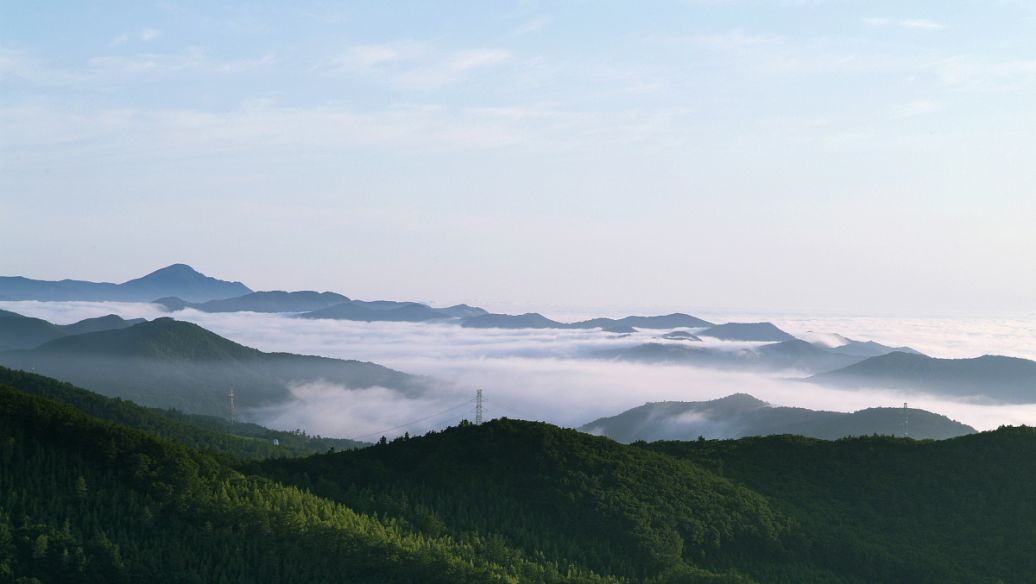 Bamboo has shaped East Asian civilisation for millennia — used in everything from early calligraphy brushes to temple scaffolding — and Nanshan offers one of the largest contiguous bamboo ecosystems in eastern China. Where most temperate forests across Europe and North America turn a hundred shades of autumn brown, these Phyllostachys groves stay winter-green, blanketing the rolling foothills of the Tianmu Mountain range in an unbroken wave of jade. Think of it as a more sweeping answer to Japan's celebrated Arashiyama Bamboo Grove in Kyoto: roughly 50 square kilometres of whispering poles that ripple like ocean swells whenever the breeze stirs the canopy overhead.
The reserve sits in a humid subtropical monsoon zone, where steady rainfall and mineral-rich mountain soils feed bamboo at astonishing rates — some shoots can grow almost a metre in a single day. A single bamboo clump may live 60 to 100 years, anchoring the region's reputation as a centre of longevity culture. Summer escapes are the park's big draw: while Shanghai and Nanjing swelter above 35°C, the bamboo-shaded valleys stay a comfortable 25°C, the dense canopy trapping enough negative ions to earn the area a reputation as a natural "oxygen bar" — a phrase Chinese visitors use the way Europeans might describe a particularly bracing alpine air.
The park's human footprint is just as carefully curated as its natural one. The recreated village of Jimingcui preserves classic Huizhou architecture — whitewashed walls, dark roof tiles, and carved wooden beams — a vernacular style often compared to the half-timbered Alpine villages of Bavaria for its harmony with mountain terrain. Midway up the ridge, the Longevity Star Plaza is dominated by a colossal statue billed as China's "First Longevity Star," a sculptural tradition echoing the monumental flair of Mount Rushmore or Bavaria's Alpine Road colossi. The neighbouring Bamboo Crafts Museum showcases centuries-old weaving and carving techniques that once supplied scholars' brush pots and tea masters' ladles across the Yangtze Delta.
For many visitors, the highlight is the Panda Pavilion, home to two giant pandas named Xing'an and Huali. Outside the major breeding programmes around Chengdu, this is one of the closest places to the lower Yangtze to see these beloved black-and-white bears — comparable to meeting pandas at Edinburgh Zoo or Vienna's Tiergarten Schönbrunn, only set against a misty bamboo backdrop. Adventurous travellers can then board a ground-level funicular and a high-altitude cable car to the summit of Wuyue Diyi Peak, the "Highest Peak between Jiangsu, Zhejiang, and Anhui," where a single step plants one foot in three provinces — a trilateral feat reminiscent of standing on Germany's Dreiländereck where France, Germany, and Switzerland meet.
The main entrance ticket runs around 90 RMB (roughly 12 USD) and already includes the panda pavilion. The vintage forest train, ground funicular, aerial cable car, and bamboo raft rides are sold separately; combo tickets typically push the total per person to 150–250 RMB depending on how many rides you add. Budget four to six hours for the full circuit, which winds from tranquil Jinghu Lake through the Bird Paradise, the village, the pandas, and finally up to the summit. Allow extra time if the parrot show or Anhui lion dance is running — both are popular with families travelling with children.
Spring and autumn bring the mildest hiking weather, summer is the undisputed cool-escape season, and winter offers quieter trails and crystalline views across the bare canopy. Wear pale, breathable clothing and sturdy non-slip shoes — the bamboo litter can be slick — pack strong mosquito repellent and sunscreen, and check the weather before arriving, as cable cars may halt during thunderstorms or high winds. Open flames are prohibited throughout the reserve.
Bamboo has shaped East Asian civilisation for millennia — used in everything from early calligraphy brushes to temple scaffolding — and Nanshan offers one of the largest contiguous bamboo ecosystems in eastern China. Where most temperate forests across Europe and North America turn a hundred shades of autumn brown, these Phyllostachys groves stay winter-green, blanketing the rolling foothills of the Tianmu Mountain range in an unbroken wave of jade. Think of it as a more sweeping answer to Japan's celebrated Arashiyama Bamboo Grove in Kyoto: roughly 50 square kilometres of whispering poles that ripple like ocean swells whenever the breeze stirs the canopy overhead.
The reserve sits in a humid subtropical monsoon zone, where steady rainfall and mineral-rich mountain soils feed bamboo at astonishing rates — some shoots can grow almost a metre in a single day. A single bamboo clump may live 60 to 100 years, anchoring the region's reputation as a centre of longevity culture. Summer escapes are the park's big draw: while Shanghai and Nanjing swelter above 35°C, the bamboo-shaded valleys stay a comfortable 25°C, the dense canopy trapping enough negative ions to earn the area a reputation as a natural "oxygen bar" — a phrase Chinese visitors use the way Europeans might describe a particularly bracing alpine air.
The park's human footprint is just as carefully curated as its natural one. The recreated village of Jimingcui preserves classic Huizhou architecture — whitewashed walls, dark roof tiles, and carved wooden beams — a vernacular style often compared to the half-timbered Alpine villages of Bavaria for its harmony with mountain terrain. Midway up the ridge, the Longevity Star Plaza is dominated by a colossal statue billed as China's "First Longevity Star," a sculptural tradition echoing the monumental flair of Mount Rushmore or Bavaria's Alpine Road colossi. The neighbouring Bamboo Crafts Museum showcases centuries-old weaving and carving techniques that once supplied scholars' brush pots and tea masters' ladles across the Yangtze Delta.
For many visitors, the highlight is the Panda Pavilion, home to two giant pandas named Xing'an and Huali. Outside the major breeding programmes around Chengdu, this is one of the closest places to the lower Yangtze to see these beloved black-and-white bears — comparable to meeting pandas at Edinburgh Zoo or Vienna's Tiergarten Schönbrunn, only set against a misty bamboo backdrop. Adventurous travellers can then board a ground-level funicular and a high-altitude cable car to the summit of Wuyue Diyi Peak, the "Highest Peak between Jiangsu, Zhejiang, and Anhui," where a single step plants one foot in three provinces — a trilateral feat reminiscent of standing on Germany's Dreiländereck where France, Germany, and Switzerland meet.
The main entrance ticket runs around 90 RMB (roughly 12 USD) and already includes the panda pavilion. The vintage forest train, ground funicular, aerial cable car, and bamboo raft rides are sold separately; combo tickets typically push the total per person to 150–250 RMB depending on how many rides you add. Budget four to six hours for the full circuit, which winds from tranquil Jinghu Lake through the Bird Paradise, the village, the pandas, and finally up to the summit. Allow extra time if the parrot show or Anhui lion dance is running — both are popular with families travelling with children.
Spring and autumn bring the mildest hiking weather, summer is the undisputed cool-escape season, and winter offers quieter trails and crystalline views across the bare canopy. Wear pale, breathable clothing and sturdy non-slip shoes — the bamboo litter can be slick — pack strong mosquito repellent and sunscreen, and check the weather before arriving, as cable cars may halt during thunderstorms or high winds. Open flames are prohibited throughout the reserve.