Helan Mountain Nature Reserve
⭐ 4.20
Helan Mountain Nature Reserve, Yinchuan City, Ningxia Hui Autonomous Region, China
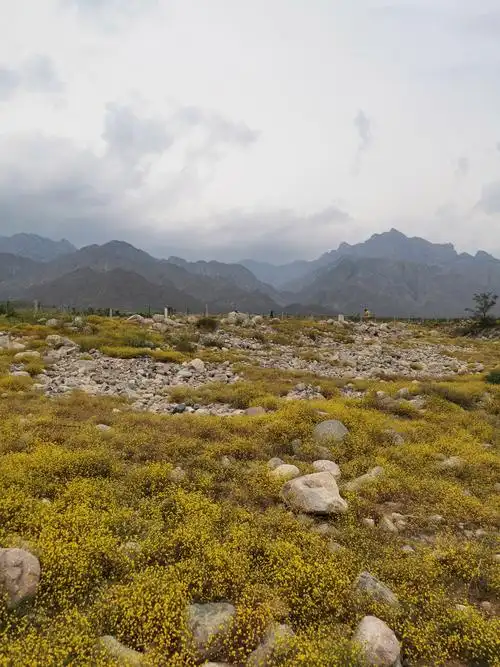 Stretching more than 200 km east to west, the Helan Mountains have functioned for thousands of years as a natural bulwark separating the Yellow River's fertile plains from the Gobi steppe, much as the Pyrenees once divided the Frankish and Iberian worlds. This rugged barrier shaped the destiny of countless nomadic and agrarian civilizations, channeling trade, migration, and conflict along the Silk Road. Designated a national nature reserve in 1988, the area now safeguards roughly 1,935 square kilometers of arid mountain ecosystems—an ambitious conservation effort that protects one of northwest China's most important biodiversity hotspots while preserving its layered human heritage.
The reserve's dramatic vertical zoning mirrors what travelers might encounter in the Alps or the High Atlas, with vegetation ascending through steppe grassland, open woodland, and finally dense stands of Qinghai spruce before yielding to alpine meadows at the highest elevations. Within Suyukou National Forest Park, the celebrated "Ten Thousand Valleys of Pine Waves" envelop visitors in cool, fragrant air, while the only cantilevered cliff walkway in Ningxia clings to the rock face near the Golden Summit, a viewing point that delivers sweeping sunrise vistas over a sea of clouds. With 70% forest coverage and temperatures running 5–8°C cooler than Yinchuan below, the park serves as the region's most accessible mountain retreat.
The cliffs and forests shelter wildlife that has all but vanished elsewhere in the region. Blue sheep—agile, sure-footed relatives of the chamois—climb the rocky slopes in some of the world's densest populations, while red deer, musk deer, and the elusive blue eared pheasant roam the wooded valleys. Early morning and dusk offer the best chances to spot them grazing along forest edges or silhouetted against the ridgelines. Patient, quiet observation is essential; feeding the animals is strictly prohibited, allowing visitors to experience an authentic, undisturbed encounter with one of China's last intact mountain ecosystems.
Deep within the range, hundreds of prehistoric petroglyphs are carved into cliff faces—stylized hunting scenes, herding rituals, and ceremonial figures that invite comparison with the Ice Age masterpieces of Lascaux in France or Altamira in Spain, though here the art remained accessible in open air rather than sealed caves. The tradition continued for millennia, making the Helan rock art one of Asia's most continuous records of human expression. Just below the mountains, the Western Xia Imperial Tombs rise in earthen pyramids sometimes called "the Pyramids of the East," forming, together with the cinematic set of Zhenbeipu Film Studio, a cultural corridor that complements any nature-focused visit.
Reaching the reserve is straightforward: drive roughly 50 km west from Yinchuan, where rental cars and ride-hailing services are readily available, though public Bus Route 2 runs on a limited schedule. Entry to Suyukou Forest Park costs about 40 RMB, with a sightseeing bus ticket adding roughly 80 RMB. The optimal visiting window runs from May through October, with autumn bringing spectacular color to the slopes. Sun protection, plenty of water, and offline maps are essential—cellular reception fades in the deeper valleys, and UV exposure at altitude is intense. The core and buffer zones are strictly off-limits, and collecting specimens or feeding wildlife is forbidden.
Few destinations in northwest China combine so seamlessly the appeal of cool alpine wilderness, ancient art, and dramatic historical setting within easy reach of a regional capital. Where else can a visitor photograph blue sheep at dawn, study carvings older than the Egyptian New Kingdom in the afternoon, and stand beneath earthen pyramids by sunset? Helan Mountain rewards travelers who venture beyond the standard Silk Road circuit with a multi-layered experience that bridges natural wonder and human history—an encounter that lingers long after the journey home.
Stretching more than 200 km east to west, the Helan Mountains have functioned for thousands of years as a natural bulwark separating the Yellow River's fertile plains from the Gobi steppe, much as the Pyrenees once divided the Frankish and Iberian worlds. This rugged barrier shaped the destiny of countless nomadic and agrarian civilizations, channeling trade, migration, and conflict along the Silk Road. Designated a national nature reserve in 1988, the area now safeguards roughly 1,935 square kilometers of arid mountain ecosystems—an ambitious conservation effort that protects one of northwest China's most important biodiversity hotspots while preserving its layered human heritage.
The reserve's dramatic vertical zoning mirrors what travelers might encounter in the Alps or the High Atlas, with vegetation ascending through steppe grassland, open woodland, and finally dense stands of Qinghai spruce before yielding to alpine meadows at the highest elevations. Within Suyukou National Forest Park, the celebrated "Ten Thousand Valleys of Pine Waves" envelop visitors in cool, fragrant air, while the only cantilevered cliff walkway in Ningxia clings to the rock face near the Golden Summit, a viewing point that delivers sweeping sunrise vistas over a sea of clouds. With 70% forest coverage and temperatures running 5–8°C cooler than Yinchuan below, the park serves as the region's most accessible mountain retreat.
The cliffs and forests shelter wildlife that has all but vanished elsewhere in the region. Blue sheep—agile, sure-footed relatives of the chamois—climb the rocky slopes in some of the world's densest populations, while red deer, musk deer, and the elusive blue eared pheasant roam the wooded valleys. Early morning and dusk offer the best chances to spot them grazing along forest edges or silhouetted against the ridgelines. Patient, quiet observation is essential; feeding the animals is strictly prohibited, allowing visitors to experience an authentic, undisturbed encounter with one of China's last intact mountain ecosystems.
Deep within the range, hundreds of prehistoric petroglyphs are carved into cliff faces—stylized hunting scenes, herding rituals, and ceremonial figures that invite comparison with the Ice Age masterpieces of Lascaux in France or Altamira in Spain, though here the art remained accessible in open air rather than sealed caves. The tradition continued for millennia, making the Helan rock art one of Asia's most continuous records of human expression. Just below the mountains, the Western Xia Imperial Tombs rise in earthen pyramids sometimes called "the Pyramids of the East," forming, together with the cinematic set of Zhenbeipu Film Studio, a cultural corridor that complements any nature-focused visit.
Reaching the reserve is straightforward: drive roughly 50 km west from Yinchuan, where rental cars and ride-hailing services are readily available, though public Bus Route 2 runs on a limited schedule. Entry to Suyukou Forest Park costs about 40 RMB, with a sightseeing bus ticket adding roughly 80 RMB. The optimal visiting window runs from May through October, with autumn bringing spectacular color to the slopes. Sun protection, plenty of water, and offline maps are essential—cellular reception fades in the deeper valleys, and UV exposure at altitude is intense. The core and buffer zones are strictly off-limits, and collecting specimens or feeding wildlife is forbidden.
Few destinations in northwest China combine so seamlessly the appeal of cool alpine wilderness, ancient art, and dramatic historical setting within easy reach of a regional capital. Where else can a visitor photograph blue sheep at dawn, study carvings older than the Egyptian New Kingdom in the afternoon, and stand beneath earthen pyramids by sunset? Helan Mountain rewards travelers who venture beyond the standard Silk Road circuit with a multi-layered experience that bridges natural wonder and human history—an encounter that lingers long after the journey home.