Zhenbeibu Film Studio
⭐ 4.50
Zhenbeibu Town, Helan County, Yinchuan City, Ningxia Hui Autonomous Region, China
 Founded in 1993 by celebrated writer Zhang Xianliang, Zhenbeibu transformed two abandoned Ming and Qing-era frontier garrisons into one of China's most distinctive film locations. These fortresses once guarded the northwest frontier against nomadic incursions, much like the medieval watchtowers along Scotland's border castles or Spain's frontier castles of the Reconquista. Zhang's vision gave the crumbling earthen walls new purpose, turning a forgotten military outpost into the cradle of Chinese western cinema and a stage where film history meets Silk Road heritage.
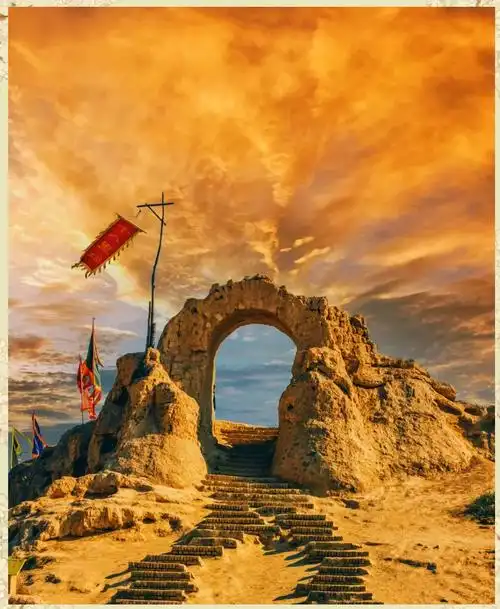
The studio comprises two fortress complexes built using traditional northwestern rammed-earth techniques—thick walls and rough lines that evoke the same earthbound gravitas as Morocco's Ait Benhaddou or Tunisia's desert kasbahs. The Ming Fortress features the famous "Moon Gate" and a rustic tavern wall brimming with frontier romance, while the Qing Fortress rises with imposing gate towers. Nearby, Old Yinchuan Street recreates 1950s "Willow Lane," its grey brick and tile facades channeling nostalgic mid-century China in a setting reminiscent of London's reconstructed Dickensian yards.
Zhenbeibu has served as the backdrop for over a hundred Chinese and international productions, cementing its status as a cultural landmark of Chinese cinema. Iconic scenes from Stephen Chow's "A Chinese Odyssey," Zhang Yimou's "Red Sorghum," and Xie Jin's "The Herdsman" were immortalized within these ancient walls. For Chinese audiences, the site functions much like Cinecittà does for Italians or Leavesden Studios for Harry Potter fans—a pilgrimage destination where movie magic and cultural heritage intertwine.
Located in Zhenbeibu Town, Xixia District, about 35 kilometers west of central Yinchuan, the studio is reachable by Bus 57, taxi, or self-drive. Adult admission is 80 yuan, with summer discounts available; seniors over 60 and children under six enter free. Summer hours run 8:00 AM to 10:00 PM. Plan for three to five hours, and combine your visit with the on-site art gallery and Zhang Xianliang Memorial Hall. Sunscreen, hats, and plenty of water are essential.
A recommended route winds clockwise from Ming Fortress through Old Yinchuan Street to Qing Fortress, avoiding backtracking. Both fortresses offer costume rentals (around 20 yuan per person) near key filming spots—a must for fans wanting their own silver-screen moment. For photographers, late afternoon light wraps the Moon Gate and gate towers in cinematic glow. The site offers few hands-on activities, so watching the classic films beforehand dramatically enriches the experience. Strong summer sun demands preparation, but the rewards are unforgettable.
Founded in 1993 by celebrated writer Zhang Xianliang, Zhenbeibu transformed two abandoned Ming and Qing-era frontier garrisons into one of China's most distinctive film locations. These fortresses once guarded the northwest frontier against nomadic incursions, much like the medieval watchtowers along Scotland's border castles or Spain's frontier castles of the Reconquista. Zhang's vision gave the crumbling earthen walls new purpose, turning a forgotten military outpost into the cradle of Chinese western cinema and a stage where film history meets Silk Road heritage.
The studio comprises two fortress complexes built using traditional northwestern rammed-earth techniques—thick walls and rough lines that evoke the same earthbound gravitas as Morocco's Ait Benhaddou or Tunisia's desert kasbahs. The Ming Fortress features the famous "Moon Gate" and a rustic tavern wall brimming with frontier romance, while the Qing Fortress rises with imposing gate towers. Nearby, Old Yinchuan Street recreates 1950s "Willow Lane," its grey brick and tile facades channeling nostalgic mid-century China in a setting reminiscent of London's reconstructed Dickensian yards.
Zhenbeibu has served as the backdrop for over a hundred Chinese and international productions, cementing its status as a cultural landmark of Chinese cinema. Iconic scenes from Stephen Chow's "A Chinese Odyssey," Zhang Yimou's "Red Sorghum," and Xie Jin's "The Herdsman" were immortalized within these ancient walls. For Chinese audiences, the site functions much like Cinecittà does for Italians or Leavesden Studios for Harry Potter fans—a pilgrimage destination where movie magic and cultural heritage intertwine.
Located in Zhenbeibu Town, Xixia District, about 35 kilometers west of central Yinchuan, the studio is reachable by Bus 57, taxi, or self-drive. Adult admission is 80 yuan, with summer discounts available; seniors over 60 and children under six enter free. Summer hours run 8:00 AM to 10:00 PM. Plan for three to five hours, and combine your visit with the on-site art gallery and Zhang Xianliang Memorial Hall. Sunscreen, hats, and plenty of water are essential.
A recommended route winds clockwise from Ming Fortress through Old Yinchuan Street to Qing Fortress, avoiding backtracking. Both fortresses offer costume rentals (around 20 yuan per person) near key filming spots—a must for fans wanting their own silver-screen moment. For photographers, late afternoon light wraps the Moon Gate and gate towers in cinematic glow. The site offers few hands-on activities, so watching the classic films beforehand dramatically enriches the experience. Strong summer sun demands preparation, but the rewards are unforgettable.