Chongqing Zoo

⭐ 4.70

No. 1, Xijiao Yi Village, Yangjiaping, Jiulongpo District, Chongqing, China
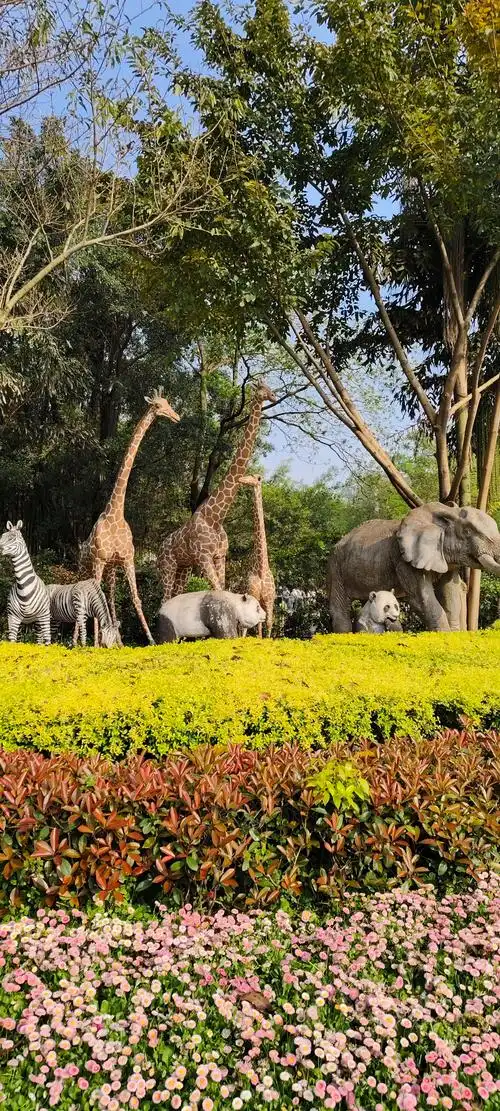
Chongqing Zoo
Founded in 1953, the very year the Korean War armistice was signed and Stalin lay dying, Chongqing Zoo emerged during a remarkable period when China was simultaneously reconstructing its industrial heartland and reimagining public spaces for its citizens. Originally conceived as part of the post-liberation modernization drive that transformed the wartime capital of Chongqing, the park was formally named in 1960 and has evolved over seven decades from a modest menagerie into southwestern China's largest and most biodiverse zoological institution. It carries within its leafy pathways the layered memories of multiple generations of Chongqing residents and stands as a living testament to the country's shifting philosophies on wildlife care, moving from traditional barred cages toward modern, ecologically sensitive habitats. Unlike the flat, grid-like layouts of zoos in cities such as Berlin's historic Tierpark or London's Regent's Park, Chongqing Zoo exploits the dramatic topography of its mountain setting, creating a terraced landscape where elevated walkways, sunken enclosures, and winding forest trails unfold in constantly shifting vistas. The dense tree coverage—reflected across shimmering artificial lakes—provides exceptional shade during the humid subtropical summers, lending the park an almost botanical-garden atmosphere reminiscent of Italy's Bioparco di Roma or Switzerland's hilly Tierpark Bern. Visitors frequently comment that strolling here feels less like touring a zoo and more like wandering through a protected mountain reserve that happens to house extraordinary creatures. The Giant Panda Hall unquestionably anchors the visitor experience. Home to roughly two dozen of the beloved black-and-white bears—more than most European collections can dream of housing, including the famous pairs at Vienna's Tiergarten Schönbrunn or Edinburgh Zoo—the facility allows intimate viewing throughout the day. Early morning is prime time, when pandas clamber from their slumber to munch bamboo, tumble playfully, or doze in their enclosures. The experience rivals any panda encounter available on the continent and offers exceptional photographic opportunities thanks to well-positioned glass viewing panels. Beyond its star attractions, the zoo presents a thoughtfully curated menagerie featuring South China tigers, golden snub-nosed monkeys, red pandas, giraffes, chimpanzees, and an aviary teeming with native birdlife. The reptile house and primate islands provide further educational enrichment, while dedicated children's interaction zones allow younger visitors to engage with smaller herbivores. Conservation breeding programs for endangered native species—including the critically endangered South China tiger, a subspecies functionally extinct in the wild—give the institution genuine scientific significance beyond its recreational appeal. Practical planning is refreshingly straightforward. Summer hours run from 08:00 to 18:30 (last entry 18:00), with the park open year-round. Peak-season tickets cost just 25 yuan (roughly €3) from May through November, dropping to 20 yuan in winter; students and seniors pay half price, while children under 1.2 meters enter free. The easiest approach is to take Metro Line 2 to "Dongwuyuan" (Zoo) Station, where Exit 1 delivers visitors directly to the eastern gate—far simpler than navigating London's Tube-to-Zoo trek or Berlin's U-Bahn connections. For an optimal visit, arrive by 08:30 and head straight to the panda enclosures before crowds build. Pandas are most active during feeding peaks at 09:00–10:30 and 14:00–15:00. A clockwise circuit covering pandas, giraffes, big cats, monkey hill, primates, and the reptile house requires roughly three to four hours. Chongqing's summers are notoriously hot and humid, so pack a sunhat, sunscreen, and ample water; sturdy non-slip footwear is essential for navigating the slopes. Visitors should refrain from feeding animals, tapping on glass, or using flash photography—a code of conduct mirroring best practices at accredited European zoos.

Traveler reviews

Especially great! It's my first time seeing so many pandas at a zoo, and they all look very energetic. You must go in the morning, as many people wait for the panda house to open. Both locals and t...
⭐ 5 · Robin Hayes Expand
There are many varieties of animals, though some seem to be slacking off, but the ones that are active are all very cute. Best to visit the red pandas when the park first opens in the morning, as the staff are feeding them th...
⭐ 4 · Sage Linden Expand