Xinyang Museum
⭐ 4.20
Northwest side of the intersection of Hudong Avenue and Beijing Road, Shihe District, Xinyang City, Henan Province, China
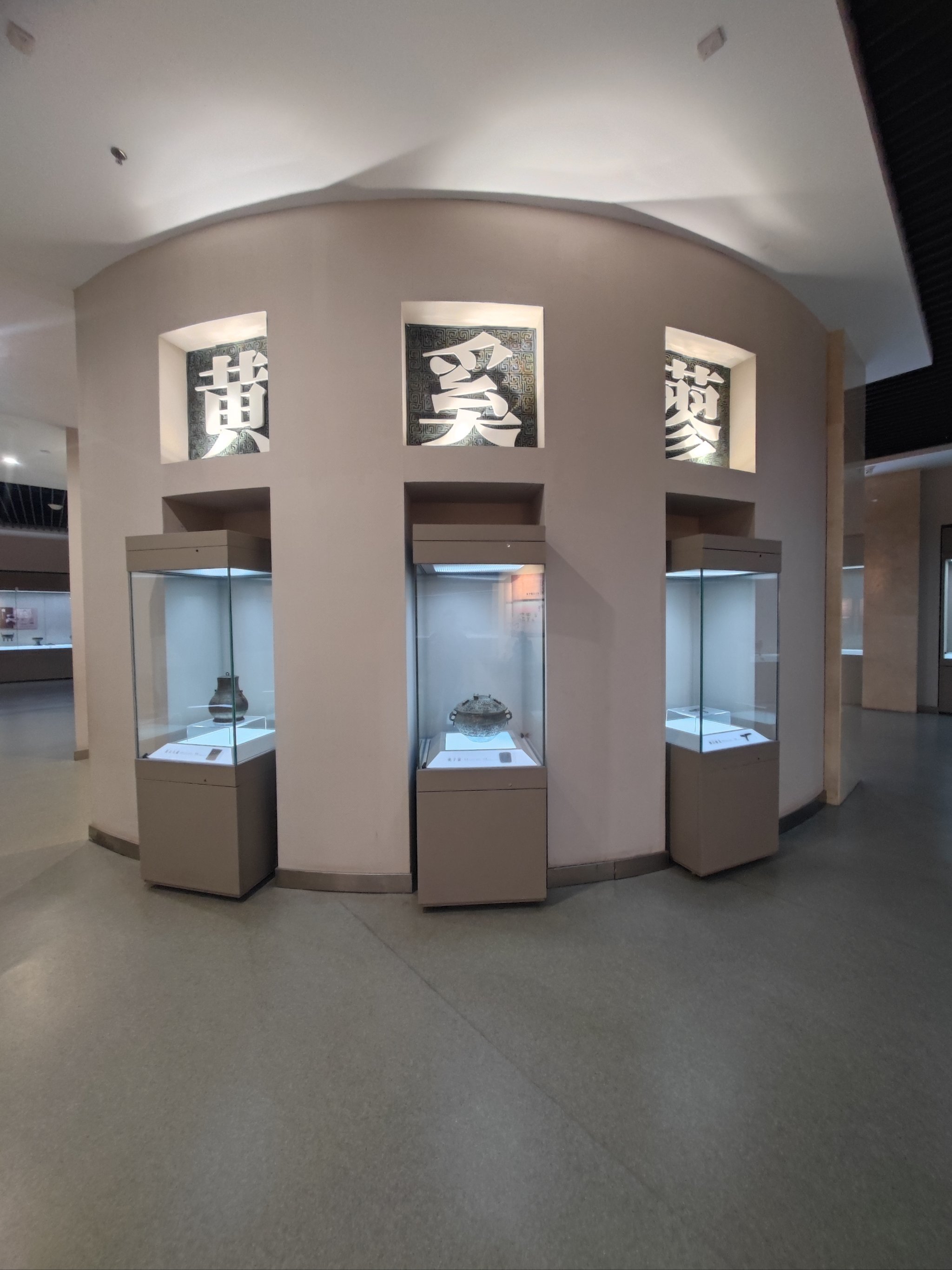 Opened to the public in 2010 and elevated to National Level-2 status in 2024, the museum occupies a distinctive place in Chinese archaeology. Its bronze holdings span ritual vessels, weapons, and wine containers from the Shang through Han dynasties—roughly 1600 BCE to 220 CE, contemporary with Egypt's New Kingdom pharaohs, imperial Rome, and the flowering of Greek city-states. The collection's star treasure is a 9.28-meter Shang-dynasty dugout canoe recovered from the Huai River—the largest and best-preserved example ever found in China, dating back 3,500 years and accompanied by liquid residue confirmed as the world's oldest surviving wine.
Set within the landscaped Baihua Garden district of Xinyang's modern Yangshan New Area, the museum occupies 34,000 square meters with nearly 30,000 square meters of interior space—comparable in scale to a substantial European regional institution such as Bordeaux's Musée d'Aquitaine or Strasbourg's historical museums. Seven permanent galleries combine chronological and thematic approaches, guiding visitors through Neolithic origins, Huai River principalities, Chu royal culture, ancestral heritage, the celebrated world of Xinyang tea, and the distinctive fusion of Henan-Chu traditions that defines this cultural borderland.
What distinguishes this collection is its role as a cultural bridge between northern and southern China. Xinyang sits where Han civilization met the Chu heartland along the Huai River—a comparable crossroads to Burgundy or the Rhineland in European terms, where distinct wine cultures converged. Star artifacts include the Western Zhou "Father Ding You," an ancestral sacrificial vessel whose neck features remarkably naturalistic oxen often called "the finest ox of Western Zhou"; a colossal Shang-Zhou bronze horn-shaped pouring vessel considered a pinnacle of wine-vessel craftsmanship; and a Western Han boshan-covered zun decorated with immortals from the Classic of Mountains and Seas, revealing early integration of mythological imagery into metalwork.
The museum welcomes visitors Tuesday through Sunday, 9:00 AM to 5:00 PM, with last entry at 4:00 PM; it closes Mondays except during national holidays. Admission is free with photo ID, and no reservation is required. Free guided tours run at 10:00 AM and 3:00 PM during summer months, with a thorough visit requiring two to three hours. Photography without flash is permitted, but touching exhibits, eating, drinking, and smoking are forbidden. Wheelchairs and strollers are available at the service desk, and groups should call 0376-6365366 to arrange visits. Air conditioning runs cool, so a light jacket is advisable.
A suggested route follows the gallery sequence—Preface Hall, Ancient Homeland, Lords of the Huai, Royal Winds of Chu, Fragrance of Tea, Universal Roots and Kin, Henan-Chu Harmony—with particular attention to the Huai River civilization section and the experiential Warring States chime-bell display. After touring, visitors can stroll into the adjacent Baihua Garden or travel into the older town to sample local street foods: jianmo flatbread wraps, silky tofu pudding, and of course the celebrated Xinyang Maojian green tea, completing an immersion in both ancient heritage and living local culture.
Opened to the public in 2010 and elevated to National Level-2 status in 2024, the museum occupies a distinctive place in Chinese archaeology. Its bronze holdings span ritual vessels, weapons, and wine containers from the Shang through Han dynasties—roughly 1600 BCE to 220 CE, contemporary with Egypt's New Kingdom pharaohs, imperial Rome, and the flowering of Greek city-states. The collection's star treasure is a 9.28-meter Shang-dynasty dugout canoe recovered from the Huai River—the largest and best-preserved example ever found in China, dating back 3,500 years and accompanied by liquid residue confirmed as the world's oldest surviving wine.
Set within the landscaped Baihua Garden district of Xinyang's modern Yangshan New Area, the museum occupies 34,000 square meters with nearly 30,000 square meters of interior space—comparable in scale to a substantial European regional institution such as Bordeaux's Musée d'Aquitaine or Strasbourg's historical museums. Seven permanent galleries combine chronological and thematic approaches, guiding visitors through Neolithic origins, Huai River principalities, Chu royal culture, ancestral heritage, the celebrated world of Xinyang tea, and the distinctive fusion of Henan-Chu traditions that defines this cultural borderland.
What distinguishes this collection is its role as a cultural bridge between northern and southern China. Xinyang sits where Han civilization met the Chu heartland along the Huai River—a comparable crossroads to Burgundy or the Rhineland in European terms, where distinct wine cultures converged. Star artifacts include the Western Zhou "Father Ding You," an ancestral sacrificial vessel whose neck features remarkably naturalistic oxen often called "the finest ox of Western Zhou"; a colossal Shang-Zhou bronze horn-shaped pouring vessel considered a pinnacle of wine-vessel craftsmanship; and a Western Han boshan-covered zun decorated with immortals from the Classic of Mountains and Seas, revealing early integration of mythological imagery into metalwork.
The museum welcomes visitors Tuesday through Sunday, 9:00 AM to 5:00 PM, with last entry at 4:00 PM; it closes Mondays except during national holidays. Admission is free with photo ID, and no reservation is required. Free guided tours run at 10:00 AM and 3:00 PM during summer months, with a thorough visit requiring two to three hours. Photography without flash is permitted, but touching exhibits, eating, drinking, and smoking are forbidden. Wheelchairs and strollers are available at the service desk, and groups should call 0376-6365366 to arrange visits. Air conditioning runs cool, so a light jacket is advisable.
A suggested route follows the gallery sequence—Preface Hall, Ancient Homeland, Lords of the Huai, Royal Winds of Chu, Fragrance of Tea, Universal Roots and Kin, Henan-Chu Harmony—with particular attention to the Huai River civilization section and the experiential Warring States chime-bell display. After touring, visitors can stroll into the adjacent Baihua Garden or travel into the older town to sample local street foods: jianmo flatbread wraps, silky tofu pudding, and of course the celebrated Xinyang Maojian green tea, completing an immersion in both ancient heritage and living local culture.