Dazu Rock Carvings
⭐ 4.60
No. 7, Beishan Road, Longgang Street, Dazu District, Chongqing, China
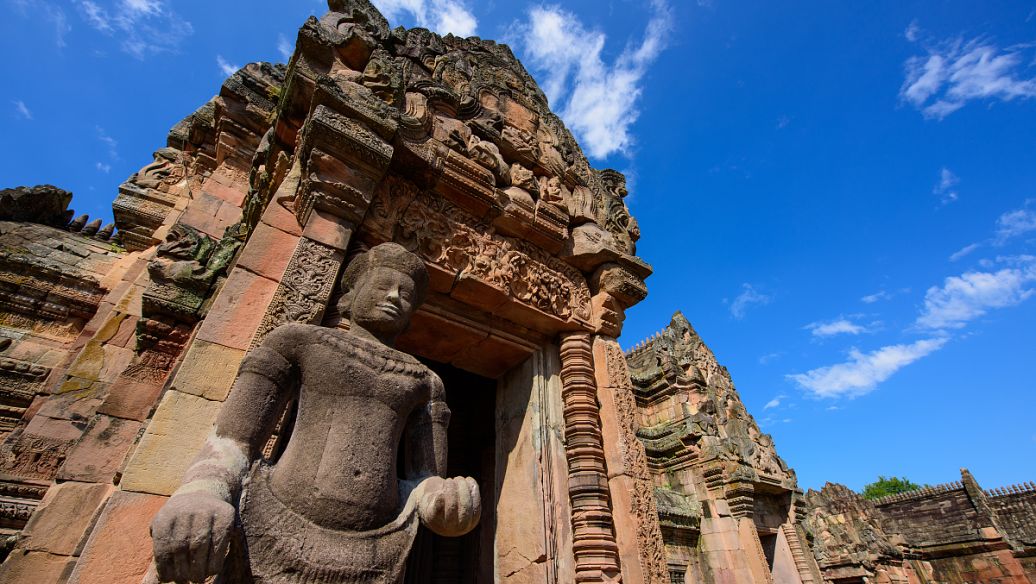 The Dazu Rock Carvings began during the early Tang Dynasty (7th century) and reached their zenith under the Southern Song (12th–13th centuries). While Chartres Cathedral rose in France and monastic scriptoria flourished across Christendom, the monk Zhao Zhifeng spent over seventy years supervising the Baoding Mountain complex. Inscribed by UNESCO in 1999, Dazu stands as Chongqing's sole World Heritage treasure and represents the final great flowering of Chinese cave sculpture, executed just as Buddhist influence began receding in the later secular dynasties.
Over 50,000 statues survive across forty-plus sites, predominantly in high relief with virtuoso round and openwork carving. The Thousand-Armed Guanyin at Baoding unfurls 1,007 gilded hands in a radiant fan—a sculptural tour de force that anticipates the dramatic dynamism of Bernini's Baroque altarpieces. The 31-metre reclining Buddha employs the elegant principle of "suggestion over completion," where unfinished contours invite the eye to complete the form, recalling Michelangelo's non-finito technique in Florence's Medici Chapel.
What distinguishes Dazu from its sister grottoes is its remarkable humanism and accessibility. The carvings translate Buddhist doctrine into vivid narrative scenes—the Parable of Parental Love depicts the hardships of child-rearing with touching sincerity, while the Wheel of Rebirth illustrates karma through dramatic imagery. Buddhist, Daoist, and Confucian teachings coexist harmoniously, creating an interfaith dialogue that few religious sites in the world can match.
Baoding Mountain tickets cost roughly 110 RMB, while a combined Baoding-Beishan ticket runs about 135 RMB. Sites open daily 8:30 to 17:30. The carvings lie approximately 130 kilometres from central Chongqing—a two-hour drive or a high-speed train to Dazu South Station followed by a short taxi. Navigate to "Dazu Rock Carvings Visitor Center," where a 4K introductory film provides essential context before you climb among the cliffs.
Plan three to four hours minimum and always hire an official guide or rent the electronic audio—locals advise that the experience is "three parts seeing, seven parts listening." Sturdy shoes, sun protection, and water are essential, particularly in summer heat. Beyond the iconic Thousand-Armed Guanyin and reclining Buddha, seek out the Three Sages of Huayan, the exquisite Revolving Sutra Cabinet grotto at Beishan, and the tender vignettes of everyday Song Dynasty life carved directly into the cliff face.
The Dazu Rock Carvings began during the early Tang Dynasty (7th century) and reached their zenith under the Southern Song (12th–13th centuries). While Chartres Cathedral rose in France and monastic scriptoria flourished across Christendom, the monk Zhao Zhifeng spent over seventy years supervising the Baoding Mountain complex. Inscribed by UNESCO in 1999, Dazu stands as Chongqing's sole World Heritage treasure and represents the final great flowering of Chinese cave sculpture, executed just as Buddhist influence began receding in the later secular dynasties.
Over 50,000 statues survive across forty-plus sites, predominantly in high relief with virtuoso round and openwork carving. The Thousand-Armed Guanyin at Baoding unfurls 1,007 gilded hands in a radiant fan—a sculptural tour de force that anticipates the dramatic dynamism of Bernini's Baroque altarpieces. The 31-metre reclining Buddha employs the elegant principle of "suggestion over completion," where unfinished contours invite the eye to complete the form, recalling Michelangelo's non-finito technique in Florence's Medici Chapel.
What distinguishes Dazu from its sister grottoes is its remarkable humanism and accessibility. The carvings translate Buddhist doctrine into vivid narrative scenes—the Parable of Parental Love depicts the hardships of child-rearing with touching sincerity, while the Wheel of Rebirth illustrates karma through dramatic imagery. Buddhist, Daoist, and Confucian teachings coexist harmoniously, creating an interfaith dialogue that few religious sites in the world can match.
Baoding Mountain tickets cost roughly 110 RMB, while a combined Baoding-Beishan ticket runs about 135 RMB. Sites open daily 8:30 to 17:30. The carvings lie approximately 130 kilometres from central Chongqing—a two-hour drive or a high-speed train to Dazu South Station followed by a short taxi. Navigate to "Dazu Rock Carvings Visitor Center," where a 4K introductory film provides essential context before you climb among the cliffs.
Plan three to four hours minimum and always hire an official guide or rent the electronic audio—locals advise that the experience is "three parts seeing, seven parts listening." Sturdy shoes, sun protection, and water are essential, particularly in summer heat. Beyond the iconic Thousand-Armed Guanyin and reclining Buddha, seek out the Three Sages of Huayan, the exquisite Revolving Sutra Cabinet grotto at Beishan, and the tender vignettes of everyday Song Dynasty life carved directly into the cliff face.