Chaotianmen

⭐ 4.20

Chaotianmen Square, Yuzhong District, Chongqing, China
Chaotianmen
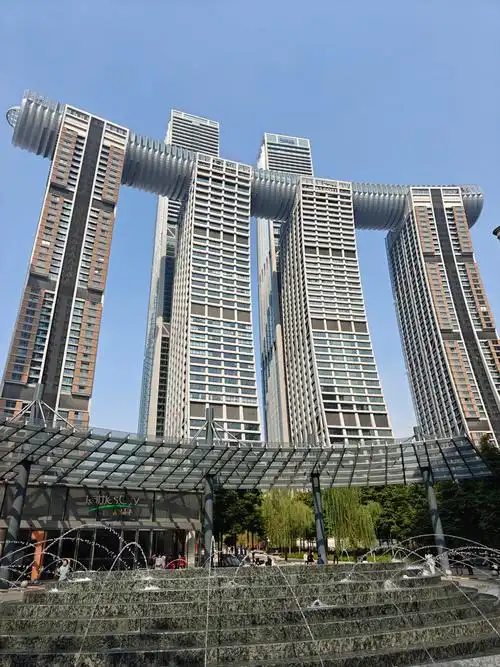
Chaotianmen takes its name from the Ming-dynasty gate that once stood here, the largest of Chongqing's "nine open and eight closed"城门—seventeen portals ringing the walled city. Just as the Tower of London embodied medieval England's royal authority, this gate served as the ceremonial threshold where officials were received and imperial edicts proclaimed. During the Qing era, the site thrived as the commercial heart of eastern Sichuan, and after the late-19th-century treaty ports, it became one of China's first inland customs houses, opening the mountainous southwest to global trade. The Jialing River runs clear and emerald, while the Yangtze churns ochre with mountain sediment; where they meet at Chaotianmen, they slide past each other in razor-sharp bands rather than mixing. This rare hydrodynamic display—visible from the open square below—lasts for several hundred metres downstream before the waters finally merge. Early mornings or after rainfall reveal the dividing line most vividly, earning comparisons to the confluence of the Rhone and Arve in Geneva, though on a far grander scale. Soaring above this natural spectacle, the Raffles City "Sailing Forward" complex—a collaboration between Singapore's CapitaLand and architect Moshe Safdie—echoes the billowing sails of the river junks that once crowded the docks. Four curved towers embrace the waterfront, linked 250 metres up by the crystalline Exploration Deck, a glass-floored skybridge offering 360-degree views across Yuzhong's vertiginous skyline. From this perch, the visual logic of Chongqing—its cliff-clinging towers, cable-spanned bridges, and neon-lit canyons—suddenly clicks into focus. Culturally, Chaotianmen remains Chongqing's most photographed symbol, framing the city in postcards, films, and opening-ceremony montages. A small heritage museum inside Raffles City, accessible by reservation, preserves memories of the old wharves where boatmen once hauled goods from Sichuan's remote interior. Together with nearby Hongya Cave—a timber-and-stile complex reminiscent of Venice's waterside palazzi lit by night—the area anchors the city's identity as a place where mountain, river, and metropolis converge. Visiting is straightforward: Chaotianmen Square is free and open around the clock, while the Exploration Deck and two-river night cruises are ticketed. Arrive at dusk to capture the river confluence at sunset, ascend for the city's nightly illumination, then stroll to Hongya Cave or board an evening boat. Metro Line 1 or 6 to Xiaoshizi Station places you within a short walk, though the hilly terrain demands sturdy, non-slip shoes. Local hotpot packs serious heat—opt for mild or a divided "yin-yang" pot if you're unaccustomed to Sichuan peppercorns. Summer brings humid heat, so hydrate generously; riverside evenings turn breezy, so pack a light layer.

Traveler reviews

The surrounding area is buzzing too. Right next to the square you've got Raffles City mall which is a whole shopping/dining universe if you need a break from sightseeing....
⭐ 5 · River Expand
Practical stuff: it's free, super easy to reach via Metro Line 1, and there are plenty of buses. But heads up—it gets PACKED, especially at night. Trying to get that perfect...
⭐ 5 · Rowan Expand