Jiefangbei
⭐ 4.20
Jiefangbei Pedestrian Street, Yuzhong District, Chongqing, China
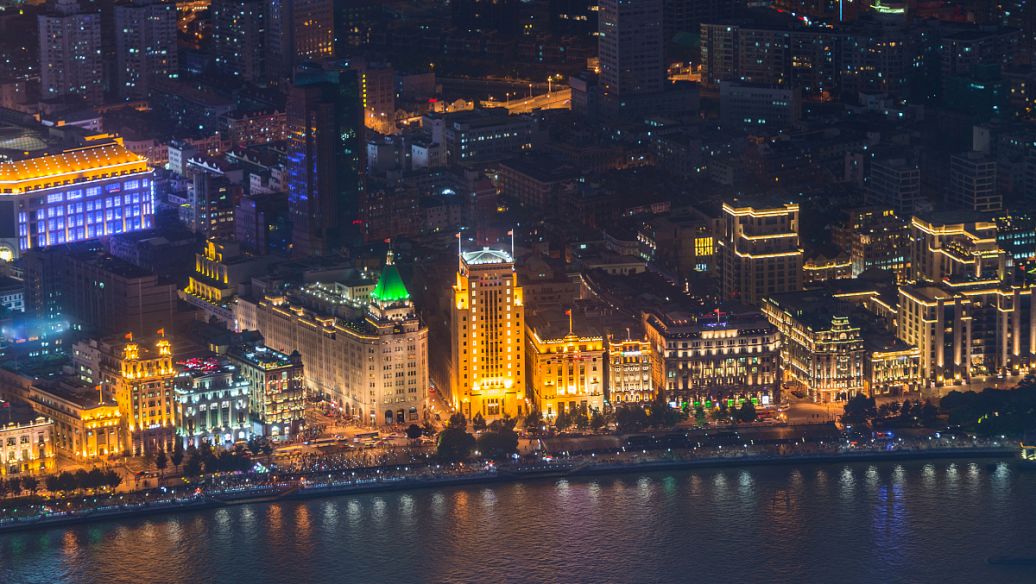 The monument traces its origins to 1940, when Chongqing—already serving as China's wartime capital since the Japanese occupation of Nanjing—was pounded by relentless bombing. Originally erected as the "Spiritual Fortress" to rally civilian morale, it was rebuilt in 1946 as the Victory Monument and renamed the People's Liberation Monument in 1950, with inscriptions penned by revolutionary leaders Liu Bocheng and Deng Xiaoping. Like London's Cenotaph or Paris's Arc de Triomphe, it functions as a national focal point for collective memory, though uniquely it honors both wartime victory and the country's subsequent liberation in 1949.
Architecturally, the monument is an eight-sided stone column rising 27.5 meters—a figure deliberately chosen to symbolize Chongqing's liberation in 1949. The octagonal shaft rises from a sturdy pedestal adorned with bas-relief scenes of the War of Resistance and calligraphy by Liu Bocheng and Deng Xiaoping. Weathered by decades of Chongqing mist and exhaust, the stonework contrasts strikingly with the glass skyscrapers looming on every side, creating a dialogue between historical gravitas and modern ambition reminiscent of how Trafalgar Square's column nestles among London's commercial bustle.
Beyond its commemorative role, Jiefangbei functions as Chongqing's spiritual compass—a beloved symbol locals invoke when referring to "downtown." Schoolchildren come for patriotic lessons, office workers pass beneath it daily, and visitors photograph it as shorthand for the city itself. Its enduring presence traces Chongqing's transformation from wartime provisional capital to a thriving western megacity of more than 30 million people, making it far more than a relic; it is a living landmark where past and present constantly intersect.
Reaching the monument is straightforward: it sits where Minzu Lu, Minquan Lu, and Zourong Lu converge in Yuzhong District, served by Linjiangmen, Jiaochangkou, and Xiaoshizi metro stations on Lines 1, 2, and 6. Entrance is free and the monument can be admired in just ten to fifteen minutes, making it ideal for a brief stop. Visit during off-peak hours to avoid the heaviest crowds, then wander the surrounding pedestrian zone to browse department stores like Chongqing Department Store and Wangfujing, or refuel at the legendary Bayi Lu Food Street.
For the best experience, arrive in the late afternoon when softer light flatters the stone and the surrounding towers begin to glow. Snap a keepsake photo at the monument's base, then sample Chongqing classics at Bayi Lu—spicy-sour noodles at Hao You Lai and delicate mountain-city glutinous rice balls are essential. As dusk falls, a ten-minute walk leads to Hongya Cave, where the cascading stilt-house complex blazes with neon against the cliffs, while nearby Luohan Temple and Baixiangju offer glimpses of old Chongqing's atmospheric lanes. Jiefangbei is more than a sight; it is the doorway into a city where every street reveals a different century.
The monument traces its origins to 1940, when Chongqing—already serving as China's wartime capital since the Japanese occupation of Nanjing—was pounded by relentless bombing. Originally erected as the "Spiritual Fortress" to rally civilian morale, it was rebuilt in 1946 as the Victory Monument and renamed the People's Liberation Monument in 1950, with inscriptions penned by revolutionary leaders Liu Bocheng and Deng Xiaoping. Like London's Cenotaph or Paris's Arc de Triomphe, it functions as a national focal point for collective memory, though uniquely it honors both wartime victory and the country's subsequent liberation in 1949.
Architecturally, the monument is an eight-sided stone column rising 27.5 meters—a figure deliberately chosen to symbolize Chongqing's liberation in 1949. The octagonal shaft rises from a sturdy pedestal adorned with bas-relief scenes of the War of Resistance and calligraphy by Liu Bocheng and Deng Xiaoping. Weathered by decades of Chongqing mist and exhaust, the stonework contrasts strikingly with the glass skyscrapers looming on every side, creating a dialogue between historical gravitas and modern ambition reminiscent of how Trafalgar Square's column nestles among London's commercial bustle.
Beyond its commemorative role, Jiefangbei functions as Chongqing's spiritual compass—a beloved symbol locals invoke when referring to "downtown." Schoolchildren come for patriotic lessons, office workers pass beneath it daily, and visitors photograph it as shorthand for the city itself. Its enduring presence traces Chongqing's transformation from wartime provisional capital to a thriving western megacity of more than 30 million people, making it far more than a relic; it is a living landmark where past and present constantly intersect.
Reaching the monument is straightforward: it sits where Minzu Lu, Minquan Lu, and Zourong Lu converge in Yuzhong District, served by Linjiangmen, Jiaochangkou, and Xiaoshizi metro stations on Lines 1, 2, and 6. Entrance is free and the monument can be admired in just ten to fifteen minutes, making it ideal for a brief stop. Visit during off-peak hours to avoid the heaviest crowds, then wander the surrounding pedestrian zone to browse department stores like Chongqing Department Store and Wangfujing, or refuel at the legendary Bayi Lu Food Street.
For the best experience, arrive in the late afternoon when softer light flatters the stone and the surrounding towers begin to glow. Snap a keepsake photo at the monument's base, then sample Chongqing classics at Bayi Lu—spicy-sour noodles at Hao You Lai and delicate mountain-city glutinous rice balls are essential. As dusk falls, a ten-minute walk leads to Hongya Cave, where the cascading stilt-house complex blazes with neon against the cliffs, while nearby Luohan Temple and Baixiangju offer glimpses of old Chongqing's atmospheric lanes. Jiefangbei is more than a sight; it is the doorway into a city where every street reveals a different century.