Zhengzhou Museum
⭐ 4.90
Zhengdong New District CBD Core Area, Jinshui District, Zhengzhou City, Henan Province, China
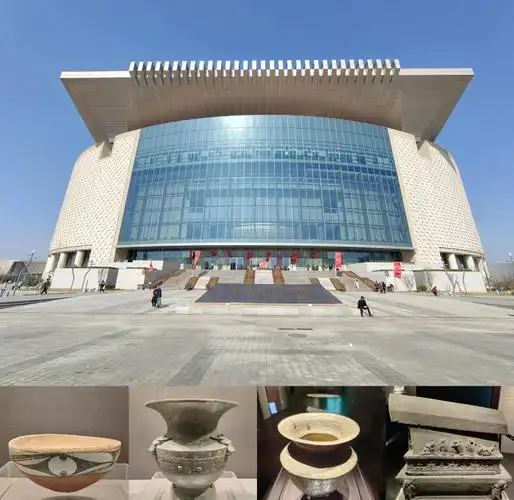 Founded in 1957 and recognized in 2025 as one of China's most innovative museums, the Zhengzhou Museum anchors a city that once served as an early capital of the Xia and Shang dynasties—the Bronze Age equivalents of ancient Memphis or Knossos. As the seat of the historic Zheng-Han kingdom and home to Neolithic sites like Peiligang and Dahecun, Zhengzhou charts humanity's journey from scattered prehistoric settlements to organized statehood. Few institutions anywhere illuminate the dawn of urban civilization as comprehensively as this one.
The museum's striking new main building on Wenhen Street, which opened in recent years, covers a staggering 147,000 square meters—making it one of the largest single-structure museums on Earth, rivaling the British Museum's exhibition footprint. Its sweeping silhouette evokes a "Dragon Soaring over the Central Plains," while soaring atriums flooded with natural light create a contemporary counterpoint to the ancient treasures within. A secondary branch on Songshan Road offers complementary themed displays, forming a dynamic old-and-new dialogue.
The permanent exhibition, "Ancient Civilization of Zhengzhou," unfolds across three sweeping chapters: "Capital of Creation," "Center of Heaven and Earth," and "A Century of History." Standout pieces include the Beast-Mask Square Ding, a magnificent Shang bronze cauldron whose fierce taotie designs echo the ritual vessels that defined Bronze Age Europe and the Indus Valley. Specialized galleries showcase the "Giants of the Central Plains" prehistoric fossils, stele rubbings from the sacred Mount Song, the embroidered shoulder pieces of Yu Opera costumes, and a sweeping ceramics evolution—all enhanced by AR interactives and VR Silk Road journeys.
Admission is free, though advance online booking with a passport or ID is required for foreign visitors, who can register through the WeChat public account and enter via the manual verification lane. Doors open daily from 9:00 a.m. to 5:00 p.m. (last entry at 4:00 p.m.), closed Mondays except on national holidays. Multilingual audio guides are available for rent, and most signage is presented in both Chinese and English, making navigation straightforward for international guests.
Reaching the new building is refreshingly simple: take Metro Line 14 to the Olympic Sports Center Station, Exit F, and walk roughly 900 meters, or hop on buses S180, 302, or S113. Free underground parking accommodates drivers, though public transit is strongly recommended to sidestep congestion. Plan to spend two to three hours exploring—prioritize the second-floor permanent galleries, the third-floor ceramics hall, the first-floor sculpture gallery, and any temporary exhibitions on view. Comfortable walking shoes and a light layer are wise, as the air-conditioning can be brisk, and the sprawling layout demands stamina.
What sets this museum apart from the more famous Henan Museum nearby is its intimate scale of crowds, family-friendly atmosphere, and rich array of hands-on activities—AI face-swap photography, traditional rubbing workshops, and immersive multimedia installations make it a magnet for school groups and curious travelers alike. Photography without flash is welcome, but touching artifacts is strictly prohibited, and large bags must be checked at the entrance. For anyone seeking to understand the origins of Chinese civilization beyond the headlines of Xi'an or Beijing, the Zhengzhou Museum offers a revelatory, uncrowded, and deeply rewarding experience.
Founded in 1957 and recognized in 2025 as one of China's most innovative museums, the Zhengzhou Museum anchors a city that once served as an early capital of the Xia and Shang dynasties—the Bronze Age equivalents of ancient Memphis or Knossos. As the seat of the historic Zheng-Han kingdom and home to Neolithic sites like Peiligang and Dahecun, Zhengzhou charts humanity's journey from scattered prehistoric settlements to organized statehood. Few institutions anywhere illuminate the dawn of urban civilization as comprehensively as this one.
The museum's striking new main building on Wenhen Street, which opened in recent years, covers a staggering 147,000 square meters—making it one of the largest single-structure museums on Earth, rivaling the British Museum's exhibition footprint. Its sweeping silhouette evokes a "Dragon Soaring over the Central Plains," while soaring atriums flooded with natural light create a contemporary counterpoint to the ancient treasures within. A secondary branch on Songshan Road offers complementary themed displays, forming a dynamic old-and-new dialogue.
The permanent exhibition, "Ancient Civilization of Zhengzhou," unfolds across three sweeping chapters: "Capital of Creation," "Center of Heaven and Earth," and "A Century of History." Standout pieces include the Beast-Mask Square Ding, a magnificent Shang bronze cauldron whose fierce taotie designs echo the ritual vessels that defined Bronze Age Europe and the Indus Valley. Specialized galleries showcase the "Giants of the Central Plains" prehistoric fossils, stele rubbings from the sacred Mount Song, the embroidered shoulder pieces of Yu Opera costumes, and a sweeping ceramics evolution—all enhanced by AR interactives and VR Silk Road journeys.
Admission is free, though advance online booking with a passport or ID is required for foreign visitors, who can register through the WeChat public account and enter via the manual verification lane. Doors open daily from 9:00 a.m. to 5:00 p.m. (last entry at 4:00 p.m.), closed Mondays except on national holidays. Multilingual audio guides are available for rent, and most signage is presented in both Chinese and English, making navigation straightforward for international guests.
Reaching the new building is refreshingly simple: take Metro Line 14 to the Olympic Sports Center Station, Exit F, and walk roughly 900 meters, or hop on buses S180, 302, or S113. Free underground parking accommodates drivers, though public transit is strongly recommended to sidestep congestion. Plan to spend two to three hours exploring—prioritize the second-floor permanent galleries, the third-floor ceramics hall, the first-floor sculpture gallery, and any temporary exhibitions on view. Comfortable walking shoes and a light layer are wise, as the air-conditioning can be brisk, and the sprawling layout demands stamina.
What sets this museum apart from the more famous Henan Museum nearby is its intimate scale of crowds, family-friendly atmosphere, and rich array of hands-on activities—AI face-swap photography, traditional rubbing workshops, and immersive multimedia installations make it a magnet for school groups and curious travelers alike. Photography without flash is welcome, but touching artifacts is strictly prohibited, and large bags must be checked at the entrance. For anyone seeking to understand the origins of Chinese civilization beyond the headlines of Xi'an or Beijing, the Zhengzhou Museum offers a revelatory, uncrowded, and deeply rewarding experience.