Wugong Temple
⭐ 3.50
Wugong Temple Scenic Area, Shihe District, Xinyang City, Henan Province, China
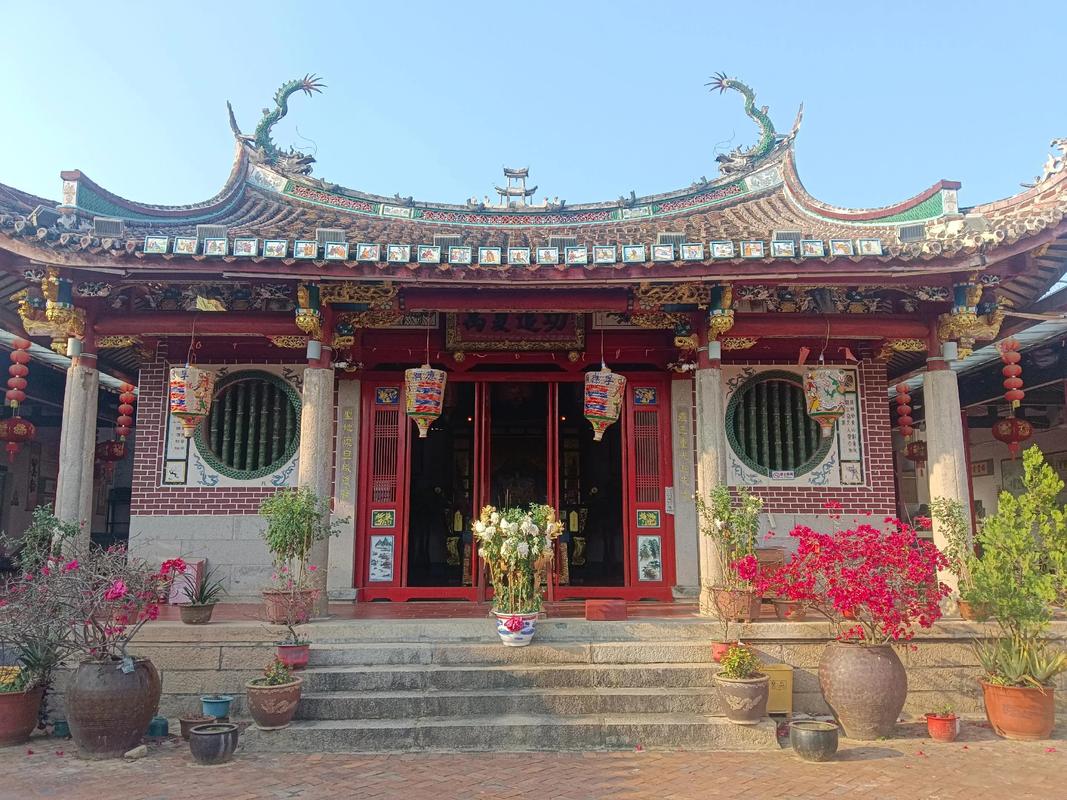 Wu Gong Temple traces its origins to the Tang dynasty (618–907), when the local official Wu Xing spearheaded flood-control works along the Mulan River, transforming swampland into fertile farmland for generations of Putian farmers. Comparable in spirit to the Roman-era hydraulic engineers of Hispania or the Renaissance reclamation projects of the Netherlands, Wu Xing's legacy earned him deification after death. Worshippers continued honoring him for more than a millennium, rebuilding and restoring the shrine through every major Chinese dynasty. Today it stands as Fujian's most tangible reminder of how water management shaped southern Chinese civilization long before modern dams.
Despite its modest footprint, the temple holds remarkable architectural treasures. Several stone columns date to the Tang and Song periods (up to the 13th century), their bases carved with restrained geometric motifs typical of early Chinese sacred architecture. The main hall employs a post-and-beam timber frame — the qiliang system — characteristic of southeastern Fujian, with painted beam decorations still faintly visible despite centuries of weathering. To Western eyes familiar with half-timbered German churches or Japanese Buddhist halls, the structure offers a fascinating counterpart in the southern Chinese vernacular tradition.
The courtyard displays several Ming-dynasty (1368–1644) stone stelae inscribed with detailed records of renovations and donor names, providing invaluable primary documentation of Putian's local history. For scholars and curious travelers alike, these tablets function much like medieval European church inscriptions — chronological ledgers of community memory etched in stone. The temple is officially protected as a Putian municipal cultural heritage site, a designation recognizing both its folkloric importance and its value for hydraulic-history research.
Wu Gong Temple forms one of the cultural anchor points of Shouxi Park, whose "Twenty-Four Classical Scenes" once celebrated the area's pastoral beauty — including the famous "Shouxi Fishing Skiff" vista. Together with the nearby Mulan Weir, an 11th-century engineering marvel still irrigating farmland today, the temple forms part of Putian's living water-cultural landscape. Visitors will find this pairing especially rewarding: the weir demonstrates the physical achievement, while Wu Gong Temple preserves the spiritual and civic memory behind it.
The temple sits within Chengxiang District's Shouxi Park and is free to enter, typically open daily from 09:00 to 18:00, though hours may shift during conservation work or festivals. Local buses serve the Shouxi Park stop, just a short walk from the entrance; a parking area and walking paths make arrival easy. Foreign visitors should carry a passport for occasional registration at the gate. Allow roughly half a day to combine the temple with the park's ancient bridges, lychee groves, and tranquil streamside walkways — an unhurried escape from Fujian's busier tourist circuits.
For lovers of off-the-beaten-path heritage, Wu Gong Temple rewards those who appreciate subtlety over spectacle. Its faded Ming carvings and weathered Song-era columns evoke the same quiet resonance as a Romanesque chapel in rural Tuscany or a forgotten Byzantine shrine in the Greek countryside. Combine a visit with a guide or translation app to fully appreciate the inscriptions, observe the posted photography restrictions in protected zones, and avoid touching any artifacts. The temple offers an unusually intimate encounter with China's enduring reverence for the engineers and reformers who shaped its landscapes.
Wu Gong Temple traces its origins to the Tang dynasty (618–907), when the local official Wu Xing spearheaded flood-control works along the Mulan River, transforming swampland into fertile farmland for generations of Putian farmers. Comparable in spirit to the Roman-era hydraulic engineers of Hispania or the Renaissance reclamation projects of the Netherlands, Wu Xing's legacy earned him deification after death. Worshippers continued honoring him for more than a millennium, rebuilding and restoring the shrine through every major Chinese dynasty. Today it stands as Fujian's most tangible reminder of how water management shaped southern Chinese civilization long before modern dams.
Despite its modest footprint, the temple holds remarkable architectural treasures. Several stone columns date to the Tang and Song periods (up to the 13th century), their bases carved with restrained geometric motifs typical of early Chinese sacred architecture. The main hall employs a post-and-beam timber frame — the qiliang system — characteristic of southeastern Fujian, with painted beam decorations still faintly visible despite centuries of weathering. To Western eyes familiar with half-timbered German churches or Japanese Buddhist halls, the structure offers a fascinating counterpart in the southern Chinese vernacular tradition.
The courtyard displays several Ming-dynasty (1368–1644) stone stelae inscribed with detailed records of renovations and donor names, providing invaluable primary documentation of Putian's local history. For scholars and curious travelers alike, these tablets function much like medieval European church inscriptions — chronological ledgers of community memory etched in stone. The temple is officially protected as a Putian municipal cultural heritage site, a designation recognizing both its folkloric importance and its value for hydraulic-history research.
Wu Gong Temple forms one of the cultural anchor points of Shouxi Park, whose "Twenty-Four Classical Scenes" once celebrated the area's pastoral beauty — including the famous "Shouxi Fishing Skiff" vista. Together with the nearby Mulan Weir, an 11th-century engineering marvel still irrigating farmland today, the temple forms part of Putian's living water-cultural landscape. Visitors will find this pairing especially rewarding: the weir demonstrates the physical achievement, while Wu Gong Temple preserves the spiritual and civic memory behind it.
The temple sits within Chengxiang District's Shouxi Park and is free to enter, typically open daily from 09:00 to 18:00, though hours may shift during conservation work or festivals. Local buses serve the Shouxi Park stop, just a short walk from the entrance; a parking area and walking paths make arrival easy. Foreign visitors should carry a passport for occasional registration at the gate. Allow roughly half a day to combine the temple with the park's ancient bridges, lychee groves, and tranquil streamside walkways — an unhurried escape from Fujian's busier tourist circuits.
For lovers of off-the-beaten-path heritage, Wu Gong Temple rewards those who appreciate subtlety over spectacle. Its faded Ming carvings and weathered Song-era columns evoke the same quiet resonance as a Romanesque chapel in rural Tuscany or a forgotten Byzantine shrine in the Greek countryside. Combine a visit with a guide or translation app to fully appreciate the inscriptions, observe the posted photography restrictions in protected zones, and avoid touching any artifacts. The temple offers an unusually intimate encounter with China's enduring reverence for the engineers and reformers who shaped its landscapes.